A Bowl of Slop
The greatest American cultural export has to be fast food. By distilling the dining experience into basic convenience and flavors, the fast food establishment has spread across the world. When you visit a foreign country, a McDonald’s will probably be within reach. However, maybe you don’t want a burger. You might actually be craving the newest American innovation: the slop bowl.
Americans love their bowls. They want all of their ingredients combined into a single container that they can eat all at once. The Portland Timbers are no different. When they are trying to put together the most perfectly putrid road performance, they cannot miss a single ingredient. Today’s 2-0 loss in Colorado featured all of the trademarks of a Timbers road stinker, which formed a perfect bowl of slop.
Recap
The Timbers nearly had a dream start in the 3rd minute when Kristoffer Velde’s corner kick was met by Cole Bassett’s head at the near post, which forced Zack Steffen to make an acrobatic save. That save turned into another corner kick, and things immediately took a turn for the worse.
This was the moment where the Timbers lost the initiative for the remainder of the game. Yes, that’s correct. The only time that this game was somewhat competitive was during the opening 3 minutes. That corner kick was taken short, and Antony’s outswinging cross instantly turned into a Colorado counterattack. The Rapids didn’t take a shot during that sequence, but Portland’s lack of composure was evident when James Pantemis cleared the ball out of bounds for a throw-in. Three minutes later, the Rapids took the lead.
It could’ve come from a free Rob Holding header in the 6th minute, but Pantemis made a huge save to force a corner. That corner was cleared, but it was recycled to Hamzat Ojediran. The Nigerian let loose from distance, but it was deflected by Finn Surman and trickled past Pantemis. 1-0 Rapids, 7th minute.
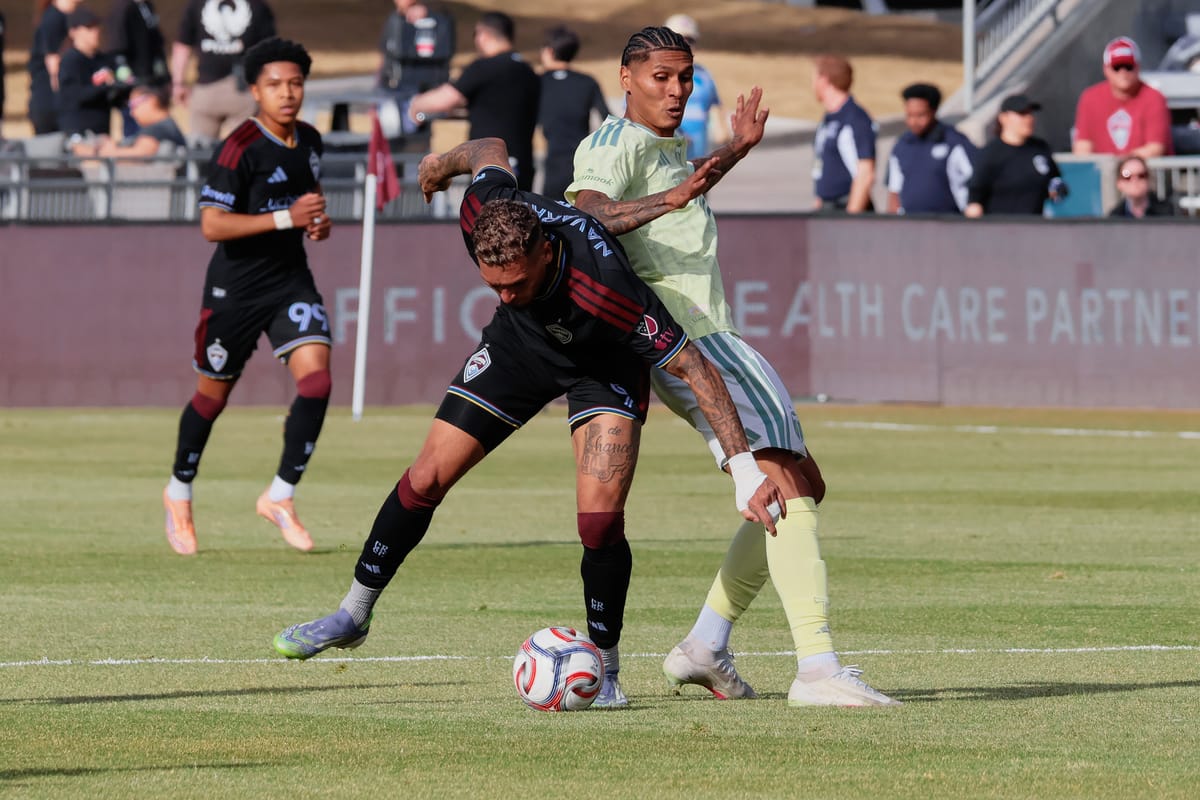
This allowed the Rapids to gain confidence, and cause the Timbers to lose what little they had when the game started. Rafael Navarro headed a strong effort (assisted by a Paxten Aaronson cross) towards goal in the 11th minute, but Pantemis parried the shot away. However, the Brazilian striker caught up to the loose ball and tried a square cross. Pantemis bobbled it but recovered the ball right away.
Portland’s next chance came from a set piece, just like the first. Velde’s 21st-minute delivery went directly through the six-yard-box before finding the surprised head of Felipe Mora, who was able to direct the ball on target. Steffen got to the ball in front of Finn Surman, who was sitting on the goal line. The Timbers were forced to recycle. Eventually, Brandon Bye’s deflected shot ended up in Steffen’s arms. With Portland’s attacks held at bay, the Rapids capitalized on a midfield giveaway. In the 23rd minute, Alex Bonetig rifled a pass at Diego Chara, who lost control of the ball. Colorado gained possession, and Navarro was through on goal again. His strong effort from outside the box forced Pantemis to make another save. Reggie Cannon continued the Rapids’ shooting parade with another effort from distance two minutes later that ended with the same result. But Portland wasn’t going to end the half without trying to create something big of their own.
This 39th minute sequence begins with the Timbers winning the ball from a long goalkick. After some brief recycling, they snapped back into their attacking patterns from last week. Antony sprung Gage Guerra into space on the right wing with a good through ball, and the University of Louisville graduate delivered a low cross into the box. It found Velde at the back post, who had time to take aim and tie the game. However, Velde’s effort blazed over the bar. A golden chance, gone to waste. Is it 2025 again? Portland entered halftime with an incredibly friendly 1-0 deficit based on the balance of chances. And if the best one found the back of the net, it would’ve been 1-1.
The second half opened with some back and forth, but a former A-League center back decided to win the game by himself. That player was Colorado’s Lucas Herrington. Two plays would play a factor. The first was a 52nd minute line-breaking pass from Herrington to Alex Harris, who found room in behind to exploit. That created a 1v1 with Pantemis, who had to stretch wide to his left to push the shot out of bounds. Dante Sealy took the resulting corner, which ended with Herrington rising above Bassett to guide a header into the far side of the net. Portland went down 2-0, and that usually results in a loss. However, they weren’t completely dead yet.
In the 57th minute, Mora received a pass from Chara and bounded up the middle. He took a shot from distance which curled just wide of Steffen’s net. Bummer. Two minutes later, Guerra dispossessed Josh Atencio in the center of the pitch and the Timbers were able to counter. Finally running downhill, Mora slid a pass to Antony on the right, who put his shot directly into the side netting. Tough. Bassett sent a 63rd-minute cross towards the back post, and the ball fell to Bye. He sent the resulting volley onto the concourse. Groan. That’s three good chances in a row without a shot on target. Finally, the Timbers were able to test Steffen again in the 69th minute. Bye sent a low cross into the box that was met by Guerra, but Steffen was able to parry the ball at point-blank range. That effectively ended the game from a competitive standpoint, but more fireworks were still on the menu.
Holding nearly added a 3rd from another free header in the 74th minute. But the biggest moment of the second half came in the 77th minute. Another Portland giveaway left Aaronson sprinting towards the sideline. Jimer Fory, despite not being under serious threat of a dangerous attack, decided to try to win the ball back with a sliding challenge from behind. The studs of his outstretched boot made contact with Aaronson’s foot, and a straight red card was shown.
There was nothing wrong with that refereeing decision. Based on the Law of Reciprocity (would I get mad if this happened against the Timbers and no red was shown?), it was a very valid straight red card. That forced the Timbers to play the rest of the game with 10 men. A victory was practically off the table. That didn’t stop the Rapids from continuing to control the game and trying to find more chances to score. None of them ever materialized, either due to weak finishing or more excellent Pantemis saves. In a game that shouldn’t have ended 2-0, the Timbers lost 2-0. That scoreline was somehow flattering.
Out-Of-Possession
Well, the Timbers lost in humiliating fashion again. You know where we have to start.
I praised the 4-2-4 pressing structure last week because it worked how it was supposed to. Columbus operated out of a back five with two central midfielders, neither of whom had the mobility of Bassett or Chara. The Crew was content to be patient in possession as well. That gave Portland more of an impetus to press higher. It was also a home game, so the Timbers were expected to play on the front foot.
That same logic doesn’t apply to a road team. Some teams (like Philadelphia) will press high whether they’re playing at home or not. But the unique challenges of away games in MLS allow teams to play for points, not a win. Yesterday’s starters were the same as the ones against Columbus. However, the Timbers were not playing against a patient Crew. They were facing a direct Colorado team instead.
YIKES!
Does this look slightly familiar to you? Did 4 consecutive weeks of San Diego matches to end last season leave an impression on the way you view this Timbers team? It certainly did to me, because the Timbers were facing another team that was trying to bait their press and play through those unstructured lines of pressure. The same tactic that worked very well against Columbus ended up being a complete mess against a fast and young Colorado side.
That clip features a very embarrassing sequence, but it wasn’t the only instance of the Rapids easily breaking Portland’s press. There would be times in yesterday’s game where Colorado vacated the middle of the pitch, which pulled Portland’s pivot out to the sides. A direct ball would be played to Navarro, who only had to win a singular duel to begin the attacking phase of play with willing runners around him. A variety of different methods were used to break Portland’s press. All of them were pretty successful. The Timbers went from front-foot defending to recovery runs in a matter of seconds. That’s not a recipe for success.
Using and Losing the Ball
The out-of-possession failures are, once again, a coaching problem. You could make a case for Portland’s feckless attacking showing being a symptom of a bad game-plan, but that would be ignoring a squad of players that downed tools. I have never seen a sloppier Timbers team on the ball than I did today. There are a couple of caveats, like a furious wind that blew from kickoff to the final whistle. But when players are failing to do the basics to an acceptable level, that’s where any sort of excuses end.
Poor first touches are one of my biggest pet peeves. Your first touch is supposed to set up the next action you want to take. A myriad of unpressured turnovers and sloppy passes killed numerous Portland attacks before they could even get going. Including a sequence that I’ve never seen before and I hope to never see again.
DEAR GOD!
The wind cannot be blamed for this. It was blowing in the opposite direction of Fory’s backpass. Even the free-kick is incredibly annoying, as Fory ignores Velde’s run and decides to deliver a ball into an outnumbered box. If you wanted a sequence to sum up yesterday’s failures in possession, that one should do the trick.
Box Tilt
The Timbers lost the box tilt battle for the second game in a row. The final tally of 37-15 is a bit misleading, considering the Rapids played with a man advantage for the final 20 minutes of game time and used that period to make incisive movements into Portland’s box. During the first half, the Rapids had a 19-10 advantage in this category. Three of those touches were shots from set pieces. Colorado had 8 corners in the first half, most of which were created by quick progression through the wings.
I thought Portland’s errors in box defense during the first half were faults of individual miscommunications and errors rather than a structural problem. Colorado’s set piece plan was very similar to Arsenal’s, and the Timbers had no answer for it. Pantemis was often marked on corner kicks, which made every single dead ball delivery a mad scramble of reacting Timbers and free Colorado attackers. For the second week in a row, box tilt didn’t really provide a major lesson. Aside from the obvious, that is (a team with 10 men will get overwhelmed by a team at full strength, especially if they’ve spent almost 80 minutes running around at altitude).
Player Ratings
James Pantemis: 7
This was a very hard grade to give. From a shot-stopping standpoint, Pantemis was easily Portland’s best player on the field. However, I left this game more concerned with his errors than his ability to keep the scoreline respectable. In the 10th minute, Pantemis and Surman collided in the box while they were both going for a cross. Crisis was averted, but it was another piece of evidence in a growing list of miscommunications between the goalkeeper and his backline. Those shouldn’t be happening, no matter how many new players are in the defensive unit. And that error occurred between two players who have been starting together for at least a year! Pantemis’ struggles were a microcosm of Portland’s multitude of errors. And I already put a clip of the biggest error in this recap! You can add another 15th-minute suicide pass to a growing collection of poor Pantemis distribution moments as well. He was outstanding at his primary duty (stopping shots) but utterly woeful in possession.
In addition, he should’ve seen red in the 73rd minute after his attempt to play sweeper on Reggie Cannon ended with the American right back crumpled on the pitch after a hard challenge with no intent to play the ball. A yellow card was brandished instead, and the Canadian goalkeeper got away with one.
Brandon Bye: 6.8
I left this game with more appreciation for Bye. His performance was pretty solid considering the players around him. However, I would like to talk about one aspect of his game: his proficiency in the Juan Mosquera role.
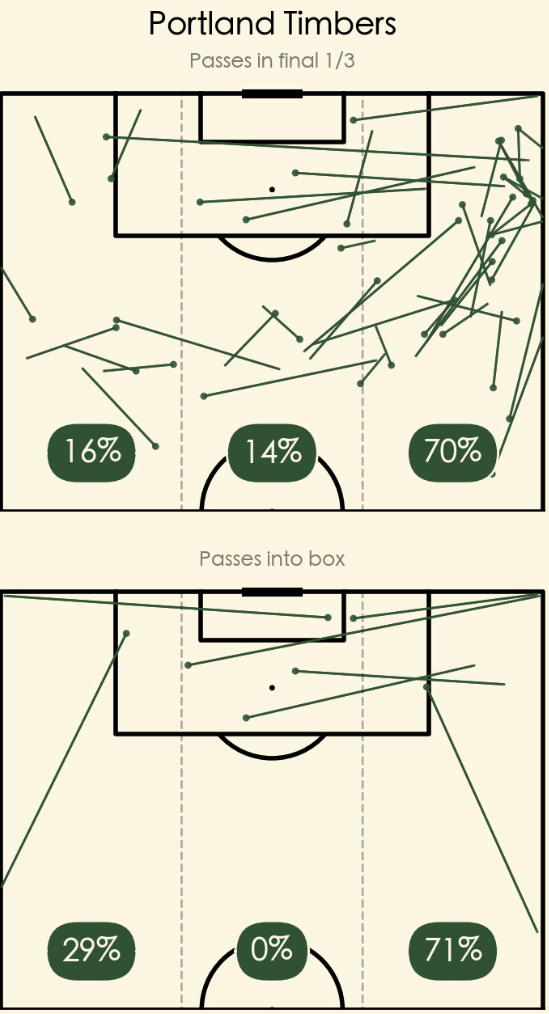
Phil Neville built this year’s system around his right back. It’s very similar to last year, but it fits Bye’s strengths (and Mosquera’s). Bye’s deliveries from the right hand side were excellent in this game, but none of his teammates could get on the end of those balls into the box. The Timbers are intent on creating the final ball from the right side. I don’t know why they are so intent on doing so. But Bye is very capable of delivering that ball, and should arguably have multiple assists over the first two games of 2026. I thought his defensive work was fine, but not as notable as last weekend.
Finn Surman: 6.5
This was a pretty anonymous game from Surman outside of a couple quality blocks. Like a 51st-minute challenge on Navarro that kept the Rapids from doubling their lead. That anonymity was especially prevalent on set pieces, where he was doing an awful lot of reacting due to Colorado’s front-footed dead ball tactics.
Alex Bonetig: 6.2
Consider this game Bonetig’s “welcome to the league” moment. After all, he did mention that he was excited about the step up in difficulty from the A-League to MLS. While his distribution was mostly fine (no perfect pass accuracy like last week) he had trouble with Colorado’s mobile forwards. That 51st-minute Surman block I just mentioned only occurred because Bonetig tried to dribble past Navarro and got his pocket picked. I also don’t think he defended very well in space. No alarm bells are ringing, but I’d like to see how he responds next weekend against Vancouver.
Jimer Fory: 2.5
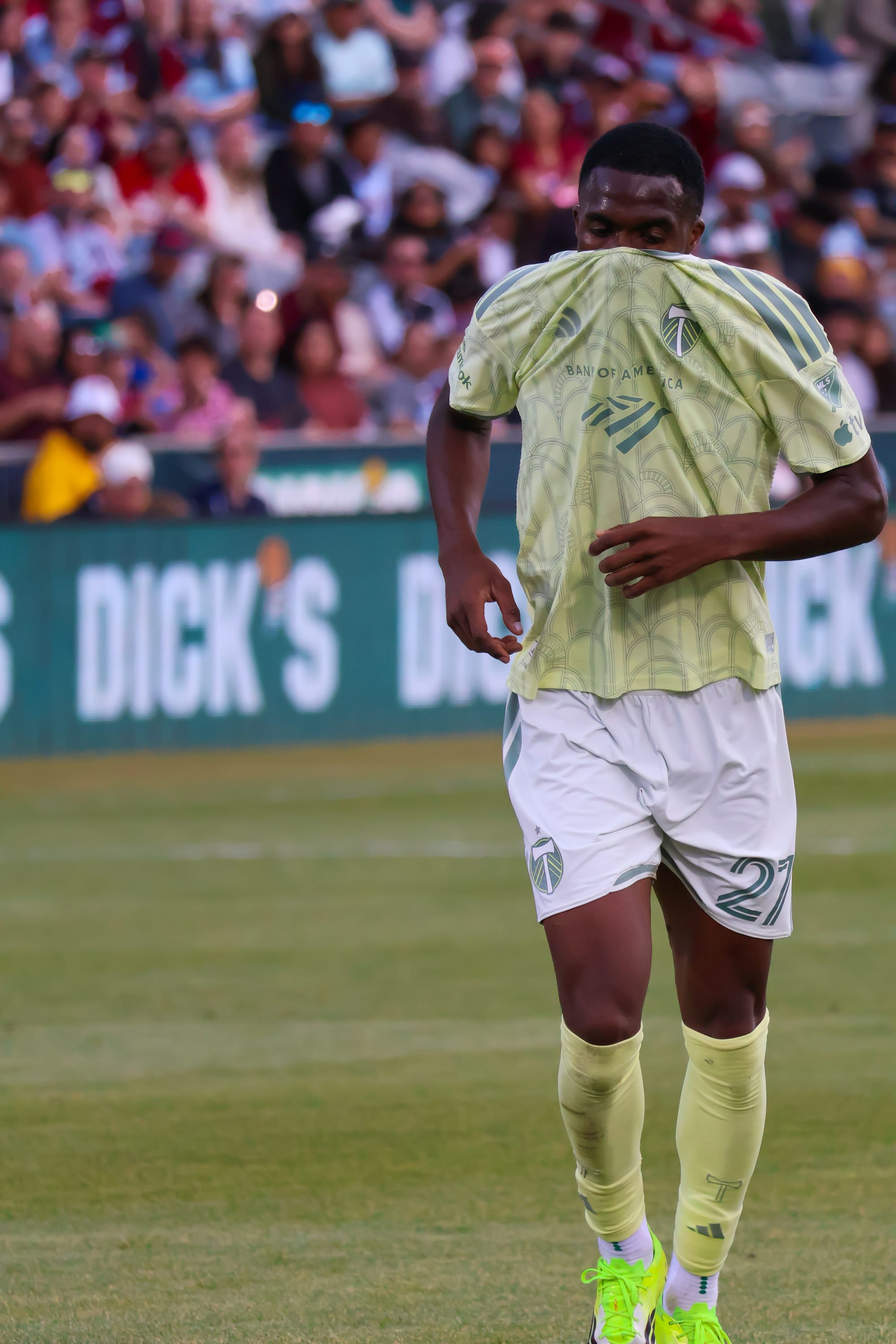
Without the red card, this grade is a 5.5. That’s how catastrophic his terrible decision to attempt that tackle was. I’ll let Neville take it from here.
“Jimer Fory, unacceptable. Unacceptable. I’ll defend my players to the hilt, but that’s unacceptable because that’s a pattern. That’s not the first time. He’s obviously been told that this is the last time. There’s a pattern where you’ve got to start learning. First time’s OK, second time you start, you know, and third and fourth time it becomes a real concern.”
This is Fory’s second red card in a span of five games going back to last season. His dismissal in Game 1 of the First Round series with San Diego killed any chances of the Timbers getting back into the game. They were already dead by the time he was sent off today, but their (slight) chances of a comeback were definitely thwarted. There was some consternation about why he was shown a straight red card for a tackle that didn’t seem to make a lot of contact. However, any amount of contact would have resulted in a red card due to the pure stupidity of the attempt. He had help! It wasn’t in the middle of the open field! Now he’ll miss next weekend’s crucial game against Vancouver and potentially a couple more if the challenge was deemed dangerous enough. I don’t expect the second possibility to become a reality, but he doesn’t have the benefit of the doubt after one season of similarly ridiculous challenges.
Diego Chara: ∞
In the 83rd minute, Diego Chara got a yellow card. It was his 123rd yellow card in MLS play, which ties Kyle Beckerman for the most cautions in MLS history. But there’s one play that stands out above all else.
LORDY.
Debate your answer to this take in the comments below. I've been thinking about it since that tackle and I still can't pick a side.
Cole Bassett: 6.2
This is not the homecoming that Bassett wanted. He was caught out defensively on several occasions, and his ability to set the table was nerfed by Aaronson’s presence as a man-marker. In addition, Herrington scored Colorado’s second by jumping over Bassett to win the header.
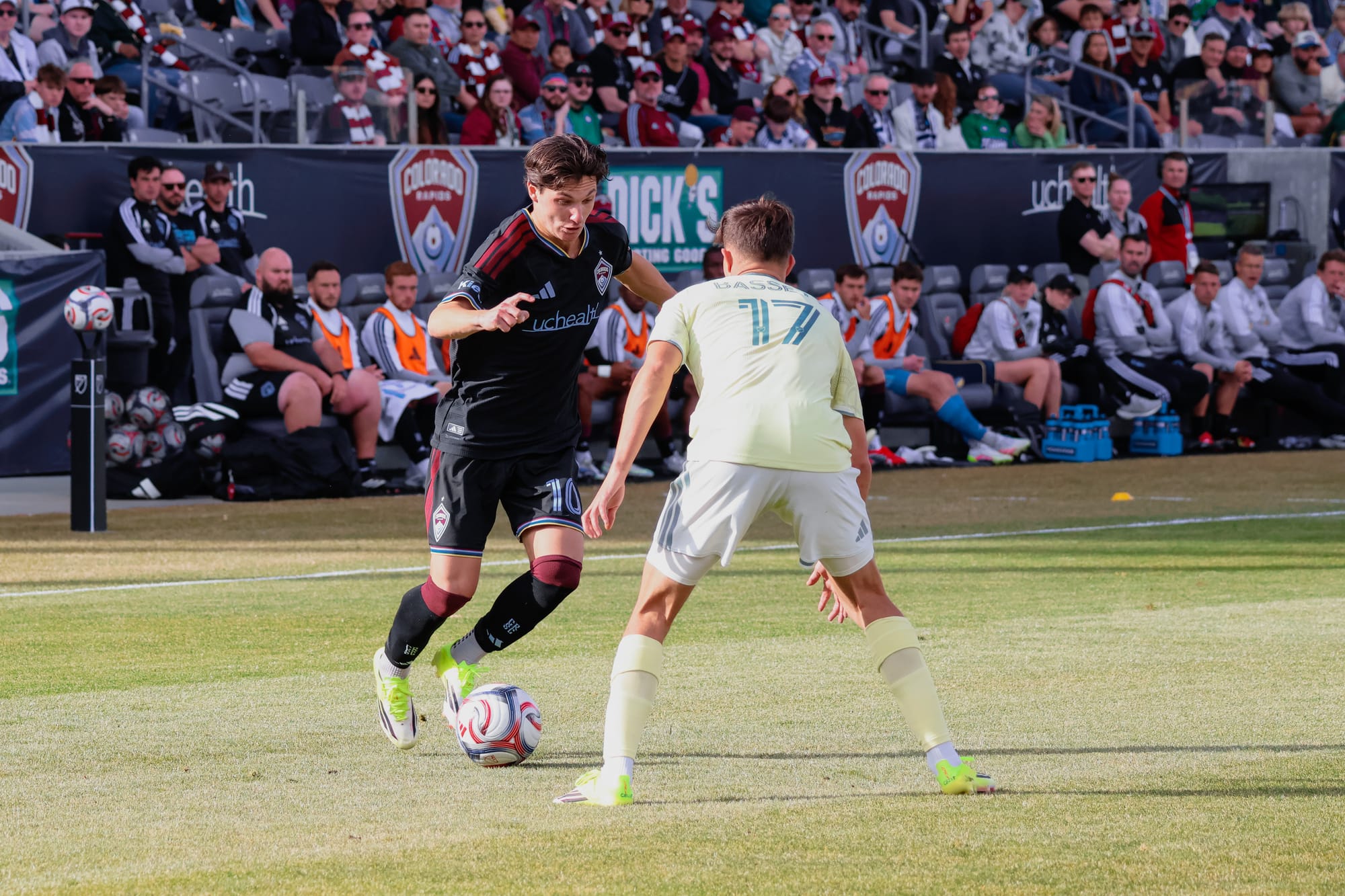
In his post-game press conference, he talked about how the team false-started on the starting blocks and never got to a point in the game where they could “really hurt those guys.” “There’s a lot of things that we talked about before the game that we just didn’t do in the game.” He did contribute to his team’s sloppiness, but not to a degree where it jumped off the page.
However, one of those post-game quotes did jump off the page. “I don’t think we looked like the Portland Timbers today.” Bassett is new here, so I’m going to give him a pass considering most of his prior experiences with Portland involved being on the opposite side of a victorious Timbers team. But this is exactly what the Portland Timbers look like: dangerous at their best and wildly inconsistent at their worst.
Antony: 6
For the first time in his Timbers career, Antony did not score against the Colorado Rapids. His opportunities on the break were limited by poor ball progression and his own affliction with “Bad First-Touch Syndrome” (BFTS). His 59th-minute effort should’ve found the target instead of the side netting. How will the arrival of Alexander Aravena affect his playing time?
Kristoffer Velde: 5
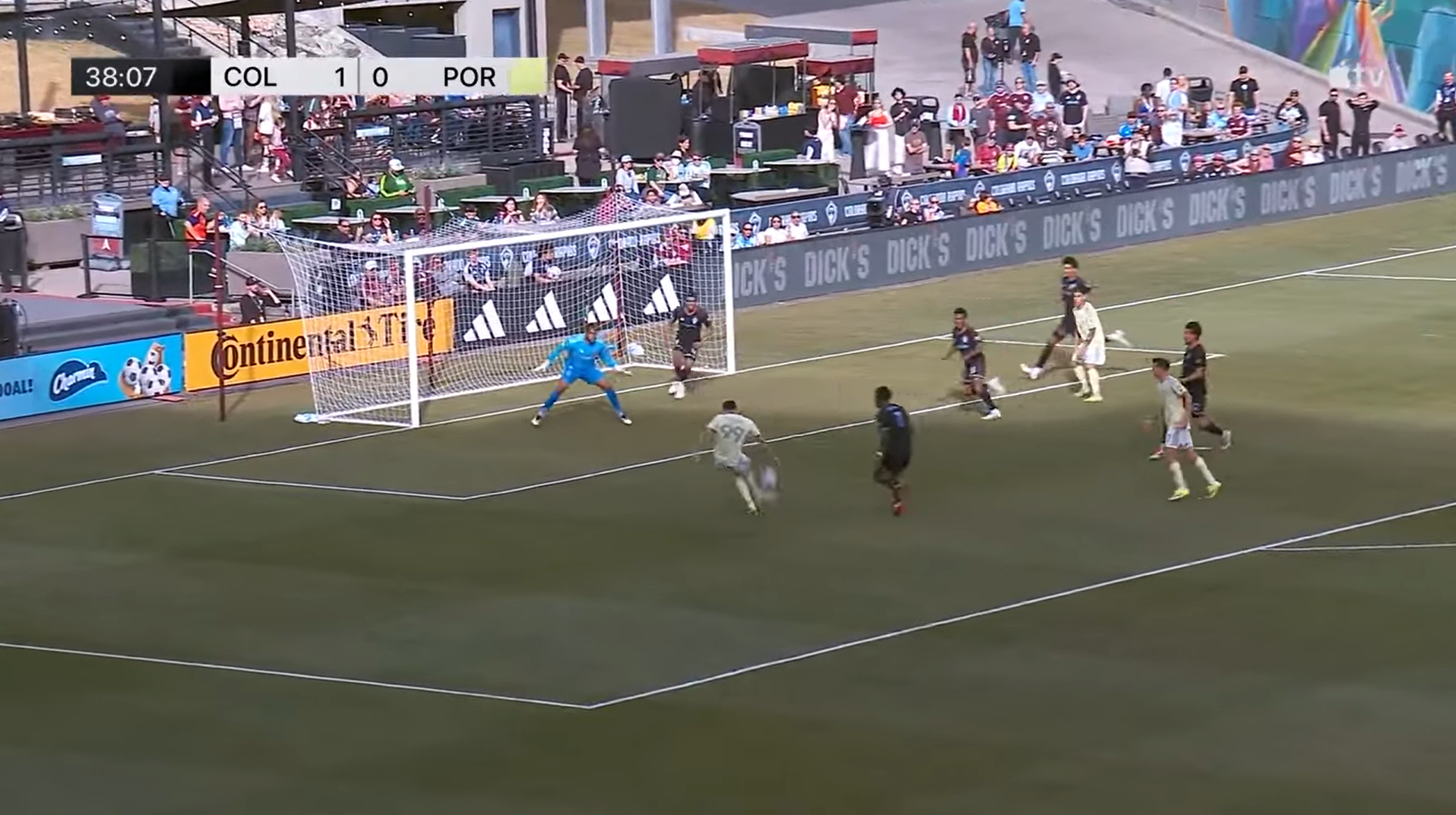
Velde decided to put this shot towards the top corner at the far post. Steffen is giving him space at the near post, and the Norwegian has enough time to steady himself before getting the shot off. A goal here completely changes the complexion of the game. In Neville’s words: “The most disappointing thing is that our best players didn’t put the ball in the back of the net, which is what we pay them to do.” Back of the net is one thing, but putting it on target is the bare minimum.
This was the worst game from Velde that I’ve seen him play in a Timbers shirt. The only other contender is last year’s awful loss in Seattle where he was clamped by Nouhou for a vast majority of the game. He suffered from BFTS worse than anyone else on the team. Fory and Bassett were often offering support on the left, but Velde continually made incorrect decisions or tried to play hero ball. A bounceback game is definitely needed after two matches without a goal involvement to open 2026.
Felipe Mora: 6.6
Mora was largely anonymous because he needed the ball to come to him. Due to his teammates’ failures in buildup, it rarely got there. But when it did, good things tended to happen. I liked his decision to try and shoot from distance in the 57th minute. At least he tried to make something happen.
Gage Guerra: 6.7
Guerra started his second consecutive match because Neville wanted to keep pressing. He found himself in two good spots to score but whiffed one and forced Steffen to make a great save on the other. In addition, he made a couple of good crosses in this game but had no goal involvement to show for it. Is he the starting striker until David Da Costa comes back? If one of those chances turns into a goal, I think he’d firmly be above Kevin Kelsy in the pecking order. Neville has been impressed with his work rate and mentality. If he keeps getting into those positions, the goals will come.
Kevin Kelsy: 6.4
The exact opposite can be applied to Kelsy, who is not finding spots to score goals. I think he’s being incorrectly utilized. He tends to drop into space and play with his back to goal. However, as a 6’4” giant, he needs to be occupying opposing center backs and getting into spots to receive the final ball. Game state definitely played a factor in his inability to get into the box, but it’s a recurring theme from previous games. If Kelsy is deployed in a manner similar to Guerra (where hold-up play isn’t as important as field-stretching) I think the team will be able to find him in better spots inside the box rather than using him as a piece in buildup. I’m officially concerned after his second straight game as a substitute.
Ariel Lassiter: 6.5
I don’t have a single notable Lassiter moment in my notes aside from one foul committed and a late corner kick delivery that got headed away. I think that’s a factor of entering the game two minutes before Fory’s red card.
Ian Smith: 6.5
In a similar vein to Lassiter, I only have one Smith contribution in my notes: a ball recovery in stoppage time. He’s probably going to start at left back next week in place of the suspended Fory.
Kamal Miller: N/A
I cannot give Kamal Miller a numerical grade after he played out of position in defensive midfield and while a man down. I liked the effort that I saw. Nothing else needs to be said on the matter.
Coach Rating: 4.5
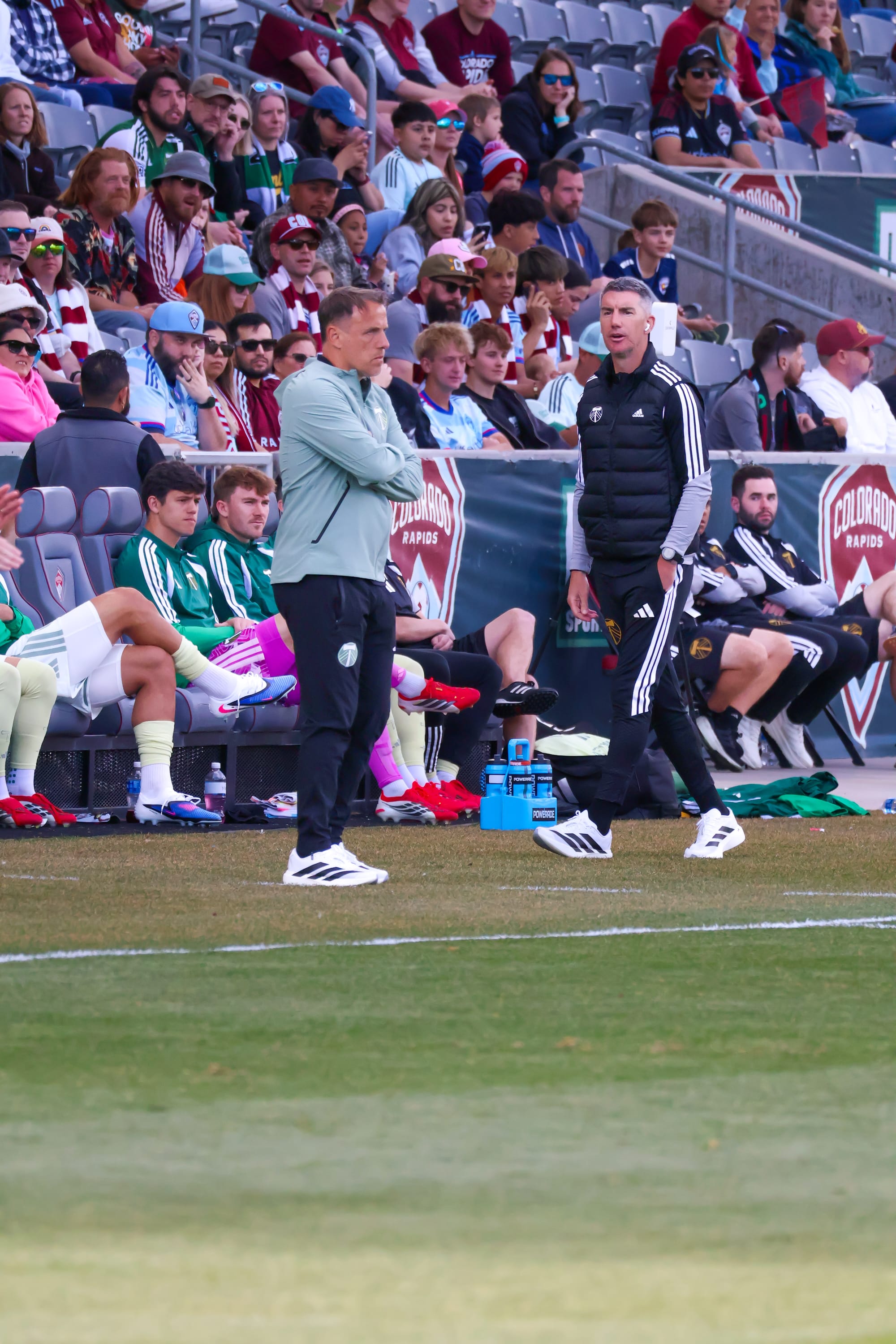
Let’s start with the things that Neville can’t control. Joao Ortiz missed today’s game after his wife went into labor on Friday. “Family is more important than football,” Neville said after the game. That’s true. However, it left the Timbers without a single midfielder on the bench for this crucial game. That’s a roster-building error, not a coaching fault. In addition, he cannot control his players screwing up the basic parts of the game. It isn’t his fault that passes were poorly executed and first touches went flying all over the pitch.
But there was an awful lot that he could control, and that begins with the game plan. Colorado had the better of Portland on 90% of all set pieces. Dead balls became a key source of chances for the Rapids, while the Timbers couldn't create anything meaningful from a set piece aside from Bassett's 3rd-minute header and Mora's surprise. Assuming that the Timbers could continue their high-octane press from the season opener in the altitude of Colorado was naive. So was waiting until the 68th minute to make a sub when it was clear that the team needed changes in order to get back into the game. Execution is a major culprit, but the Timbers are still lacking a consistent winning identity. Unless you count turnovers and desperate defending.
That seems a bit harsh considering the Timbers did try to stay consistent from week to week in terms of setup, gameplan, and lineup. Portland's complete inconsistency from week-to-week killed them last year, so I guess I have to take that into account. So what carries more weight in this instance: the controllables or the non-controllables?
Those non-controllables are pretty serious. Most of my frustration while watching this game was focused on the players' inability to get the basics correct. Professional soccer players shouldn't be repeatedly turning the ball over with bad first touches or poorly executed passes. The absence of Ortiz can't be laid at Neville's feet either. Keep in mind: the Timbers have 3 first-team players who can play central midfield. Ortiz's excused absence occurred too late for the Timbers to call up someone like Lucas Fernandez-Kim or Adolfo Enriquez; T2 players who could sign short-term loan deals to appear on the bench. Eric Izoita impressed throughout preseason, but he isn't signed to a T2 contract and is therefore ineligible for a call-up.
So what is ultimately responsible? I have an answer that all of you are going to hate: mentality.
Final Whistle
Cole Bassett said as much after the game. "For me, there shouldn't be any difference going away from home than being at home. At home, obviously, you have the love of your family and the fans, but away from home you should still mimic the same style that you're playing at home."
Style is another word for system, which is a combination of tactics and mentality. Portland's struggles away from home are emblematic of piss-poor mentality. That's what I can hold Neville responsible for the most. Any team should be able to go on the road, put out a competitive performance, and get a result that reflects that performance. Sure, soccer is won on the margins (like Velde's blown chance and the deflection that took Ojediran's shot past Pantemis) but performance is mostly controllable. That starts with mentality, and ends with execution. The Timbers brought neither to Colorado. But they did try to make their identity travel. Unfortunately all that traveled was nonchalance under pressure and a failure to make the big moments count.
When the Rapids faced Seattle last weekend, they did have an identity on display. It was pretty easy to tell how they wanted to play, but they failed to execute properly against a superior opponent away from home and paid the price with a 2-0 loss. For their home opener, head coach Matt Wells provided the fanbase with a clear view of how he wanted this Rapids team to play. And he gave them a potential view into their future with a signature victory that left no one guessing how this team is going to win games. It’s been two games, and they have an identity.
There is a slight asterisk next to this game from a Rapids standpoint: they won’t be playing the Timbers every week. From a Portland perspective, the Timbers delivered a signature defeat. They’ve registered two of those in their last 3 games. Poor execution combined with mental errors and a slightly naive tactical setup (with an incomplete squad) created the bowl of slop that the Timbers delivered in Colorado. Wells proved that the Rapids could win games with this identity against teams at or below their talent level. Neville proved that the Timbers’ main identity still revolves around their mentality. It’s like that for most MLS teams. But Wells masterminded this dominating performance in his second game at the helm. Neville’s been in the Portland dugout for three years.
The Colorado faithful went from doubt and despair pre-game to utter joy and happiness after the final whistle. They sang the name of their head coach, who will take them to a cup (their words, not mine). This was a victory for them, spearheaded by an 18-year-old Australian and a DP attacking midfielder. It could be the high point of the season for them. But it was a win that will get them through the upcoming week before the Galaxy comes to town.
Portland will have to turn around and face an old tormentor next weekend. It’s a team that has utterly dominated them on their home field and is the primary reason why the fortress has collapsed. An early season game in Colorado shouldn’t be branded with the expectations of a win. But it should have expectations of consistency. When your primary identity is inconsistency, it’s hard to reverse course. Until the reversal can be completed, joy and doom will alternate. That simply can’t happen anymore. The embarrassments have to stop. The climb continues.