Portland Timbers-Vancouver Whitecaps Preview (3/7/26)
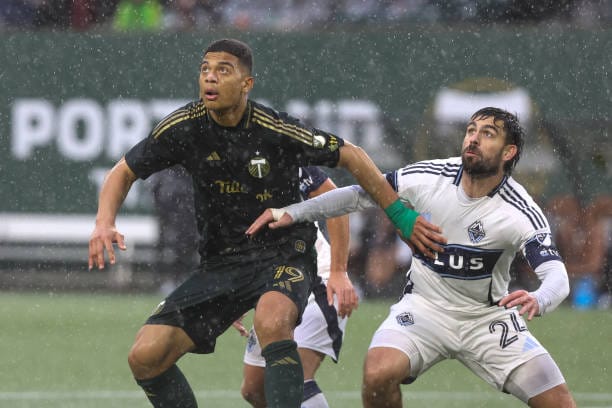
The 2026 season will be defined by a lot of things. On a national scale, the World Cup and its lasting effects will be the biggest talking point. But the Portland Timbers have a clear objective for the young season: re-establishing their home fortress during Providence Park’s 100th birthday. For their second home game of the year, a familiar foe is ready to head south. And they’re the team that’s most responsible for the destruction of Portland’s fabled home-field advantage, at least in the Phil Neville era. Another trophy is at stake, but the Timbers will be fighting for something bigger when the Vancouver Whitecaps come to town tomorrow.
The Whitecaps Report
It’s halftime on September 24th, 2025. The Portland Timbers have just embarked on a dominating display against the Vancouver Whitecaps and hold a 1-0 lead courtesy of a Kamal Miller golazo from outside the box. Portland’s back three had worked to perfection, holding a 17-3 advantage on shots. But they left a ton of chances on the table, and a reinvigorated Whitecaps team emerged out of halftime and put the clamps on the Timbers. It took until the 88th minute for Vancouver to find their equalizer (courtesy of Brian White on a corner kick) and they nearly took the lead when Emmanuel Sabbi hit the crossbar five minutes later. The stark disparity between halves was a microcosm of Portland’s season, but a draw against a budding juggernaut was still a good result (without taking into context how that draw occurred).
Vancouver finished the season with a 2-1-1 record in their final four games. A Cascadia Cup-clinching draw in Seattle three days after the Portland game was a highlight. They entered Decision Day on top of the Western Conference with a chance to win the division. All they had to do was get a win or a draw against FC Dallas on their home turf. 11 minutes into the game, Mathias Laborda was shown a red card. Osaze Urhoghide gave Dallas the lead 7 minutes later, but a 29th-minute Thomas Muller penalty (not the last time you’ll hear that phrase today) tied the game. Kaick Ferreira gave the visitors the lead directly out of halftime, and the Whitecaps couldn’t muster an equalizer. Combined with San Diego’s 4-0 destruction of the Timbers, Vancouver fell to 2nd place. That home-field advantage turned out to be very important, but it was a slight bit of disappointment as the Whitecaps got *this* close to cementing their status as the best team in the West. At least they won another Canadian Championship on October 1st against city rivals Vancouver FC.
Vancouver’s reward for losing to Dallas was an instant Best-of-3 First Round matchup against that same team. Game 1 was an utter domination, with the Whitecaps deservedly winning 3-0 after holding Dallas to one shot over the entire game. Los Toreros made life a little more difficult for Vancouver in Game 2. Petar Musa grabbed the lead in the 25th minute. Dallas was seconds away from forcing Game 3 before Ralph Priso popped up on a corner kick to tie the game and force a penalty shootout. The Whitecaps made all four of their kicks and advanced to the Conference Semifinals and a date with their old nemesis: LAFC.
In hindsight, this game did not receive the amount of hype that it deserved. Sure, LAFC’s two-headed monster of Denis Bouanga and Heung-Min Son brought the headlines, and it made the Whitecaps the afterthought of the pre-match chatter. This was for a reason: in the previous two seasons, Vancouver fell to LAFC in the playoffs. Despite an excellent regular season including an improbable run to the CONCACAF Champions’ Cup Final, the Whitecaps needed to beat LAFC in the playoffs to truly prove that they were a different team. And on the third time of asking, they succeeded.
At halftime, the Whitecaps were ahead 2-0 courtesy of goals from Sabbi and Laborda. But Son refused to throw in the towel, halving Vancouver’s lead on the hour mark. LAFC kept pushing, and Vancouver kept trying to progressively kill the game off. However, everything changed in the 3rd minute of stoppage time. Tristan Blackmon, the newly-minted Defender of the Year, was starting his first game since mid-September due to an injury. He received a second yellow card, which gave LAFC just enough time to find an equalizer. Son was the discoverer of said equalizer, which came from a free-kick two minutes after Blackmon’s dismissal.
Extra time was a rock fight. LAFC had chance after chance but none of them were able to find the back of the net. Bouanga missed a sitter in the dying moments of extra time and the game went to penalties. Vancouver finished the game with 9 men on the pitch after Belal Halbouni (Blackmon’s replacement) left the field in the 110th minute with a serious knee injury. Would the Whitecaps be rewarded for their heart and spirit in the penalty shootout?
Yes, they would. Son took the first penalty, which hit the post. Vancouver scored all of theirs (minus Edier Ocampo’s attempt that got saved by Hugo Lloris) and Laborda sent his game-winning kick into the top right corner to slay the dragon. San Diego awaited in the Western Conference Final. Vancouver effectively ended the game after 11 minutes by taking a 2-0 lead. The final score was 3-1, and the Whitecaps were off to MLS Cup.
Prior to the season, Whitecaps fans couldn’t have predicted a campaign with such stunning highs. But, as mountains rise and valleys form, the lows were just as fascinating. Their reward for winning the Western Conference was a December trip to Miami, who had steamrolled the Eastern Conference en route to their first MLS Cup appearance. The Herons took the lead in the 8th minute via Edier Ocampo’s own goal, and that advantage held firm at halftime. However, Vancouver found their equalizer through Ali Ahmed in the 60th minute. 1-1, with all to play for in the final half hour.
Vancouver is the only Cascadian team without MLS’ top prize in their trophy cabinet. The Sounders needed a miraculous save and a zero-shot gameplan to finally add a desired star to their shirt. Portland took a different route. Their crowning achievement occurred due to two individual plays of brilliance within the first 7 minutes at MAPFRE Stadium. But the most important moment of that championship run occurred in the Wild Card Game. Kansas City’s Saad Abdul-Salaam stepped up to the penalty spot with a chance to eliminate the Timbers. Adam Kwarasey dove the wrong way, but Abdul-Salaam’s attempt miraculously bounced off of both posts and back towards the penalty spot. The Double Post; an iconic moment of America soccer lore and the spark that launched the Rose City to MLS immortality.
Double posts are works of art. They occur completely by accident. The ball has to hit one post at the perfect angle to travel across the face of goal and kiss the opposite woodwork at the perfect angle and bounce away from the frame of the net. The 7-10 split in bowling carries a similar degree of difficulty, except the bowler is trying to summon every bit of skill and magic to hit the pin at just the right angle to bring a seemingly impossible event into reality. If a bowler hits that shot, they’re destined to win. They have the gods of bowling on their side. However, if a double post occurs in soccer, losing becomes inevitable. The gods have issued their disapproval.
In the 62nd minute, two minutes after Ahmed’s equalizer, Sabbi created space inside the box and sent a left-footed shot towards the left side (goalkeeper’s left) of Miami’s net. The ball hit the left post and right post with a courtesy bounce between both woodworks. The rebound fell to Maxi Falcon, who made a meal out of his first touch. Sabbi tried to atone for the god’s denial by trying to overcome their will himself. He pressured Falcon’s loose touch and tried to squeeze a shot from a tight angle, but Falcon and goalkeeper Rocco Rios Novo denied him at the near post.
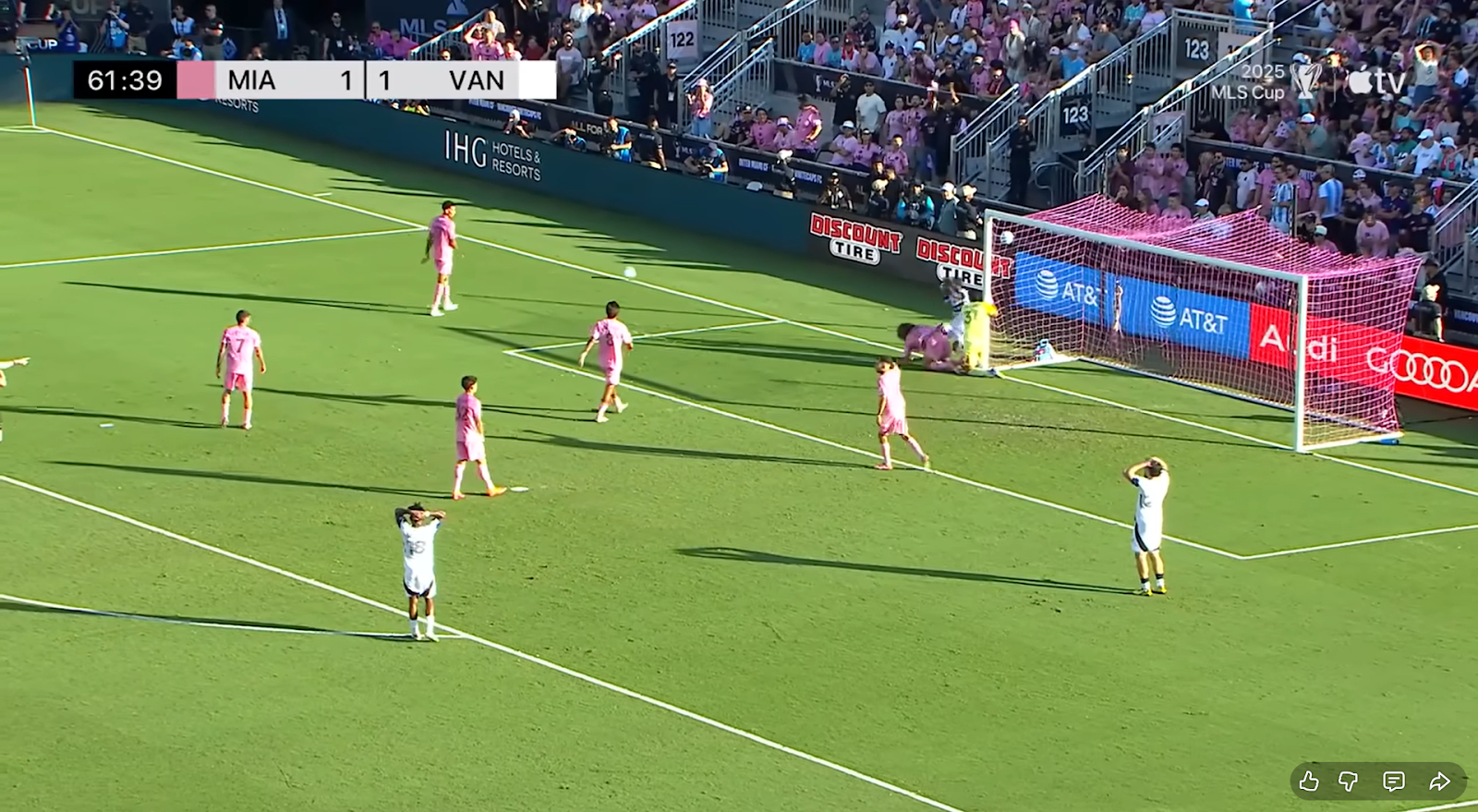
Back in April, the Whitecaps beat Miami twice to book their spot in the CONCACAF Champions’ Cup Final. It was a game that they would go on to lose 5-0, but it was viewed as a wonderful journey where the final destination was too big of a mountain to summit. Vancouver reached their MLS Cup summit with this play. Four minutes later, Ahmed was replaced by Ryan Gauld and Joedrick Pupe subbed in for a cramping Priso. Miami found their lead again three minutes after the double substitution. Andres Cubas, the heart of the team, was pick-pocketed by Lionel Messi. A through ball to Rodrigo De Paul followed, and a far-posted effort beat Yohei Takaoka. Brutal. Vancouver pushed for an equalizer, but none of their chances were too threatening. Finally, the killing blow came in the 6th minute of stoppage time from Tadeo Allende. The Vancouver Whitecaps became a steamroller in 2025, pushing their way to the two biggest cup finals of the MLS season. They left without a trophy besides their honorary Canadian Championship title. Jesper Sorensen’s first year at the helm was a whirlwind. How would they get over the hump in 2026?
Their offseason has two different parts. The on-field business is one thing, but their off-field issues are a summit far greater than any cup final. Let’s establish the stakes first, because they’re monumental.
The club was put up for sale in 2024. A team with the history and community like the Whitecaps should be an easy sell, but there was a giant block in the way of any potential investor: BC Place.
It’s a stunning stadium from the outside. Blending seamlessly into downtown, the centrally-located venue is in a prime location to host a multitude of events that come to Canada’s jewel on the West Coast. However, the stadium is owned by the county, not the Whitecaps. This has led to wildly unbalanced lease agreements where the Whitecaps take home as little as 12% of the revenue from their own games at their home stadium. The Whitecaps shouldn’t want to lose BC Place as a home venue due to its central location, but a new owner would probably want to have a stadium of their own. Since the Whitecaps were actually good in 2025, attendance skyrocketed. That should’ve been enough of a prod towards investors, but no offers have come in. The revenue splits are not good enough, and the club is suffering as a result. Any new owner would probably have to build a new stadium in British Columbia in order to increase revenue. As a result, it would probably be more financially beneficial for a new ownership group to relocate the team and build a new stadium elsewhere.
The realities of modern sports (mostly the decisions of rich people in regards to their own vast wealth) have made relocation a uniquely American aspect. In America (Canada counts for this because MLS teams play in the American league) teams have been held hostage by their owners to force the public to contribute towards new stadiums. Capital is king, so those who have a lot of money can make the public bend to their will. A similar situation is occurring with the Trail Blazers, but the “relocation" word hasn’t been thrown around in Portland to the degree that it has in Vancouver. Instead, the new ownership group of the Trail Blazers is desperately trying to make the public pay for Rose Garden upgrades through a new bill that taxes revenue from the arena. Once again, this is all the fault of people who already have too much money and do not want to spend it towards the public good. That bill passed, and the billionaire class gets another victory over the average citizen.
By all rights, the Whitecaps want to remain at BC Place but with a greater revenue share. Since the county won’t play ball (some concessions were made in their latest lease agreement), relocation is now the biggest attractor towards any new owners. It looks bleak off the field for Vancouver fans. But they’re coming off the best season in club history, and the team has to keep building for another Cup run. How do they do that with such a hamstrung budget?
Selling Ahmed definitely helps. Heralded by several pundits as one of the most underrated players in the league, the Canadian international departed for Norwich in January for a fee of approximately $2.3M (American dollars). Two weeks prior, winger Jayden Nelson was traded to Austin for $1.2M GAM and a draft pick. Barcelona SC’s Bruno Caicedo and FC Metz’s Chiekh Sabaly arrived as replacements. Former St. Louis player AZ Jackson joined on loan from Jagellonia Bialystok as another reinforcement out wide. In a tragic move for me personally, former Colorado Rapids midfielder Oliver Larraz joined in free agency. The only notable departures outside of Ahmed and Nelson were striker Daniel Rios (loan expired) and defenders Giuseppe Bovalina and Pupe (loaned to Sint-Truiden and Orebro, respectfully).
Time will tell if Caicedo and Sabaly can replace Ahmed and Nelson. The former hasn’t made his Vancouver debut yet while the latter got his first taste of MLS with 14 minutes off the bench last weekend. But the Whitecaps (2-0-0, 6 points, 4W/4S) are heading into the season with a focus on defense. Through their first 4 games (both CCC matches included) they haven’t allowed a goal. Sorensen’s organized structure (combined with a relatively weak first 2 league games) has picked up where it left off at the start of 2026.
Vancouver’s calling card last year was the best team identity in the league. Injuries plagued the Whitecaps last year, but no other team could exercise the “next man up” mentality like Vancouver could. Absences are still taking a toll on the Whitecaps in 2026, but they’ll always be able to be competitive in a game no matter who is on the field. Not just competitive though. They’re utterly outstanding.
VAN Injury Report & Projected Starting XI
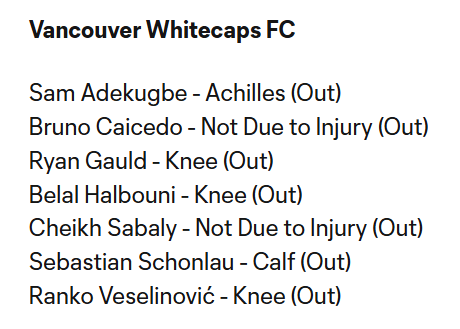
Those injuries are still a major problem. Adekugbe is a casualty from 2025. So are Halbouni and Veselinovic. Schonlau joined the team last summer but hasn’t made his debut yet. All of the aforementioned players are defenders. It’s unclear why Caicedo and Sabaly can’t play, but it isn’t injury-related. Gauld is on the Injured List and has 4 games left until he can be activated for MLS games.
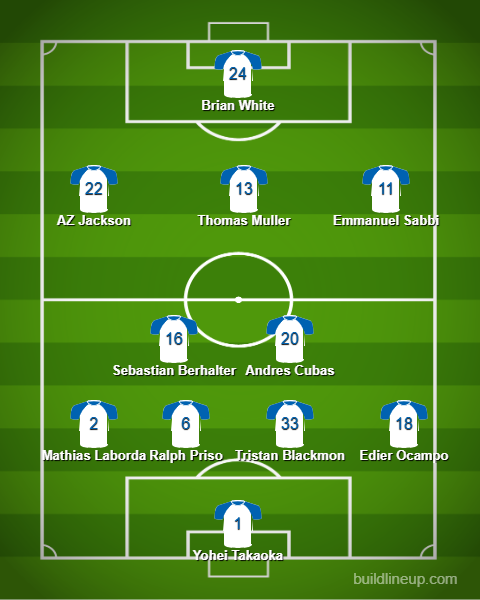
Vancouver’s strongest lineup is whatever lineup is starting. Such is the strength of Jesper Sorensen’s system and his ability to impart it on his players. Takaoka got Goalkeeper of the Year votes last season. The backline is the same one that started in MLS Cup, but Tate Johnson could start at left back. That would move Laborda to right back.
The Uruguayan is undroppable. The same could be said for Priso, Blackmon, Berhalter, Cubas, Muller, and White. Vancouver’s sudden lack of depth out wide is partially solved by Sabbi’s return from suspension. Jackson scored in the season opener and drew a penalty last weekend. He isn’t the same player as the departed Nelson or Ahmed. This could backfire heavily, but I still don’t see the hype around Jackson. I didn’t rate him at Minnesota, St. Louis or Columbus before he got sold to Jagellonia. Now he’s on loan in Vancouver. It just reeks of money-laundering, but Sorensen has found a way to make him consistently serviceable. The only thing giving me pause is their upcoming CCC matchup against Seattle on Thursday. There are places where they could rotate (midfield is the most obvious one) but they’re going to want to continue their recent streak of incredible results in Portland.
White scored in both matchups last year, and leads all active players (on both sides) with 6 goals from 27 shots in this fixture. Muller has never faced the Timbers before, but he was on the Bayern Munich team that played at Providence Park in the 2014 MLS All-Star Game. Turf shouldn’t be a problem for him, especially considering that he chose to go to Vancouver and play on whatever their turf is masquerading as (it’s certainly not a quality playing surface!).
The Timbers Report
Portland (1-0-1, 3 points, 12W/19S) began the new season with two relatively winnable games. They defended their home field on opening night against Columbus but fell flat against Colorado last weekend. Their opponent this weekend is a model of consistency, and has outscored the Timbers 9-1 across both of their previous meetings at Providence Park. From this point until the World Cup, nothing is easy. However, the final piece of the pre-World Cup puzzle is on his way.
The Final Reinforcement
Portland needed to sign a defensive midfielder even before David Ayala was sold to Miami. You could make the case that Portland’s neglect of their midfield in recent years has been directly tied to the club’s sliding descent into mediocrity. Think about it. In 2022, injuries to Ayala and Eryk Williamson handicapped the team so much that a $2.2M summer offer for Cristhian Paredes had to be declined. The team has continued to go into season after season with only four central midfielders on the roster without any boost from the second team. They began 2026 with 3, only for one of them to be absent (for good reason) last weekend with no proper replacement available on the bench. Midfielders are the most important players on the pitch, and they often dictate the floor of the team. Look at Vancouver’s pivot of Berhalter and Cubas. Both players avoided the injury bug in 2025, and the Whitecaps rose to great heights as a result. Portland’s depleted midfield has been a key indicator of regression. They have tried to reinforce this area. No one can be blamed for Felipe Carballo’s torn ACL. But in order for a team to be consistently competitive, a strong midfield is paramount.
An addition in this area of the pitch has been the most important part of the team’s offseason. And it nearly got done a couple weeks before the season began, but unforeseen complications led to a deal falling apart. A month later, the deal went through. Say hello to the (probable) newest Timber: Jose Caicedo.
Because this deal isn’t official, I’m only going to comment on the basics (similar to Alexander Aravena two weeks ago). Caicedo is a 23-year-old Colombian who made 114 appearances over 4 years for Pumas in Liga MX. He enjoyed his best run of form under former manager Antonio Mohamed, who just won back-to-back titles with Toluca. Unfortunately, his relationship broke down with current manager Efrain Juarez after an injury, and the player requested to leave the club. That almost led to him joining Portland a month ago, but the deal broke down. Now it appears that the player is getting his wish. He was the mystery player mentioned by Ned Grabavoy a month ago, and the Timbers didn’t give up on the deal.
Part of the reason why his situation at Pumas became untenable was due to a lunatic fringe of the fanbase harassing him and his family. Any performance, no matter how subpar, does not give anyone the right to abuse a player and those closest to him. He will literally be seeing greener pastures in Portland.
Those greener pastures should allow him to do what he does best: be a wrecking ball in the midfield. A pure destroyer, Caicedo should patrol the middle of the field and break up play. I haven’t done a full scouting report on him yet, but it’s another victory for the profile brigade. The Timbers needed a player like this in the midfield, and it appears that Caicedo will fit the bill. More words to come once the transfer is finalized.
GAM Release
Roster Profiles dropped last week, but the GAM totals weren’t available until today. Let’s take a look at how much flexibility the Timbers have.
With $4,788,001 in GAM, the Timbers are currently holding the 3rd-largest amount of allocation money in the league. That is an increase of $1,608,001 from their previous total at the end of January. What does this mean? And how did the Timbers add more allocation money?
Let’s start with the latter first. I assume that all $2M of David Ayala’s transfer fee hadn’t arrived by the end of January. Neither had all of Santiago Moreno’s $6M. Only $1.5M of Moreno’s fee was eligible for GAM conversion due to a maximum of $3M total GAM available to be collected from player sales (Portland took $1.5M GAM from Evander’s sale to Cincinnati). That could be an explanation, but there’s also the yearly GAM payment that each MLS team gets. These payments aren’t uniform across the board. However, each team gets GAM from the league each year. There’s also the $1M in discretionary GAM (dGAM) that the Timbers have already received based on their selection of the 2/4 roster model.
That’s a lot of speculating, but there are some important caveats to note with this release. Yes, it’s very good that the Timbers have a lot of allocation money. But this isn’t going to be their final total by the end of the transfer window. I believe that Alexander Aravena’s cap hit has already been calculated and the GAM used in that transaction has already been reflected in this total. However, the potential Caicedo deal will use some of this GAM. Until that deal is finalized, it’s unclear how much might be earmarked for the long-awaited defensive midfielder.
Unless the Caicedo deal is uber-pricey, the Timbers should still be left with a fair amount of allocation money to use in the summer window. It can be used directly to trade for players, but it also buys cap space. Portland maximized their cap space last year and ended the summer without a single dollar of GAM in the war chest. It was the right move, but I didn’t expect the Timbers to be able to recover from an empty bank balance so quickly.
That’s what happens when large contracts come off the books. Dario Zuparic, Cristhian Paredes, and Maxime Crepeau were on large wages and their departures opened up a ton of space. Portland used that space to sign Alex Bonetig, Brandon Bye, Aravena, and potentially Caicedo. Cole Bassett’s arrival coincided with Ayala’s departure, and his High-Value Roster Slot was the one formerly occupied by the Argentinean midfielder. I expect the Timbers to go all-in next summer too, which should be more impactful than their 2025 gamble.
There were only 10 games remaining after the Leagues Cup break in 2025. However, 20 of the 34 league matches (including 3 guaranteed Leagues Cup Phase One games) will take place after the World Cup. The summer transfer window opens 3 days before the Timbers return from the World Cup break with a game in Seattle. Clubs are incentivized to wait until the summer this year. Portland should be busy regardless of where they are in the table.
The Timbers opted for the 2/4 roster model until the summer window opens. This gives them the flexibility to target a new DP for the second half of the season. However, they also have an opportunity to fill their vacant U22 slot and use some of this GAM to buy down one of their current U22s in the summer to allow that third DP to join. Portland has a ton of flexibility going forward. In terms of roster holes, I still think another center back is needed. Particularly because of Zac McGraw’s lengthy recovery time making it significantly unlikely that he returns before the World Cup.
Right now, the roster feels nearly complete (aside from one more body at center back). Portland’s flexibility allows them to use the 14 games before the World Cup to assess the roster and see which position could benefit from a DP-level upgrade the most. “Striker” is probably the position that you’re currently thinking of, but my mind is wandering towards the wings (depending on how much Aravena can produce). Either way, Portland’s roster build for 2026 looks very good with the potential to get better.
Leagues Cup Draw
Let’s keep looking towards the future because Portland’s Leagues Cup schedule has been released!. Like it or not (I’m currently right down the middle) Leagues Cup will never die. This year’s edition of the tournament follows the same format as last year with American and Mexican sides facing each other in Phase One and having separate tables for passage into the knockout stage. Here are Portland’s three Phase One games (kickoff times TBD):
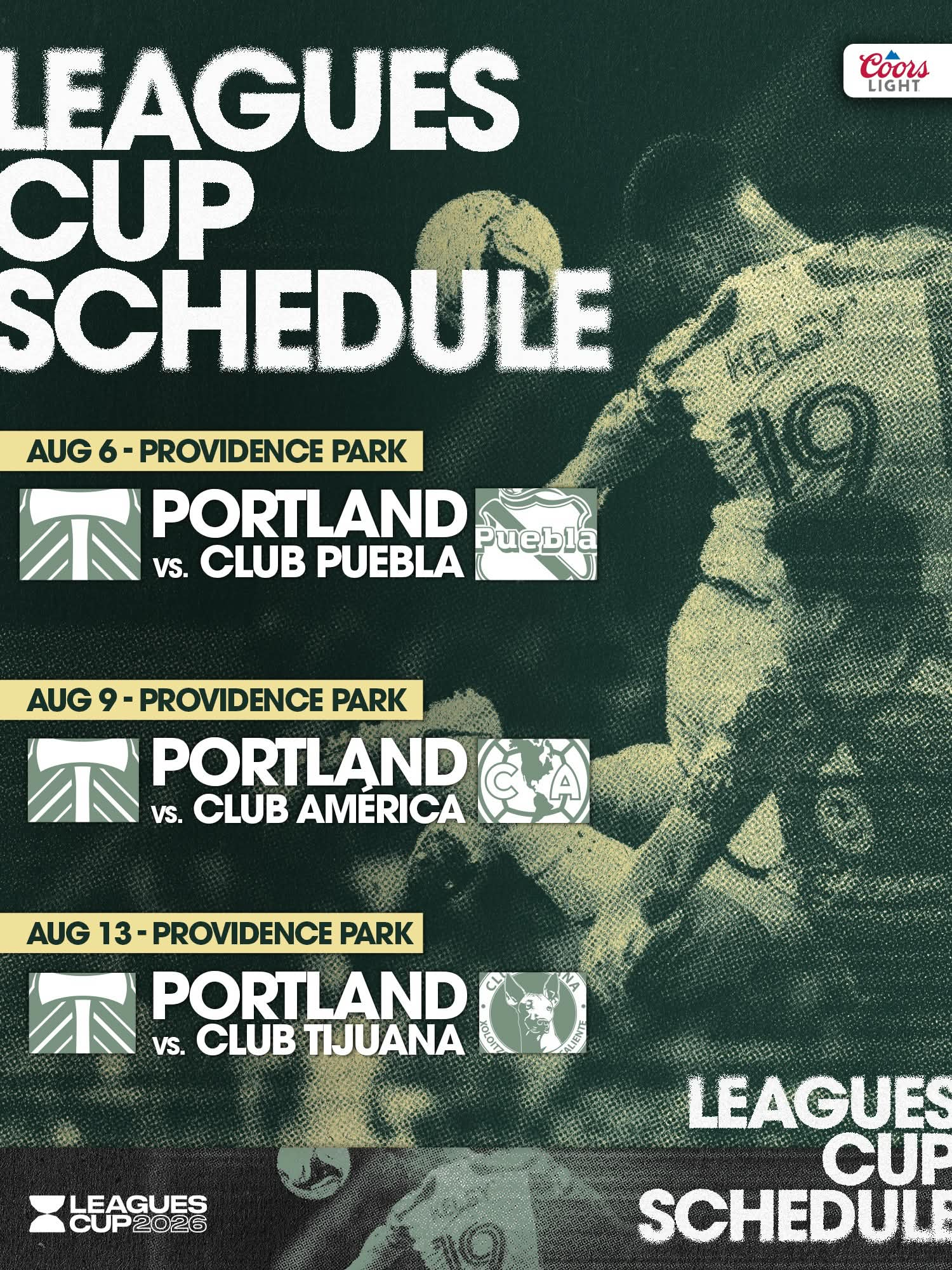
This is a good schedule simply because all the games are at home. Puebla and Tijuana haven’t played Portland before, and the Timbers get a chance for revenge against Club America. I think this draw works out in their favor. These games are bookended by a home game against Seattle on August 1st and a trip to Chicago on August 16th. It is manageable, but Portland’s league position could make the Tijuana game very interesting.
PTFC Injury Report & Projected Starting XI
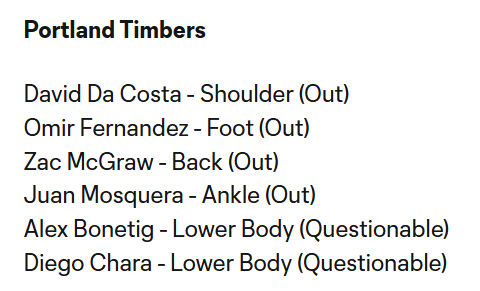
Let’s begin with the good news. Alexander Aravena’s visa has been approved and he will be available for selection tomorrow. Da Costa is only “one week away” (per Neville) and Mosquera is “two weeks away” (also per Neville). Here’s the worrying stuff: Jimer Fory is suspended due to the red card from last weekend. Bonetig didn’t train on Thursday, and the staff said that his absence was “precautionary.” Chara did train on Thursday, so his inclusion is a bit of a surprise.
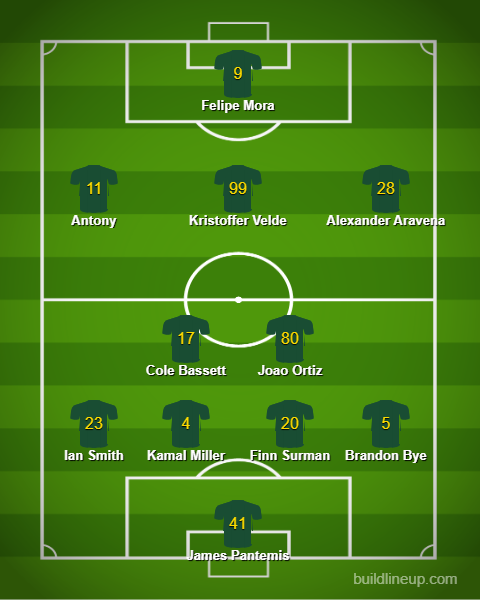
Let’s get one thing out of the way: the Timbers should not be in a back three tomorrow. Neville and Ned Grabavoy have spent all offseason saying that this team fits a 4-2-3-1. I would be shocked if Neville changed structures.
Assuming that Bonetig and Chara aren’t fit to start, the defensive unit picks itself. I think Ortiz would be starting even if Chara was off the injury report. If Bonetig is good to go, I think Kamal Miller has the edge over Ian Smith at left back based on the way that Neville wants his left back to play (tucking inside to form a back three in possession).
The other question involves the attacking corps. Neville has never been shy about throwing a new signing onto the pitch at the earliest time of asking. Da Costa was an exception, but he had only been in Portland for a couple days and was lacking fitness. Aravena spent the last week training with the team so he should be sharp enough to get in from the jump. But where does he play?
Which player has to be dropped for the Chilean to slot into the starting lineup? Although Gage Guerra has done a good job acting as the focal point for Portland’s press, it would utterly shock me to see him starting his third consecutive game in a row. Maybe he does, but doing so would bench one of Felipe Mora or Kevin Kelsy. I don’t think that Neville would leave one of those two on the bench for this game. Having said that, Mora should get the nod up top. However, it could be Guerra or Kelsy too.
That (sort of) resolves the player that Aravena would replace in the starting XI, but not the position he would be playing. However, Neville compared him to Santiago Moreno, so I think that spot is on the right wing (technically the right channel). This would free up Antony to return to the left wing and move Velde into the middle, where the Norwegian was effective at times last year. It’s kind of mental how one new signing could spark ripples of change in the starting lineup. There’s a case for Cole Bassett to move up to the number 10 role to increase Portland’s pressing proficiency. It could be another game of the Guerra-Mora battery with Aravena on the bench. So many options, all of them intriguing. I feel very confident in saying that I’m not confident at all in this lineup projection.
Tactical Preview
Set Pieces
Last weekend, the Timbers could count themselves lucky. On every dead ball delivery into the box, the Colorado Rapids reigned supreme. Portland *technically* only allowed one goal from a set piece, but it could’ve been at least 4 or 5 based on the quality of chances that fell towards the opposition. Vancouver’s set piece proficiency is rather underrated league-wide. Last year they scored 15 goals from dead-ball scenarios, which was tied with Chicago and San Jose for 3rd-most in the league. Currently they’re tied with a laundry list of other clubs on 2 set piece goals, both of which occurred last weekend against Toronto. Stopping Vancouver’s chances on set pieces will be crucial in this game.
But how do you stop conceding goals from dead balls? Phil Neville had a simplistic but correct answer on Tuesday. “Stop giving set plays away.”
This is correct because the Timbers surrendered dead-ball opportunities at will in Commerce City. I don’t need to repost the clip showing Portland giving away a corner kick under no pressure from their own free-kick again, right? But positional errors and on-ball sloppiness kept giving Colorado chances to score. I could go deeper into Portland’s specific tactical plan on set pieces, but I’m going to let Neville’s quote lead into our next subject. Sometimes the most obvious answer is the most correct one, but accomplishing that objective of giving away fewer free kicks also applies to another aspect of Portland’s play that was ineffective in the Box State.
The Press
Is there a good way to stop giving away free kicks in dangerous areas? How about limiting the ball from getting into those areas in the first place? Think about it. If the ball isn’t around your own box, it’s much harder for opposing teams to win corners or free kicks!
Portland’s press is going to decide this game. However, I’m going to hesitate to call it a true press for a moment. I think that Portland has to do an effective job of defending the middle of the field more than pressuring Vancouver’s backline. If the midfield is clogged up and the Whitecaps are forced to progress the ball down the wings, it limits the amount of damage they can cause. But because the Timbers have been intent on pressing this year (with varied results) I expect the press to continue. Here’s what I expect to see: strong tackles, legitimate pressure, and the will to counterattack when they win the ball back. That’s the formula for how to make the press work, and it’ll help prevent set pieces in the process. They need to rise to the occasion off the ball in order to provide a good platform to attack.
Shots!
Portland has been creating chances, but they’ve left a lot of goals on the table through two games. It’s a similar story to the end of last year. Brandon Bye’s deliveries from the right side have been outstanding, and he’s very unlucky to not have an assist or two by now. But the Timbers should also not be afraid to shoot from distance if a lane opens up. They’re at home, and they need to keep as much pressure on Vancouver’s defense as possible.
The Whitecaps will also want to take shots when the opportunity arises, and the Timbers need to close those attempts down. Goals like Hamzat Ojediran’s opener last weekend belong in the bin of unacceptability. Berhalter in particular is not afraid to let one rip, and he has the quality to punish the Timbers if they don’t close him down. This is the type of game where if the Timbers do the basics consistently, they’ll be fine. However, those basics go out the window far too often. They need to be simple but dangerous on both sides of the ball.
Matchday Info
Broadcast Bulletin
English: Keith Costigan & Maurice Edu
Spanish: Carlos Mauricio Ramirez
Home Radio Broadcast from 105.1 The Fan: available on Apple TV
Broadcast platform: Apple TV
Kickoff time: 7:30 PM PST
Referee Report
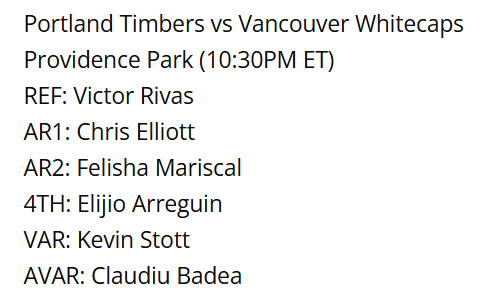
2026 stats: 1 game, 31 fouls/game, 1 penalty/game, 4 yellows/game, 1 red/game (Feb 23rd, LAGvsNYCFC)
Last Timbers game officiated: October 19th, 2025 vs SD 4-0 L
Rivas refereed last year’s season opener between Portland and Vancouver. Many thought that the red card issued to Kamal Miller was the most controversial call of the day, but I’d like y’all to remember Vancouver’s second goal. Pedro Vite handled the ball in the buildup and the goal was allowed to stand. I hope no tomfoolery of that sort occurs tomorrow.
Series History
Historical record: 18-10-14, +5 goal differential
Home record: 11-6-7, +5 goal differential
Current streak: 4 winless
Current home streak: 2 losses
Table Time
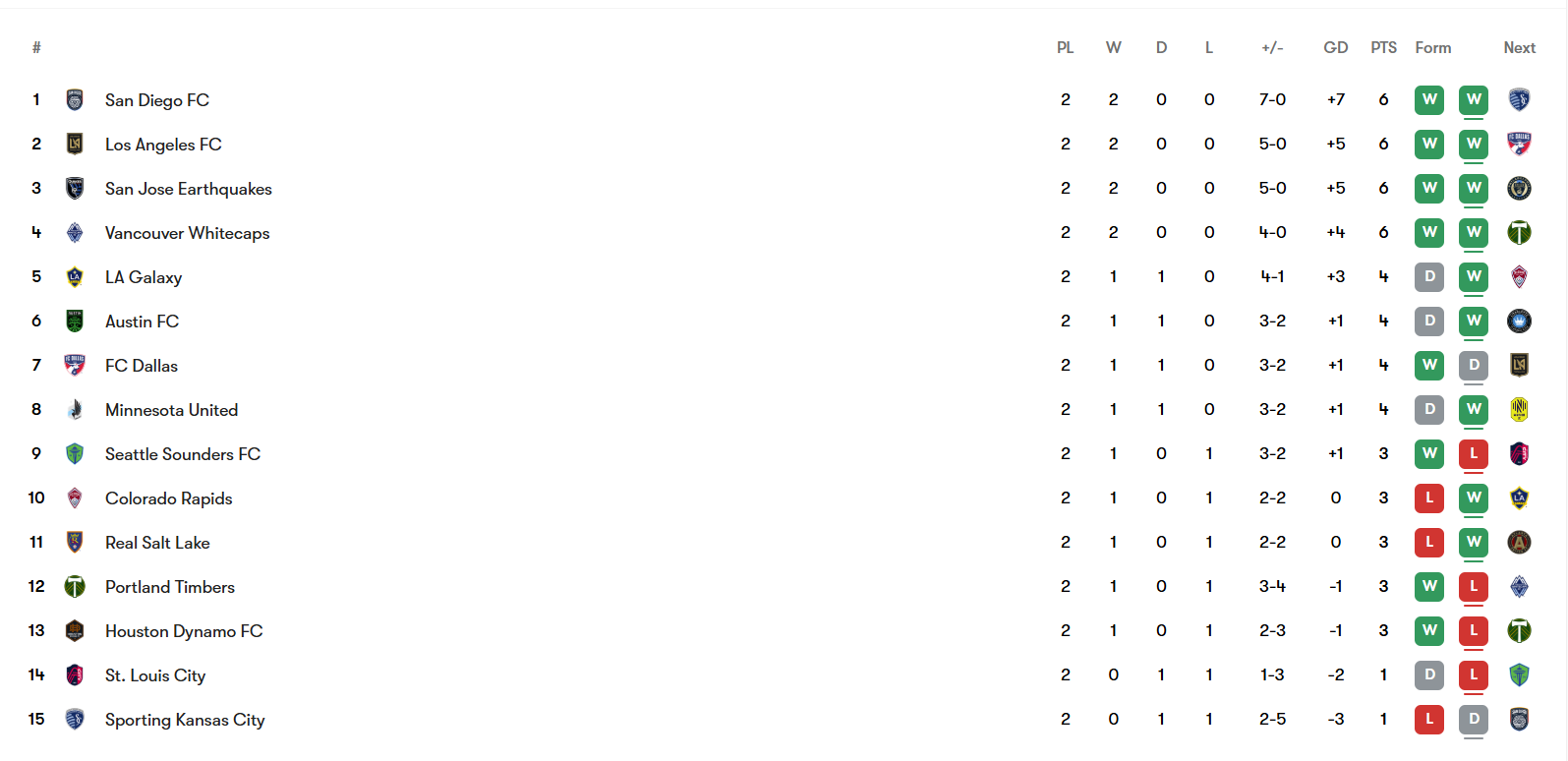
It’s way too early for the table to actually mean something, but it’s very interesting to look at after two weeks. Every single team in the West has at least one point, but teams 10-15 in the East have zeroes in that column. That’s because every single cross-conference matchup has been hosted by a Western Conference team so far. This weekend features four East vs. West games, and all are hosted by the East. It would’ve been five but the New England-Houston game has been postponed due to a threat of inclement weather. The Timbers will face the Dynamo next weekend. Another beautiful week of Major League Soccer.
This is the first Cascadia Cup matchup of the season! Hooray! Last year, the Whitecaps deservedly ended the season with the trophy. I would love to see the Timbers get it back this year, and that quest starts against the current holders. The reverse fixture of this matchup takes place on April 4th. Within a month, the season series will be over. I’m annoyed.
Final Whistle
The scheduling tendencies of Major League Soccer isn’t the only thing that’s grinding my gears. Vancouver Whitecaps fans deserved all of the highs (maybe not the lows? Can someone confirm that?) that last year brought. However, I am sick and tired of this team. It is unbelievably ironic to see a team that is in desperate need of a long-term home steal the home-field advantage of a rival, who play in a stadium that is turning 100 years old. Both of those humiliating defeats occupy a special place in Timbers lore. Is there a better way to kick off a season than a red card 10 minutes into the season opener? Can you end a season any better than the worst loss in club history? Sarcasm notwithstanding, the Timbers have to prove that they belong on their own field against this team. Which is utterly insane considering the paths that each club has taken since they entered the league together in 2011.
Portland found a way to be consistently competitive early on, but their backslide into mediocrity has coincided with Vancouver’s rapid rise to the elite of MLS. Under Vanni Sartini, the Whitecaps were always an afterthought despite the presence of Gauld, White, and Cubas driving the team. They were good most years, but never truly a contender. Their ascent from also-ran to the upper echelon was dizzying. But they’re out to prove that they aren’t a one-season wonder.
The Timbers are trying to prove that this season is different. They can win their home games and they can beat the teams at the top of the West. It’s weird for an early March match to carry so much weight, but last year’s season opener was an instant chance to make amends for Evander’s Legacy Game. Portland didn’t get out of the starting blocks, and they got punished in a manner that almost felt tame compared to the pain that the Vancouver Whitecaps imparted on their opponents week after week over the course of 2025. They were the biggest story of the league last year, and now the headlines are dominated by their future in Vancouver. All the Whitecaps can do, ultimately, is keep playing. All the Timbers can do is beat Vancouver, by any means necessary. The odds do not favor the hosts, it must be said. And that is an insult in itself. In order to properly restore the fortress, the Timbers have to take it back from its chief conqueror over the past two seasons. The only way they can do that is by winning. The climb continues.