Stuck in Base Camp
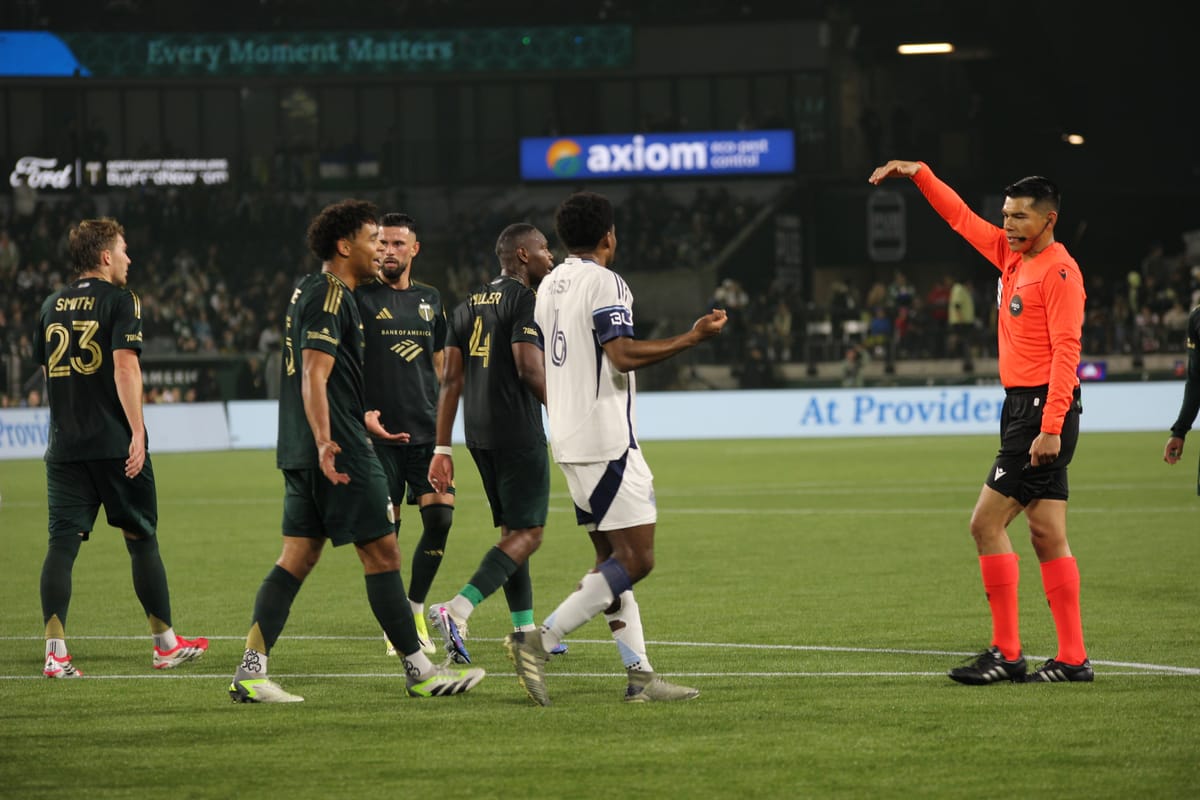
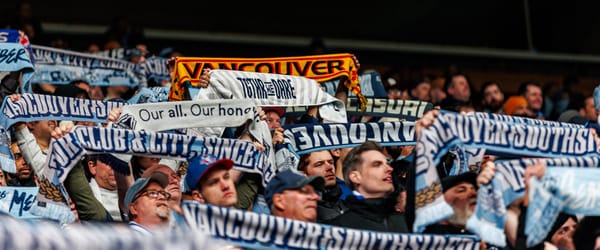
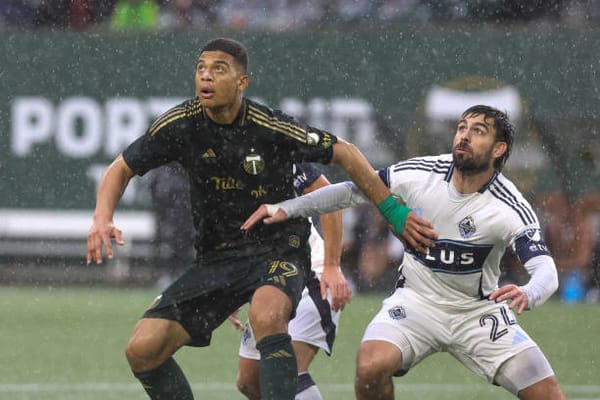
0-5. 1-4. Those two scorelines hung over the city of Portland for almost two years. One sent the Portland Timbers into a reckoning; a season-ending disaster that appeared out of seemingly nowhere but was subtly teased throughout the fall of 2024. They had an immediate chance to rectify that humiliation at the next possible opportunity. Instead, after 90 minutes (80 of them with 10 men) the scoreboard displayed 1-4. Another humiliation, obviously, but with a very important footnote. Tonight was their chance to punch back. And they fell flat on their faces once again, losing 4-1 to the Vancouver Whitecaps. A third consecutive humiliation of a defeat at their proud home stadium at the hands of one of their chief rivals.
Recap
Portland began this game in relative comfort. That was a change from their first two matches of 2026, where the Timbers conceded within the first 10 minutes of each game. Maybe tonight was the time for them to score first.
In the 6th minute, they had their chance. Kevin Kelsy (making his first start of the season) picked Ralph Priso's pocket and drove downfield. He found debutant Alexander Aravena at the top of the box, but Vancouver's suffocating defense forced the ball loose. A downhill attacking chance, ending without a shot.
More chances came to the Timbers in the early period of this game. A bit of Kelsy brilliance (more on that later) set up a corner kick in the 11th minute. Kristoffer Velde stepped up to deliver the ball, and his low cross went directly through the box without anyone on either team managing to get a touch.
Velde drew a yellow card in the 17th minute and put the resulting free kick on target, but it was saved by Yohei Takaoka. From this point onward, the game flipped on its head. The Timbers were about to return to snow-covered Canadian hell.
Velde's free kick was taken in the 18th minute. Put that in your memory hole (trying out some new phrases, let's see how this one is received) and we'll come back to it later. It was time for the Whitecaps to take the lead. Jeevan Badwal won the ball from Ian Smith on the right wing, and passed it to Edier Ocampo, who moved it to Sebastian Berhalter. The resulting cross floated through the air like an eagle (caw caw, etc.) and found the outstretched boot of fellow American Brian White. However, White was diving towards the ball and managed to make contact with his heel. This clever finish beat James Pantemis and the Whitecaps were up 1-0 in the 21st minute.
The next chance came in the 33rd minute. Takaoka broke Portland's press with an easy ball up the middle for Thomas Muller, who quickly moved it to Andres Cubas. With 2 simple passes from a disadvantaged starting position, the Whitecaps were going downhill again. Muller took a shot from outside the box and Pantemis was easily able to save it. One minute later, Velde fired an excellent cross towards the back post without a single Timber able to make contact.
More end-to-end play followed without any shots, and Kamal Miller made a huge goal-line block in the second minute of stoppage time. Portland entered the half down 1, but with a pretty solid performance (by their standards) against their tormentors. The next goal would decide the game.
Would it surprise you to learn that the Vancouver Whitecaps scored the second goal? Would that surprise be followed by more astonishment that the Timbers conceded a goal within the opening 10 minutes of the half? Maybe it isn’t surprising to you. It’s one of the only things that the 2026 Timbers do on a consistent basis. They’ve played 6 halves of soccer this season, and they’ve conceded within the first 10 minutes in 4 of them (Columbus 1H, Colorado 1H and 2H, and Vancouver 2H).
Maybe you want to be surprised by the manner of the concession. Again, you’ll be disappointed. Aravena gave away a free kick in the right channel in the 48th minute. Berhalter stepped up to the dead ball and set an excellent cross into the box that bent away from the net towards the far post.
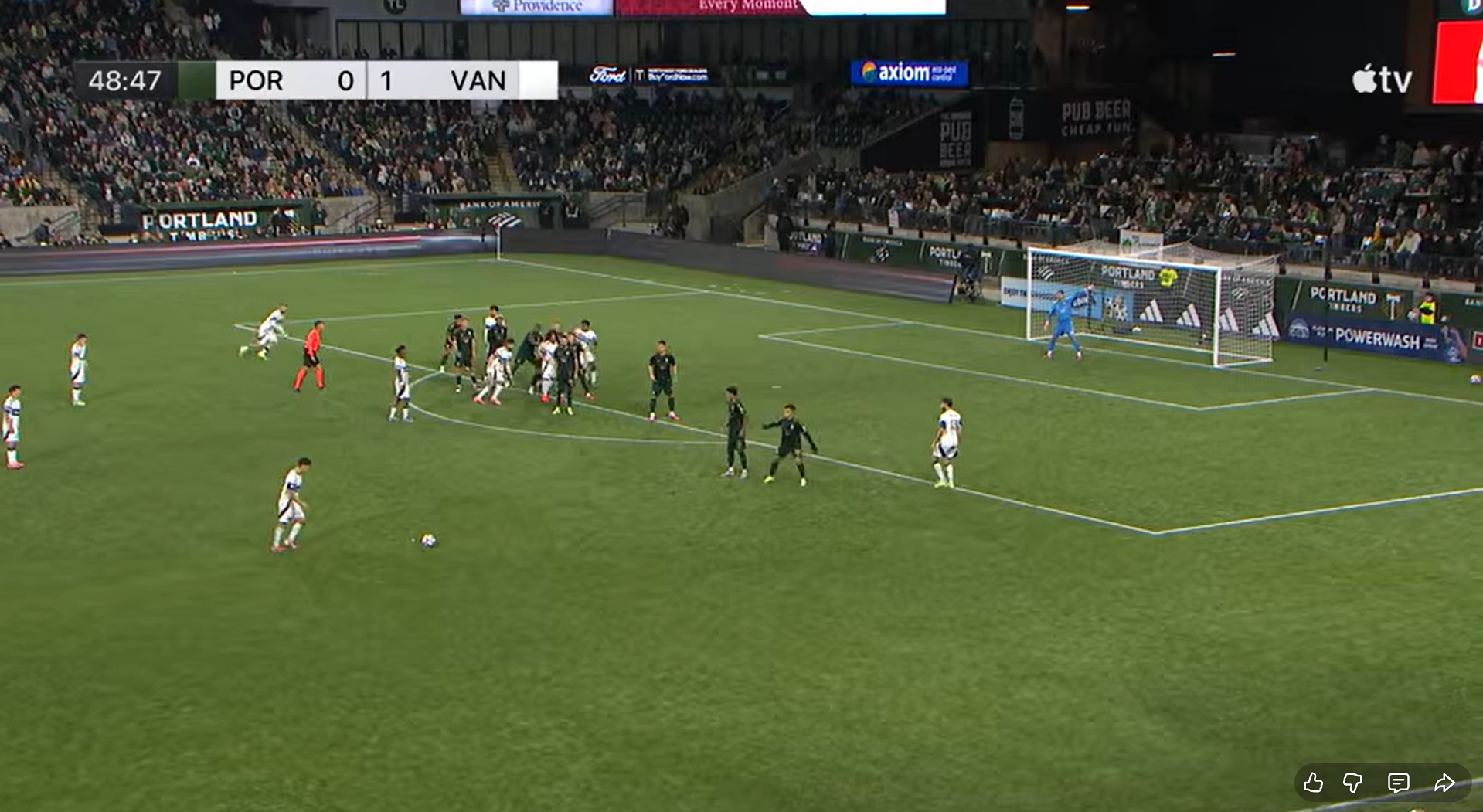
See if you can spot the goalscorer. Hint: there’s no one marking him. As far as I can tell, no Timber is aware that he’s making this run.
That player is Tristan Blackmon, the reigning MLS Defender of the Year. He’s right behind Victor Rivas (the referee) in this image, and he’s making a beeline for the far post. Because Berhalter’s precocious delivery is right on the money, all Blackmon has to do is get to the ball and he’ll be rewarded with a golden chance. That’s exactly what he does, except his initial volley cannons off the post. Because good teams (somehow) create good bounces, the deflection off the post falls right into Blackmon’s lap and he bundles it past Pantemis. 2-0 Vancouver, 49th minute. It turns out that getting the ball into dangerous positions can create the type of chaos necessary to score goals. This game is effectively over, but it isn’t finalized yet.
A third Vancouver goal would really ice this game. After all, it’s Daylight Savings Time tonight, and people might want to get ahead of losing an hour of sleep. In the 63rd minute, Finn Surman’s pass was blocked and recovered by AZ Jackson. Vancouver quickly worked it down Portland’s left side (oh I’m NOTICING this one) before Jackson calmly beat a sliding Eric Izoita and sent a cutback cross towards the top of the box. Emmanuel Sabbi was in position to receive said cross, but the real target was an onrushing Berhalter, who smashed it past Pantemis at his near post to give Vancouver their desired lead. For the third time in four games (going back to last season), the Timbers would spend a fair amount of the second half in garbage time.
In the 70th minute, Velde took a shot from distance that was blocked by a Vancouver defender. This is how the event appears in my notes. The player who blocked the shot isn’t important. HOWEVER, this attempt is very important to the story of this game. It was Portland’s first shot since the 18th minute. A span of 52 minutes during the heart of the game occurred without the Timbers taking a single shot. During that span, Vancouver scored thrice.
HOWEVER, true garbage time was almost over. Velde was free on the left and sent a cross into the box which, shockingly, got cleared. However, that clearance fell to Oliver Larraz. Joao Ortiz opportunistically won the ball and found Izoita behind him. The academy graduate, not even 24 hours removed from signing a T2 contract, took two touches and unloaded a whopper of a strike. It curled into the net inside the far post, and left Takaoka grasping at air. In the 72nd minute, Portland clawed one back through the youngest player on the field. 3-1. Could a comeback be possible? Could this momentous goal out of seemingly nothing be enough to power the Timbers to a miraculous come-from-behind result?
Nope. But they did come close. A 75th-minute Velde free-kick from a tight angle curled around the wall and was kicked away by Takaoka. Unfortunately, the Whitecaps decided to add a goal for good measure. Maybe they wanted to prove that they could beat the Timbers 4-1 with both teams at full strength for the entire game. An extra goal could go a long way towards the final Cascadia Cup standings as well. Either way, they had motivation to go for another goal. So they did, and they scored one.
This one was controversial. Larraz was bear-hugging Velde as he brought the ball forward, but no foul was called. Sure, fine, whatever. Izoita won the ball back and found Velde again, but a clean tackle from Berhalter sent Vancouver streaking towards the South Deck. Larraz found White, who took a heavy touch but had enough space to recover and find Kenji Cabrera on the left. Both center backs (Miller and Surman) appeared to position themselves for a challenge, but neither of them picked up White’s run through the middle of Portland’s box. It was an easy pass, and an easy finish for the American. Technically, the shot did hit a diving Pantemis, but it was too much for him to keep out. 4-1 Vancouver, 87th minute.
8 minutes of stoppage time followed with some middling Timbers attacks and more threatening Vancouver responses. Over the past 3 games at Providence Park between Portland and Vancouver, the Whitecaps have outscored the Timbers 13-2. Humiliating. Nothing else can describe it.
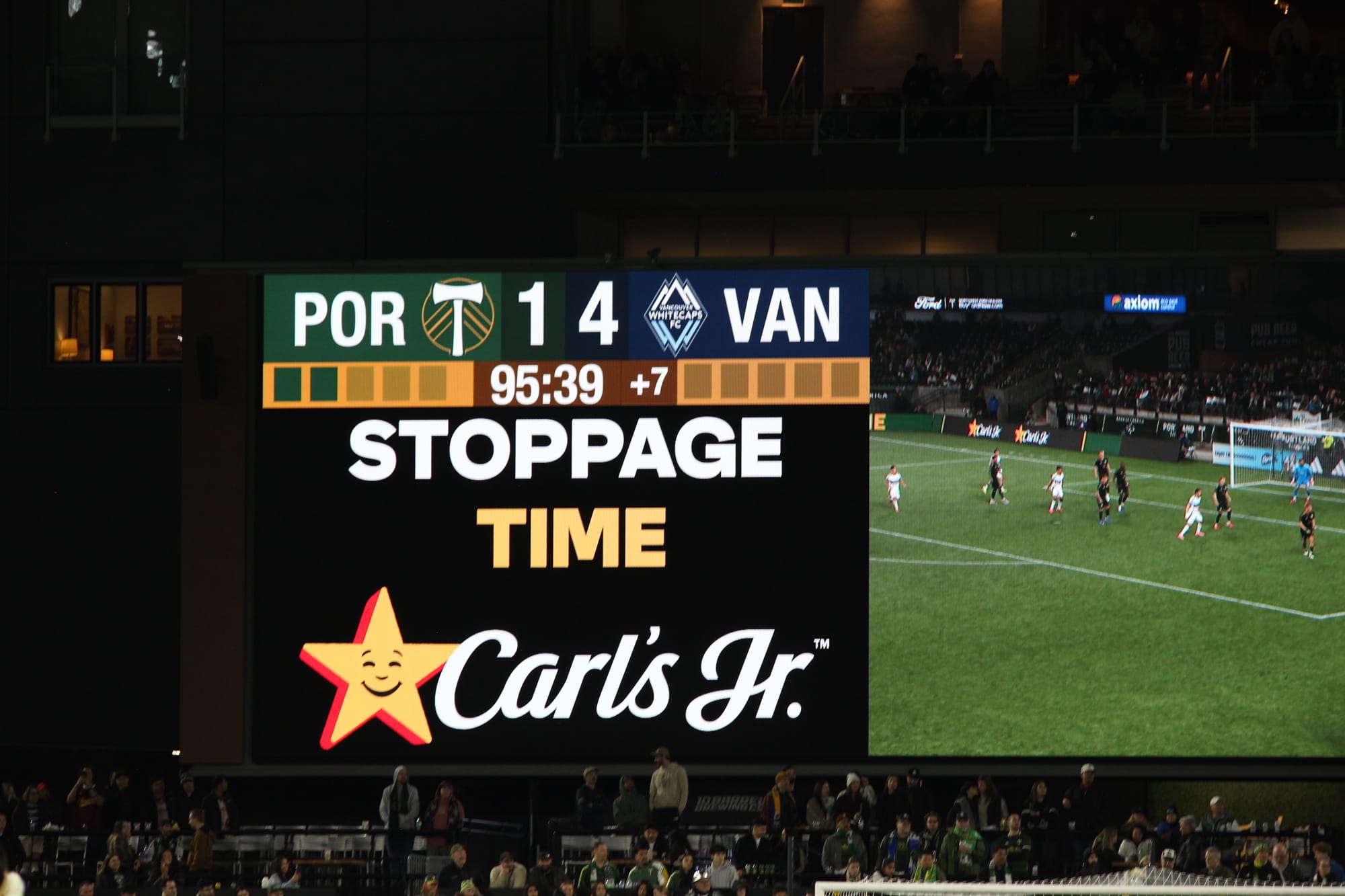
The Dry Spell
I would like to begin this section by talking about the referee. I’m sure a lot of you would want me to go into detail about Victor Rivas’ performance, but there’s only one decision that carried a ton of weight in tonight’s game. In the 57th minute, the Timbers attempted a quick, direct attack. Velde plays a diagonal ball for Guerra in behind, but it’s poorly executed and intercepted by Takaoka. What follows is a trademark Rivas whistle on a play that he doesn’t have a straight line of sight on.
This call is very important because it’s one of Portland’s only ventures into the final third during a whopping 52-minute stretch where they didn’t register a single shot. The ridiculous Rivas whistle killed what should’ve been a promising attack. It’s so important because it illustrated how rarely the Timbers were able to get into dangerous areas during that 52-minute dry spell.
From the 18th minute to the 70th minute, Vancouver strangled the Timbers. Now, a wise person could look at that and point out that the Whitecaps do this to everybody. Last weekend, Toronto didn’t register a shot until the 67th minute. But that was at BC Place, and the Timbers were at home yesterday. For the past two games (and part of the season-opening victory against Columbus) the Timbers have attacked like they don’t want to score goals.
Last year I described this team as “eternally beatable.” This assessment has held true in 2026. Portland’s attacking gameplan is way too easy for other teams to figure out. Unless it is fully executed to the best of their ability, the Timbers will struggle to progress the ball. What is this flaw in their plan?
Simply put, it’s how they want to create goals. Portland runs a cross-based attack which features final balls coming in from the wings. This is an important distinction to make, because other teams want to deliver the final ball from the channels, where more dangerous and challenging deliveries come from. Because the ball has to go out wide, the ball often stays out wide during buildup. Here’s where the problems occur.
Ignore Portland’s repeated struggles with building out from the back and breaking presses. That’s for later. I want to focus on where the ball goes when they get it into the middle third. That ball is usually funneled out wide to one of the wingers; in this case Antony and Velde. Now, there are ways to properly use the wings to progress the ball, like Vancouver did on their 3rd goal. What the Whitecaps did is keep a couple of players close by for support. This is a simple, non-revolutionary concept. However, the Timbers are not doing that. And it’s creating the same kind of turnover, which happened on repeat throughout this game.
Antony and Velde often got cornered by multiple Vancouver players while pressed up against the sideline. None of those support players offered, well, support, so the onus fell on the wingers to dribble out of pressure. That rarely worked due to Vancouver’s well-organized defense (and a couple of fairly obvious press triggers). The ball kept going out to the wings, and the middle of the pitch was rarely utilized. Aravena spent the majority of his debut finding pockets of space between lines, but seldom received the ball in those dangerous areas. It makes me wonder what this team will look like when David Da Costa returns.
Portland’s best attacking showing this season (the first half against Columbus) came when Felipe Mora was routinely receiving the ball in the middle of the pitch and springing attacks. In Colorado, the middle was ignored. When Portland’s ball progression is this easy to neutralize, it becomes clear where the attacking struggles begin. But what happens when they are able to progress the ball into the final third?
This is where things get really weird. Because the defined goal of this attack is to get the ball onto the wings (going off of my own observations because I do not have a clear explanation from Phil Neville on this, more on that later) Portland utilizes their central attacking group to crowd the box. Objectively, this is a good thing. More bodies in the box increases the likelihood of attackers getting on the end of the final delivery. However, it also makes Portland’s deliveries easier to defend.
Crowding the box incentivizes defenders to crowd the box as well. Most of Portland’s crosses in tonight’s game were easily dealt with by Vancouver players. With those players trying to occupy the box, the wide players were left isolated. But Portland’s lone goal was created from a second-ball win following one of those crosses getting cleared. Technically, it was born from Izoita “having a hit, son” but if Portland can’t win those second balls, they aren’t going to threaten around the box. Speaking of which, let’s get a quick tangent out of the way.
TANGENT: Box Tilt
I’m still tracking this metric until it finally tells me something. It should come as no surprise that the Timbers lost this battle for the third game in a row, and by their largest margin thus far. In the “more competitive” first half, Vancouver dominated Portland 23-4 in box touches. The second half was a little closer (19-5 Whitecaps) but the visitors’ two relatively quick goals after halftime allowed them to take their foot off the gas a bit.
This latest entry into the Box Tilt spreadsheet has uncovered the true purpose of the stat. Since the Timbers are intent on crosses being their final ball delivery method, it tracks how often those final balls are able to find their intended target. I don’t think it’s a catch-all reason for Box Tilt, but it certainly illustrates the difference between how Vancouver and Portland wanted to attack. The Whitecaps used all areas of the pitch to find ways to enter the box. From the wings to the channels to set pieces, they unleashed the full armada of their power onto Portland’s box. The Timbers kept trying the same method, over and over, with disappointing results. Most of the time, they weren’t even able to get into the final third.
The Dry Spell, Continued
When the Timbers are at their best, they move the ball quickly and decisively down the field. That is something that a lack of personnel should be able to overcome. Again, I point the finger in Vancouver’s direction, who have remained incredibly consistent since Jesper Sorensen took over with a more horrific injury report than the Timbers have had in the same time frame. They finished second in the West last season without Ryan Gauld available for the vast majority of the year. No matter who is playing for the Whitecaps, they always know where their teammates are supposed to be. If miscommunications occur, the team’s organized shape is quickly able to adjust and snuff out potential counterattacks. The Timbers needed dynamic play to beat Vancouver yesterday. Not even beat, but perform to a good standard. Instead, the ball kept going out to the wings, and Vancouver quickly won it back. Over and over again.
Two more graphics for the remainder of this section. The first is a stark illustration of the 52-minute stretch without a shot.
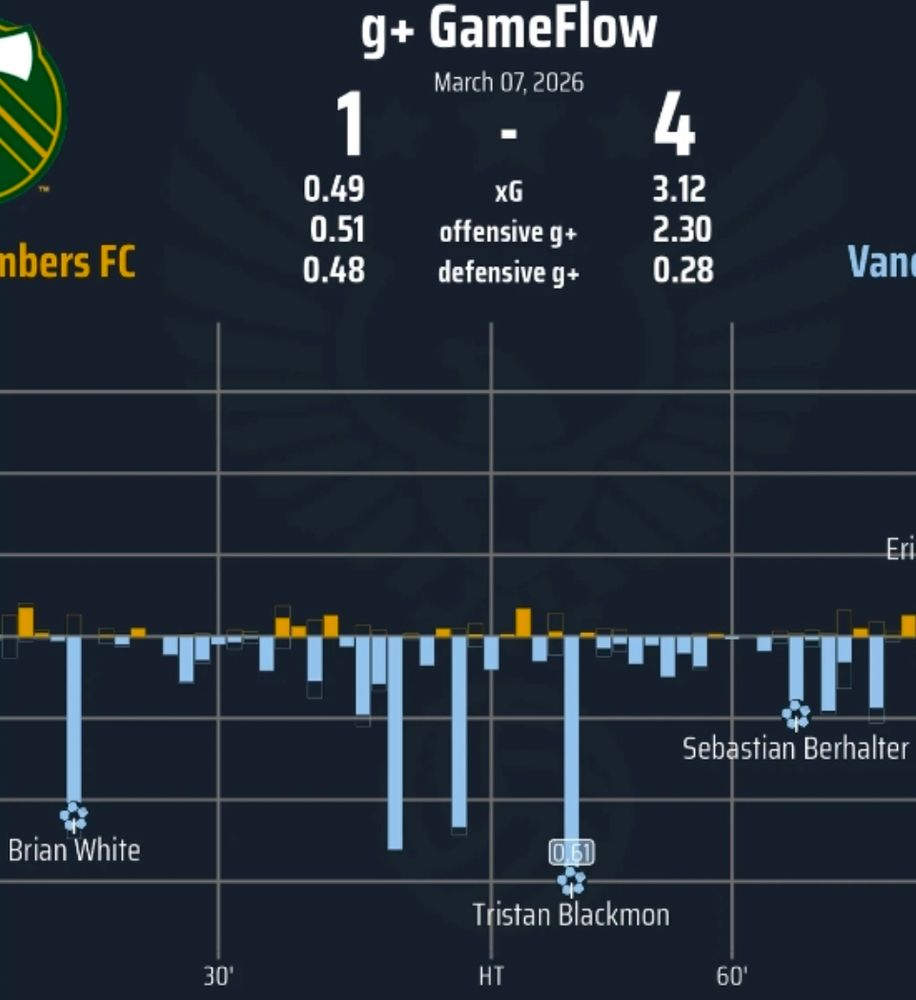
Not even a threat to Vancouver’s final third, much less their box.
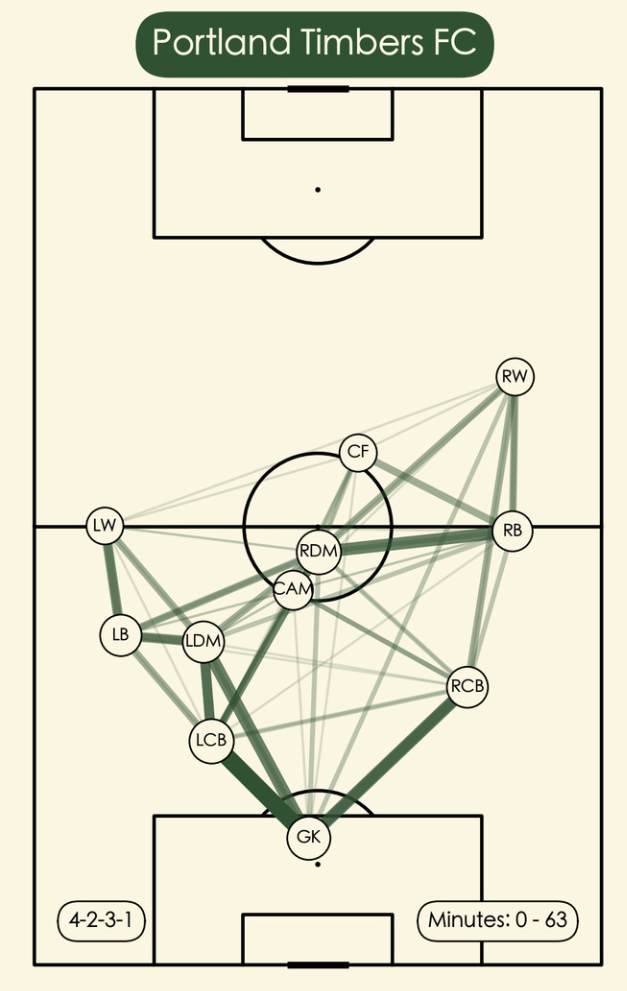
Look at how spread out this team is. The passing triangles are way too far apart to be effective. Both wingers are completely isolated. The data matches the eye test. Yuck.
Defense Or Offense?
With all of those notes about the team’s attack, it’s time to look at the defense. In a game where the Timbers conceded 4 goals, I’m finding it hard to completely criticize the backline. Vancouver’s first goal was born out of hustle and created by two of the best players on the pitch utilizing their strengths. I don’t think much could be done to prevent that. It’s a goal that good teams score. Their second goal is a classic set-piece failure, but it doesn’t become a goal unless Blackmon follows up the rebounded shot off the post and gets lucky with the bounce. The late run is the only part of the play that the Timbers technically could’ve controlled, but Berhalter’s exquisite delivery played a huge part in making that goal possible.
Those are the first two concessions, and the final two deserve some more scrutiny. Vancouver’s quick passing and off-ball movement created the space for Jackson (with some help from the Money Launderer’s own dribbling [THAT’S HOW YOU’RE SUPPOSED TO USE DRIBBLING IN ATTACKING PHASES, WRITE THAT DOWN]) to deliver a good cutback for Berhalter to smash home. In terms of errors, I think Pantemis should have his near post covered for that goal, and someone should’ve been tracking Berhalter’s run. But loads of teams in this league struggle to defend that type of goal, and Vancouver’s execution of those chances is among the best that the Timbers will face this year (and across the entire league).
The fourth goal’s failures begin in two parts. The first is Velde’s (correct) insistence that he was fouled. Always play to the whistle, especially with an entire match’s worth of evidence about Rivas’ parameters. Miller and Surman, choosing to pressure the ball carrier, ignored White’s run. Ortiz also chooses not to track White into the box and settles on ball-watching too. That is about all I can think of.
I feel pretty comfortable in what I’m about to say next. I don’t think the Timbers are a true pressing team, but they do want to play in an advanced block. This advanced block features press triggers instead of a full-blown press. I think it suits the team, but gaps can open when the press triggers fail.
Let's acknowledge the positives first: Portland does a good job at forcing Vancouver back into their own half. However, the key mistake isn’t a failure of a press trigger. It’s actually Velde going off-script. Neville routinely talks about leaving the goalkeeper free and not applying pressure on that specific player. His reasoning for this is sound: every press will leave one player free, and the goalkeeper can do the least amount of damage if the defensive structure is working as intended. Instead, Velde decides to pressure Takaoka. When this phase of the sequence begins, Ortiz is marking Berhalter. The press needs to be led by the first line. Velde does not communicate with Ortiz during this play. In a well-organized and communicative team, Velde would be telling Ortiz to drop back and mark Cubas. But the Norwegian opts to play the defensive version of hero ball, and Ortiz isn’t aware of the giant gap that has opened behind him. Neither is Velde.
Now Takaoka has an open lane to pass the ball to a dropping Muller. Izoita is stuck between Muller and Cubas. Muller decides to drop, which opens up a release pass from Takaoka and forces Izoita to make a choice. That choice is to pressure Muller (objectively correct) but Cubas becomes the free player. Velde should have told Ortiz to drop back and mark Cubas or Muller in this situation, which would free up Izoita to mark the other player. With Ortiz dropping, Velde would be free to mark Berhalter and leave Takaoka free. This is what the Timbers did against San Diego last year in Game 2 of the playoffs. They put themselves in good positions to win second balls based on their man-marking. However, Velde’s hero ball decision and lack of communication opens up the runway that Muller and Cubas exploit. The German legend actually makes a bad decision by choosing to shoot this ball. He had runners in support, but even Thomas Muller wants to play some hero ball once in a while. It isn’t a gigantic blown chance because of how easy Vancouver was able to progress the ball and win it back through counterpressing. That’s what happens when your defensive and offensive identities are perfectly married.
Portland’s advanced block is a good place to start, but it’s still way too easy for teams to exploit the gaps created by individual errors or balls into space. Colorado dumped long balls down Portland’s left side last weekend, and Vancouver’s well-oiled machine was able to use good off-ball movement to create gaps of their own. There are levels to this mountain climb.
Player Ratings
James Pantemis: 6.4
I can really only fault Pantemis for Vancouver’s 3rd goal, but I’m also worried about the responsibility he has in buildup. I’d rather see the team try to launch balls downfield, remain in their structure, and try to win the second ball. That’s not his fault; he’s just following the gameplan. I also don’t know who to properly blame for this.
(Probably Surman's fault, but a play this bad has a serious overarching problem. Especially with back-to-back instances of similar plays in back-to-back weeks.)
Dear God. Levels to the mountain climb, etc.
Brandon Bye: 6.7
I think Bye had a solid outing, but his attacking contributions were nerfed by Vancouver’s suffocating press. I understand the decision to sub him off in the 80th minute, but I don’t think the change was executed to the best of Neville’s ability. More on that later. He displayed some good defensive work, but the team was really missing his crosses. I don’t know how much fault he has for that.
Finn Surman: 6.8
The Kiwi took the captain’s armband, and had the unenviable task of man-marking Brian White. The American’s physicality was tough to deal with, and Surman lost him on Vancouver’s first goal. Eventually Kamal Miller was called into action to deal with White. Surman continued to clear everything within his hemisphere. I’d like to see him be trusted with more on-ball responsibility, particularly when it comes to playing long balls over the top.
Kamal Miller: 6.7
Miller gets a slight knock for ball-watching on Vancouver’s 4th goal and some risky passes from the back. However, it was his first start of the season, and he handled himself pretty well. I was impressed by the quality of some of his long balls (the ones that traveled through the air, not on the ground). Either way, he didn’t look out of place. I don’t know whether or not that’s a compliment, but I like watching him play and I like the mentality he brings to the team.
Ian Smith: 6.5
Badwal took Smith to the weight room on Vancouver’s first goal. One of Portland’s rare attacking thrusts during the Dry Spell occurred in the 37th minute. Velde had the ball, and Smith was making a rare foray into Vancouver’s half. However, he did not delay his run, so Velde’s through ball put him offside. I think he should’ve done a better job of checking his run. Despite an impressive box score when it comes to defensive contributions, I thought he looked rather anonymous.
ERIC IZOITA: Luke Skywalker
We’re going to ignore the last two movies in the original Star Wars trilogy for this one. In A New Hope, the younger Skywalker is hailed as the future of the Jedi after using the Force to guide a seemingly-impossible blaster shot directly into the core of the Death Star. Although Luke’s incredible shot results in a Rebel victory, Izoita isn’t so lucky. However, Skywalker is hailed as the new hope. Portland’s academy graduate also fits that bill.
In tonight’s game, Izoita became the first Timbers academy player to start a game since Tega Ikoba in April 2023 (oddly enough, also against Vancouver). But the whispers surrounding Portland’s academy gem finally came true tonight. Despite making his professional debut against one of the best teams in the league featuring a certified legend of the game, Izoita did not look out of place. He never scored for T2, so of course he had to tally the best goal of the game with a wicked strike from outside the box. Prior to this game, Vancouver hadn’t conceded a single goal across all 4 of their 2026 games across all competitions. Does that make their defense a Death Star? For the purposes of this analogy, yes. Izoita guided that ball past Takaoka with absurd technique for any player, much less an 18-year-old making his professional debut.
His post-game press conference featured one particular phrase that I took note of: “I don’t go into any games with pressure on me.” This is the best effect of using young players. They do not have the expectations that most players deal with, so they feel more free and loose during a serious game against a bitter rival. Confidence can be earned, but young players are already confident because they’re playing at a high level amongst experienced veterans. The goal elevated Izoita to Skywalker status. But he would’ve earned a high grade even without his Force-guided laser blast. As one of the only players in the main progression unit (defense and midfield) willing to take risks with his passing, he routinely tried to test Vancouver’s backline with long balls. He held his own physically. It was a very impressive debut from Portland’s newest starboy, and I wish the rest of the team played with his confidence. Although they lost, he’ll never forget that goal. I certainly won’t.
Joao Ortiz: 6.4
Ortiz managed to assist Izoita’s goal, but was caught out of position several times. I would count this performance as “more bad than good, but not awful.” However, his ball-watching led to Vancouver’s 4th goal, and the veteran presence he was supposed to provide hasn’t carried through to the Timbers from Independiente del Valle. It’s a pretty big indictment of his play that he didn’t register a single tackle despite being in a very active midfield. But he did a good job on the ball and was willing to take risks with his passing. I still believe Ortiz can be a good MLS player. But Jose Caicedo’s arrival will push the Ecuadorian further down the depth chart. I would also like to point out that he doesn’t track back during that 33rd-minute sequence that ends with Muller’s shot at Pantemis.
Antony: 5.7
When you’re continually asked to beat your man out wide and fail to do so, this is the result. It was possible for the Brazilian to cut the deficit to 2 in second half stoppage time, but his shot went off the post. I was a little befuddled that he wasn’t subbed off. However, someone had to play right back in the dying moments of an already-finished game. Tate Johnson deserves some recognition for having Antony in hell during the majority of this game.
Kristoffer Velde: 6.1
Velde gets an upgrade because he was able to find the game better after moving centrally. However, he mostly occupied the channels, which provided some support for Ariel Lassiter. He didn’t receive that support when he was stuck out on the left. There was less “hero ball” in tonight’s game than there was in Colorado. However, it’s very worrisome that he’s played in 11 regular-season games and hasn’t scored a goal yet. There’s a lot of weight on his shoulders, and he also received a silly yellow card for an unnecessary close-out challenge on Ocampo. Will his play improve with a healthy Da Costa?
Alexander Aravena: 6.6
Aravena spent the majority of his 60-minute debut occupying spaces that his teammates couldn’t find. He showed some decent chemistry with Kelsy and Ortiz. But he only got 21 touches and gave away the free kick that led to Vancouver’s second goal. Neville called him one of the best players on the pitch for Portland after the game. And yet he only saw the field for 62 minutes.
Kevin Kelsy: 7.4
I DEMAND JUSTICE FOR KEVIN KELSY.
The Venezuelan spent the first two games on the bench behind Guerra. He finally got his chance in this game and took it by the scruff of the neck. Feast your eyes on this:
In editing, I noticed Velde ignoring a rare overlap. Sigh. Too captivated by the pass.
I see shades of a certain large-bodied striker who devastated Premier League defenses with insane creativity and a willingness to play the game at his own pace. This player was often called “lazy” and it’s nearly impossible to find a player who plays the game to the beat of his own drum. The flicks and tricks are what catches my eye, but the mental polish to this player’s game isn’t quite there with Kelsy. I’m talking, of course, about Dimitar Berbatov.
This is one of the drawbacks of youth. Experience allows a player to polish their game and increase their soccer IQ. Kelsy hasn’t gotten there quite yet, but tonight’s display opened up the game for the Timbers. He acted as a true outlet, and pushed the game forward with his dribbling. In some ways, he acted as a secondary number 10 instead of a true center forward. But that’s the role that he had to play in this game with such a lack of a central playmaking presence. He found spots to get forward into the box, but the service never came his way.
It was obscenely frustrating to see Kelsy get substituted in the 54th minute. He did not deserve to be hooked while providing such a crucial role in a Timbers team that was getting bollocked on the wings. He was acting as the release and the target but those deliveries rarely found him in the box. A start in Houston is paramount. All the “frustration” and “body language” talking points can take a well-deserved backseat today. If I was subbed out in the 54th minute after a very good shift that featured a ton of correct decisions, I’d be fuming too. He has the quality and technique, while the mental side of the game will keep growing with more minutes. BUT HE NEEDS THOSE MINUTES IN ORDER TO KEEP GETTING BETTER AS A PLAYER! START KELSY! FOR GOD’S SAKE!
Gage Guerra: 6.4
The flag went up on this play in the 85th minute, so it doesn’t impact the box score. But for the 3rd game in a row, another golden chance flashed across a wide-open box and Guerra couldn’t get a foot to it. After 3 games in a row with similar misses, the grace period is over. He shouldn’t be starting over Kelsy.
Ariel Lassiter: 6.3
Lassiter’s first touch let him down in possession several times, but he gave the Timbers some decent opportunities from set pieces. He’s gotta get on the field at the same time as Kelsy. The service provider and the target need some minutes together.
Felipe Mora: 6.5
The most notable moment in my notes involving Mora is some decent hold-up play in the 4th minute of second-half stoppage time. He didn’t do much outside of that. Not really his fault either. He doesn’t get involved when the Timbers ignore the middle.
Coach Rating: Not At The Level
There are two quotes that I would like to dive into. But before I can get to those, let’s talk about the substitutions. It was wildly clear that Antony was off the pace (and potentially dealing with a knock following a hard challenge in the 25th minute) yet Neville persisted with the Brazilian, eventually moving him to right back in the dying moments of the game. With two subs remaining on the bench, I would’ve liked to see Sawyer Jura for a brief moment instead of sticking with the known quantity who was subpar for the entirety of the game.
The second substitution made sense in real time, but was confusing when Neville’s post-game quotes came into play. After describing Aravena as one of the “best players” on the pitch, hooking him after an hour was bewildering. You might remember last year when Neville would say the same thing about Ortiz after the game in matches where the Ecuadorian received an early hook.
I’ve already made my feelings pretty clear about the Kelsy sub.
All three of Portland’s changes kept the same shape with the same instructions despite the FIFTY-TWO minute Dry Spell without a shot. With this in mind, let’s get to those quotes.
“I think we’re probably one of the best teams data-wise to transition to goal. The quickest from winning the ball to transition to goal. Data-wise, I think we’re one of the best.”
I’m going to do my best to defend this because I think I see where he’s coming from. Portland has scored a grand total of ONE counterattacking goal in 2026 (Antony vs. Columbus). That goal was scored very quickly, but it’s only one goal amidst a fairly large sample size of counterattacking goals in MLS this year. I think that Neville looked at this one goal and went off of this data.
However, that goal represented the 99th percentile of Portland’s counterattacking goals. Most high turnovers do not result in quick breaks towards the opposition box. Counterpressing teams like Colorado and Vancouver forced the Timbers to recycle the ball several times, while sometimes the urge to overcomplicate and a lack of supporting runners can kill promising counters before they can properly begin. I don’t think he’s necessarily wrong, but I think it’s a misinterpretation of the data. Nothing to be seriously worried about, even though this quote was widely panned across the Internet.
“What I said to them at the end was I wanted them to watch the game back and see Thomas Muller running back in the 93rd minute and I’m afraid that there’s some of ours who didn’t do that. To win a game of football against the best teams you need every single player to be showing that kind of hunger. And when you come to Providence Park you want to be the star, but the only star should be the team and not an individual.”
Initially, I wanted to focus on the “tracking back” aspect of the quote. It could be a good time to talk about the “cycle of recoveries” that this team keeps finding themselves in, but I’ll save it for a later date. Instead, the final sentence is what stands out the most. In this game, Neville asked Antony and Velde to be the individual stars and heroically move the ball up the pitch against waves of pressure. The only star “team” was wearing white shirts.
This is the opposite of how the Timbers have operated in the Neville era. The DPs and highest-paid players are the actual force instead of force magnifiers. Muller and Cubas didn’t stand out from an individual standpoint tonight. Instead, all of their actions were to the benefit of the team. When your primary progressors are isolated with little support, it becomes a herculean task to move the ball into attacking positions, much less take shots. When Da Costa comes back, is he supposed to take the mantle of central progression? Will Portland’s predictable buildup sequences shift? Can they find a proper balance in their off-ball structure with proper communication on the pitch? There are so many questions that still need answering. Even without 6 starters on the pitch. What will those starters bring to elevate the already beatable structure and system that appears week after week?
Final Whistle
That last paragraph is the first time that I’ve mentioned Portland’s 6 “missing starters.” Alex Bonetig, Jimer Fory, Juan Mosquera, Diego Chara, David Da Costa, and Cole Bassett did not suit up for this game through a combination of injury and suspension. A team down 6 starters might not have much of a chance in this game. However, that assumption (and possible excuse, which Neville denied being an excuse) goes out the window when tonight’s opponent is taken into account.
Jesper Sorensen dragged Vancouver to the 2 biggest cup finals in American soccer despite a complete laundry list of injuries. Ryan Gauld missed the vast majority of the season and wasn’t fully back to match shape by the time he returned for the playoff push. That’s the same Ryan Gauld who scored a hat trick in the 5-0 disaster in 2024. Sam Adekugbe tore his Achilles on international duty last June. Muller missed games down the stretch due to various knocks. Berhalter and Cubas were absent at times due to international duty. Every single position was affected by absences, most notably the center back room. Ralph Priso was elevated to the center back spot following injuries to Ranko Veselinovic and Blackmon during the latter half of the season. However, he was able to keep his spot as Blackmon returned to full health. Every single player plugged into the team by Sorensen (aside from Giuseppe Bovalina and Joedrick Pupe, who have since gone out on loan) were seamless replacements for the players farther up the depth chart. In that final against Miami, only two “first choice” defenders started. One of whom was Blackmon, who was a little rusty due to injury and a playoff red card suspension. This is not an opponent where “6 missing starters” can ever be used as an excuse. Especially given the process that led to Sorensen’s hire in the first place.
No one would have batted an eye at the Whitecaps if Vanni Sartini remained in the dugout entering 2025. My initial reaction was utter surprise and sympathy for the departed quirky Italian. After all, his team had just demolished the Timbers at Providence Park and ran into a stronger LAFC team in the First Round for the second year in a row. However, CEO Axel Schuster decided to be bold. He fired the proven quantity of Sartini, and opted to swing for the fences to find a coach that could take an already playoff-quality Vancouver team to the next level. That decision required serious ambition and trust in his squad. While operating with a shoestring budget, he plucked Sorensen from Brondby. Few pundits (myself included) believed that the Whitecaps had improved. After all, their winter business wasn’t the most inspiring and a lot of the depth was unproven. Schuster made everyone eat their words to a degree that hasn’t been seen in MLS before.
Now the Whitecaps are an utter juggernaut. They did not settle for the assumed mediocrity/steady platform that Sartini had provided for 3+ years. They wanted to reach for the stars and vault themselves into MLS’ elite. Schuster’s gamble paid off in spades. Ambition won the day.
The Timbers are close to a reckoning of their own. With Neville’s contract expiring at the end of the year, he’s just added another key data point in his resume. Prior to the 5-0, Portland beat Vancouver 2-0 at Providence Park in June 2024. An Evander-less squad took a 1-1 draw from BC Place in September of that year. One month later, Vancouver whipped the Timbers on their own field. Since that game, the Timbers have been outscored 8-2 by Sorensen’s Whitecaps at Providence Park. Tonight’s match was competitive from a mentality standpoint early on. But Vancouver turned the garbage-time switch on at the hour mark. There were levels needed to summit the Vancouver mountain. The Timbers remained stuck in base camp.
But the Whitecaps’ story has shown that ambition can win the day. They are everything that the Timbers aren’t: light spenders, entertaining, and cohesively unique with a winning identity. If it’s possible to build a team like this with Vancouver’s constraints, Portland should be able to do the same with even more advantages. These players aren’t bad. But they aren’t getting put into positions to succeed. Portland improved on last year’s 4-1 defeat by losing 4-1 with 11 men on the field. Base camp is probably comfortable though. Maybe some mountains are too scary to climb.
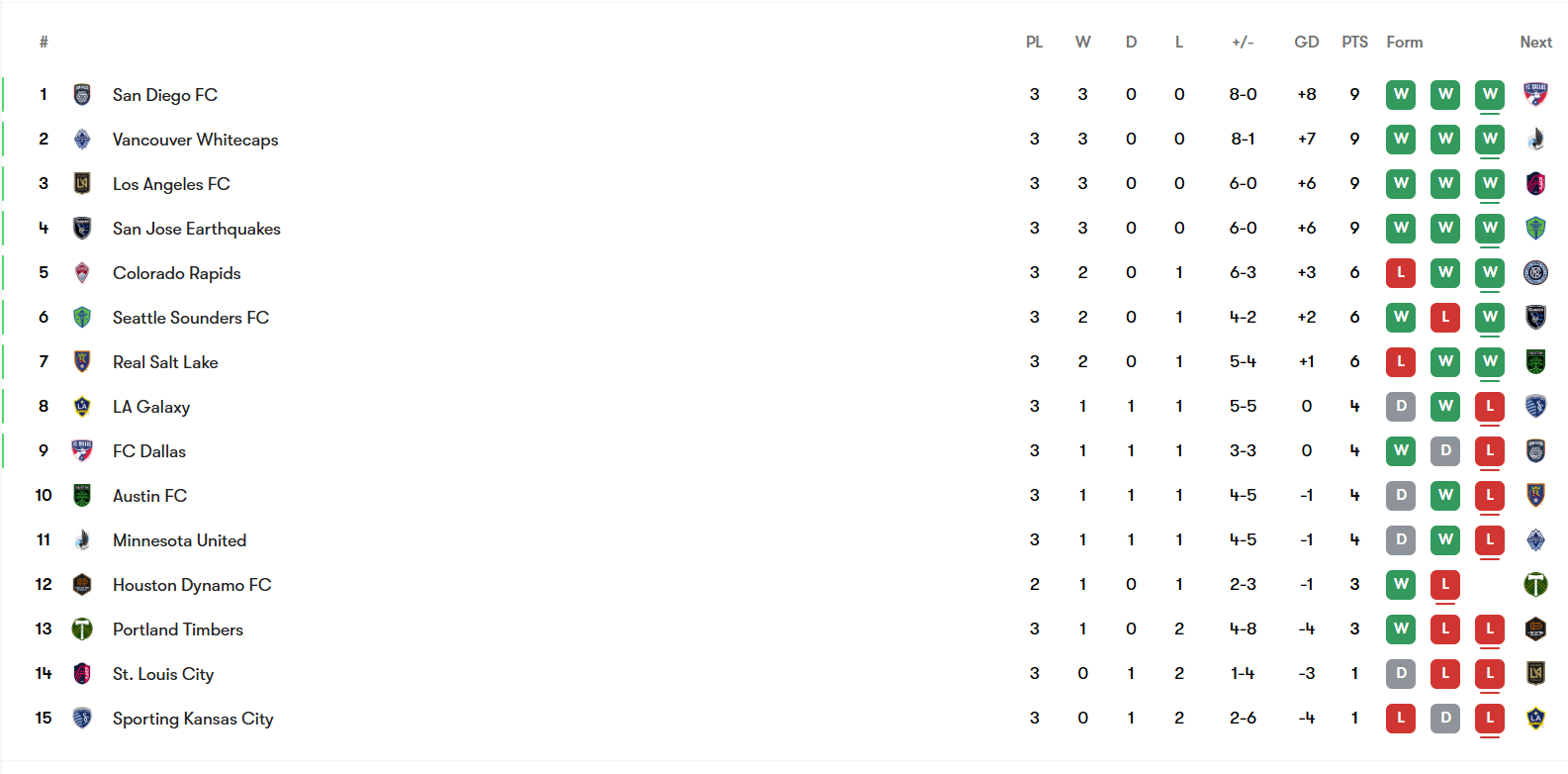
The Timbers will likely end Matchday 3 with the most goals conceded in a suddenly hyper-competitive Western Conference. Three teams above them haven’t allowed a single goal in 2026. If Eric Izoita doesn’t complete the Skywalker transformation, it would be 4 teams. And the schedule is only going to get harder.
Next weekend’s trip to Houston is mightily important. Aside from being a house of horrors (much like what Providence Park has turned into against Vancouver), the Timbers have to prove that they can be competitive away from home. 7 of their next 11 games (the entire pre-World Cup schedule) are on the road. Players should be returning, so the top-end quality of the squad should see the field in the coming weeks. But can they elevate Portland’s beatable team into something greater than the sum of its parts? That’s the big question, and one that Neville is banking on. The climb remains in base camp.