The Hail Mary
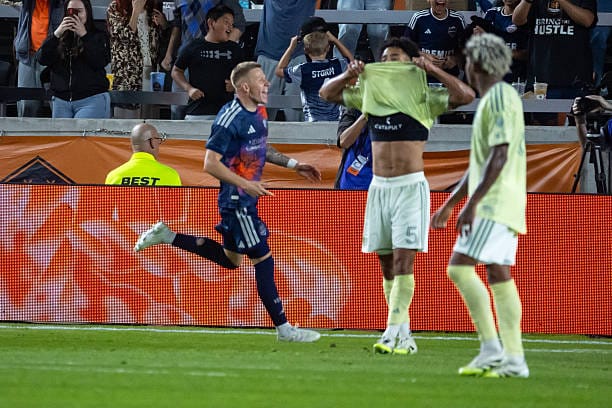
The result is familiar. A loss in Houston isn’t a foreign occurrence. But this game was a complete roller-coaster. And it could haunt the Portland Timbers when the final stretch of the season arrives. 3-2 says a lot, and the full story paints a wild picture.
Recap
In typical “Portland road game” fashion, the Timbers gave away several corner kicks within the first 10 minutes but defended them well. After that brief stretch, Portland settled down and developed a semblance of control. Both teams traded some punches (without many shots) but Houston found the first big chance in the 34th minute. Guilherme had a breakaway but squared the ball to Ezequiel Ponce, who fired a shot with his weak foot wide of the left post. That would end up being the Dynamo’s best chance of the first half. But Portland had some answers.
Those answers came from set pieces. Ariel Lassiter’s 41st-minute delivery was punched away by Houston goalkeeper Jonathan Bond, but the rebound fell to Kristoffer Velde at the back post. The Norwegian chipped a tantalizing cross into the six-yard-box where Finn Surman’s head directed the ball towards Bond’s near post. The English goalkeeper made a spectacular save, but the Timbers kept the pressure on. That pressure resulted in another corner kick taken in the 43rd minute. Surman went down in the box before the ball could get to him, it got cleared to Velde, and the Norwegian skied the shot. However, the VAR crew was looking at the reason why Surman (normally an immovable figure) went down so early in the play. Diadie Samassekou had the Kiwi in a full bear hug and brought him to the ground before the ball could get into the box. After a lengthy VAR check, the Timbers were rightfully awarded a penalty, much to the displeasure of Houston’s coaching staff and the home fans.
Velde stepped up to take the penalty in the 4th minute of first-half stoppage time. His attempt was aimed at Bond’s left side, and the Englishman easily parried it to his left. Gage Guerra timed his run perfectly to crash the box and slotted the rebound off the post and into the back of the net. Portland’s 1-0 lead was deserved based on the balance of play, and they entered halftime with the same scoreline.
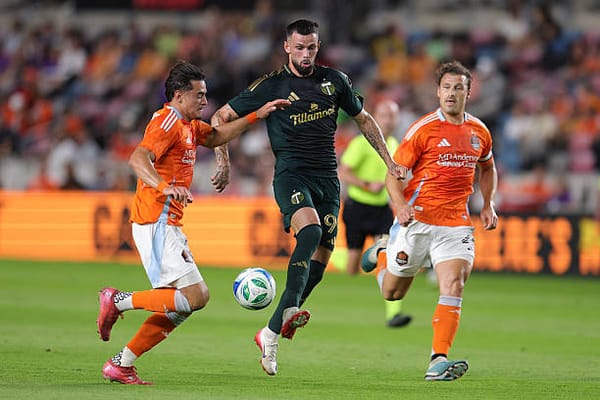
Then the second half began, and the Dynamo began their push for an equalizer. The first warning shot was struck by Guilherme in the 52nd minute, whose header from an Erik Sviatchenko cross was easily collected by James Pantemis. Ten minutes later, that equalizer was found. Duane Holmes’ cross was cleared by Surman, but Jack McGlynn quickly moved the ball to Mateusz Bogusz on the right wing. The Polish DP sent an outswinging cross into the box, which allowed Guilherme to rise up behind Brandon Bye to head the ball past Pantemis at his far post. Poor marking and a pretty good delivery allowed the Dynamo to equalize. The Timbers needed to regain the initiative that they had in the first half.
Four minutes later, McGlynn hit the bar on a shot from distance after a short corner kick. The ball got recycled, and another cross into the box allowed Lucas Halter to win a contested header (Timbers had a 4v1 numerical advantage in the box) but Pantemis was able to scoop up the rebound. Halter went down on the play, and he would need to be subbed off.
Portland responded with the next chance of the game. In the 69th minute, Jimer Fory found Lassiter at the back post with a whipped cross. The Costa Rican screwed up the finish from a tight angle and sent the ball into the side netting. Both teams spent the next several minutes going back and forth, but no serious chances arrived.
Then the 77th minute rolled around. Bogusz won a loose ball at the top of the box and the Dynamo recycled possession. Guilherme was double-teamed on the left wing, so he found Felipe Andrade in the left channel with plenty of space.
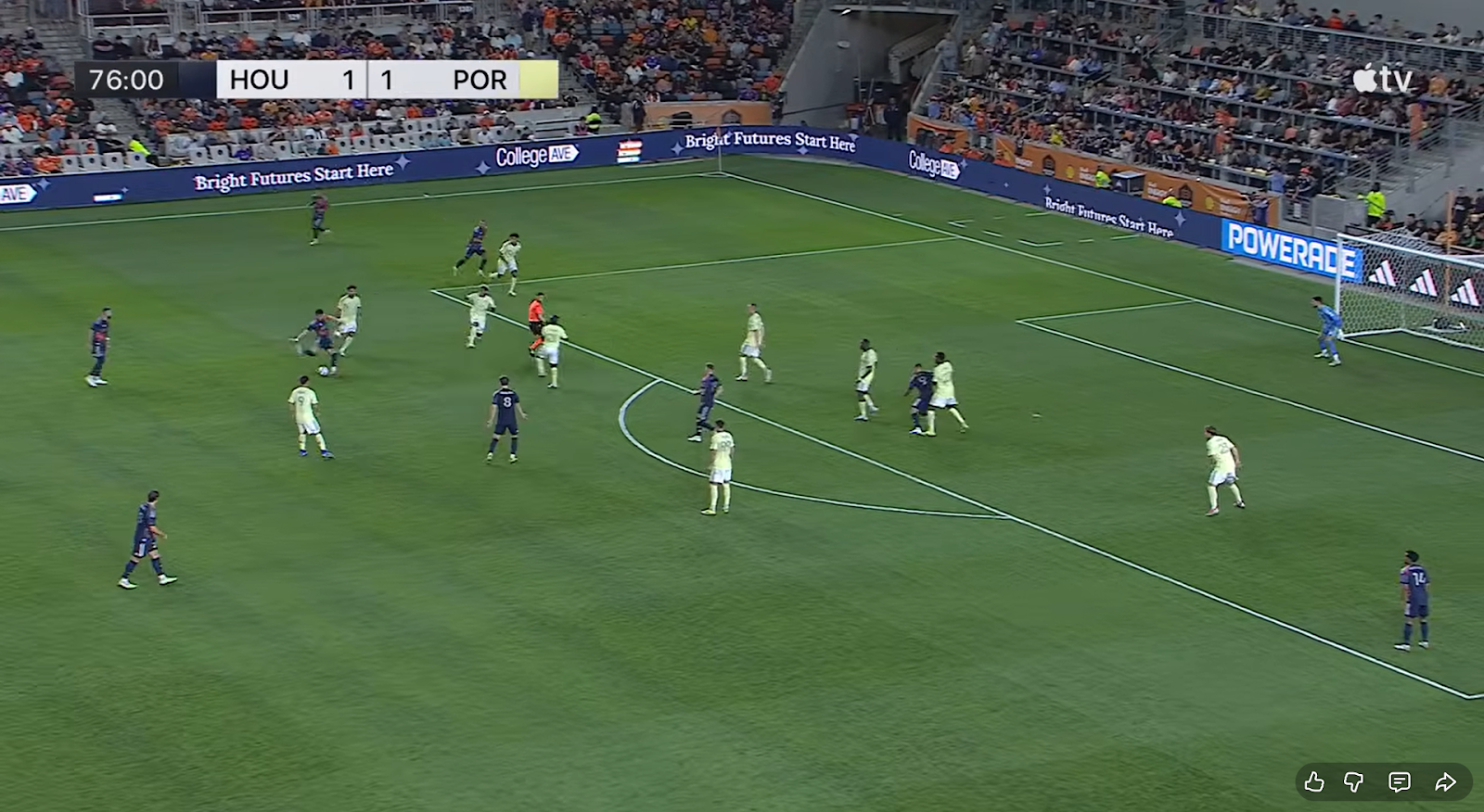
Portland conceded a similar goal when Diego Rossi equalized for Columbus on opening day. Hamzat Ojediran launched a similar shot from distance with no pressure in Colorado, which took a deflection and beat Pantemis. Andrade’s attempt wasn’t properly pressured, and Pantemis was unable to stop the ball from beating him at his far post. 2-1 Houston. A very ugly way to surrender the lead.
That lead only lasted for two minutes. Portland won a throw-in and Fory launched the ball into the box. Ian Smith flicked the ball into the middle and Guerra swung a leg at the ball without making contact. It fell to Surman, who moved the ball to Velde. With a big swing of his right foot, the Norwegian DP finally found the back of the net in glorious fashion. The resulting laser of a shot beat Bond at the far post and suddenly the game was tied again. This gave both teams the belief that they could find a game-winner.
Lawrence Ennali tried to win the game in the 84th minute, but his low drive was secured by Pantemis. McGlynn called his own number on a 86th-minute free kick but his curling effort was parried by the Canadian goalkeeper. First-half stoppage time gave the Timbers a serious boost, and they were about to get another one at the end of the second half.
In the third minute of second-half stoppage time, Guilherme played a through ball to substitute Nick Markanich. It turned into a race between Markanich and Pantemis to try and get to the ball first. The goalkeeper won the race, and Markanich stepped on his head with the studs of his cleats. While blood poured from Pantemis’ head, referee Rubiel Vazquez showed a straight red card to the Dynamo substitute. Pantemis remained on the ground to get bandaged up, and Portland suddenly had a man advantage with plenty of stoppage time remaining to get a winning goal.
And, folks, they came SO CLOSE to doing so. In the 13th minute of stoppage time, Velde’s free kick found Kevin Kelsy’s hip. The Venezuelan had crashed the six-yard-box and redirected the ball on target but Bond punched it away. It fell to Surman, who put a quick effort on target. Dynamo substitute Agustin Resch pivoted to the goal line and kept the ball out. Two humongous chances that simply didn’t go in. That was their moment to win.
But they still had the opportunity to take a draw from this game. That dream ended in the 15th minute of stoppage time. McGlynn sent a long ball from just outside his own box to Bogusz, who took advantage of a Bye miscue to receive the ball in space just inside Portland’s box. The Polish international cut inside and had just enough space to bend the ball inside the far post to win the game for the Houston Dynamo. The final whistle blew shortly thereafter.
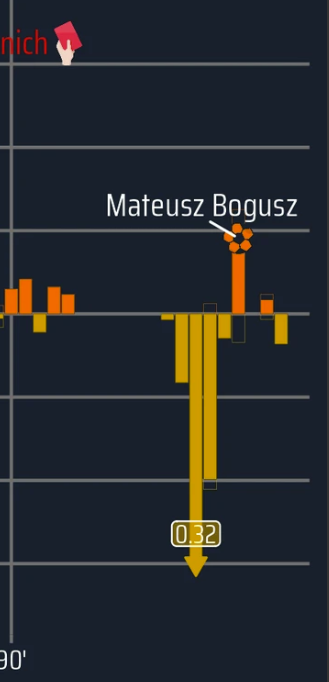
This picture tells the entire story. Out of absolutely nothing, McGlynn’s Hail Mary was answered. Their Texan neighbors to the north coined the play 51 years ago in the dying moments of a playoff game in the other sport called “football.” Houston, a city that has seen very little success in American football, decided to pivot to the international version. And the Timbers’ relatively encouraging performance was wasted by McGlynn’s prayer and Bogusz’s strike. They were good enough for a draw. If a couple bounces go their way, they were good enough for a win. However, they couldn’t stop themselves from falling short at the last hurdle. A chance that the Dynamo weren’t even trying to create was the death blow. And Portland conceded this brutal game-winner with a man advantage and one of the last possible kicks of the game.
Control
“If a couple bounces go their way, they were good enough for a win.”
That's one way to describe Portland's lack of control in the second half. But I'd like to take a look at their success in the opening frame first. However, this comes with a slight caveat: were the Timbers good on their own merits or did Houston allow them to be good?
The answer to this question is yes. Portland was good on their own and the Dynamo gave them the platform to be successful. This is the result of a tame Houston press and Portland's new structure.
The starting lineup graphic was very encouraging for a number of reasons.
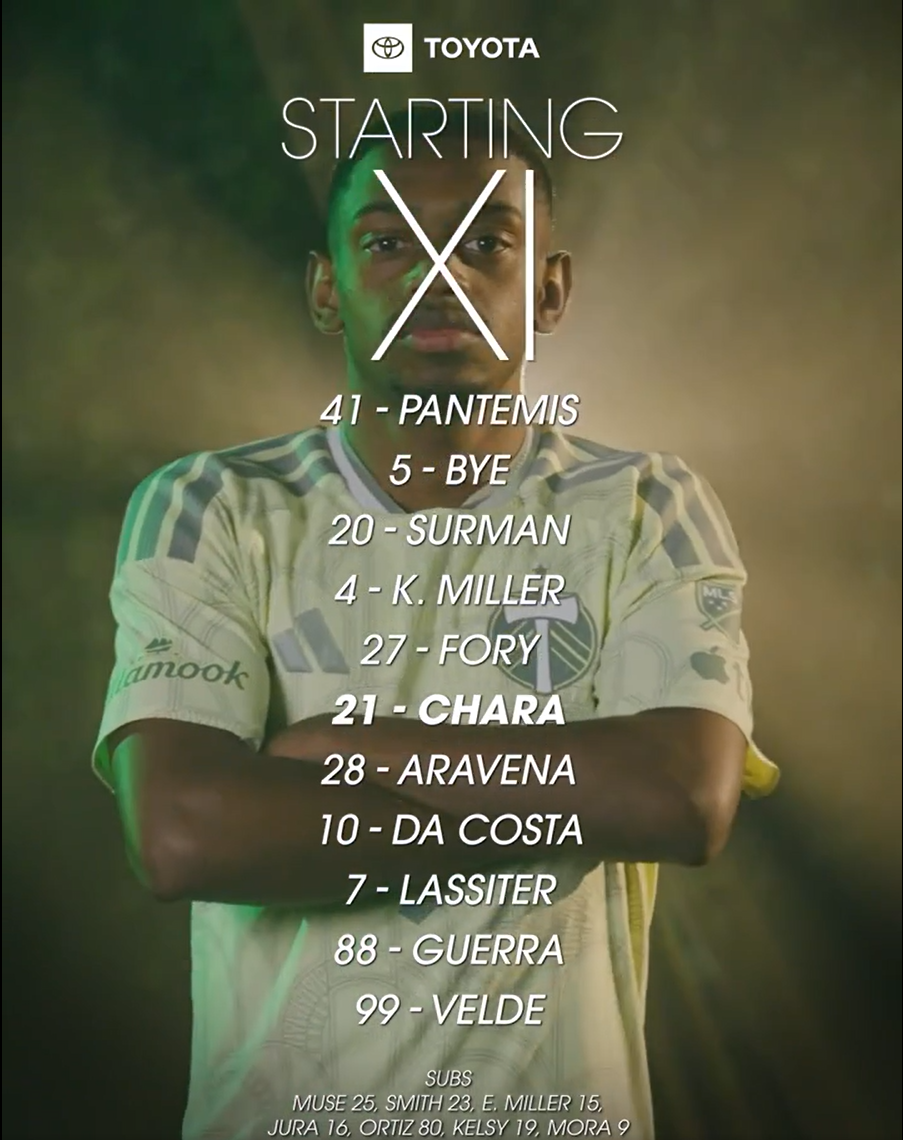
*Quick aside: this is a screenshot of the graphic posted by the Timbers’ social media team. The entire lineup graphic is a video. Some people have an issue with it. I don’t think it’s that big of a deal. Surely there are more pertinent things to complain about.*
Across the league, various teams put out their starting lineups in differing order. This is one of the only things that I will give credit to the Seattle Sounders for. Their graphic is easy to read, in formation, and leaves the reader with very little guesswork. Others (like the god-forsaken New York Red Bulls) choose to announce their lineups in alphabetical order (which is utterly psychotic). The most common is a numerical order, like how the stadium announcer at Providence Park informs the attendees of each team’s starters. Houston’s graphic confused me, but since I did research it was pretty easy to pigeon-hole players into the correct positions. Portland’s is very good. It properly conveys the formation in order from back to front. And today’s graphic illustrated a 4-3-3.
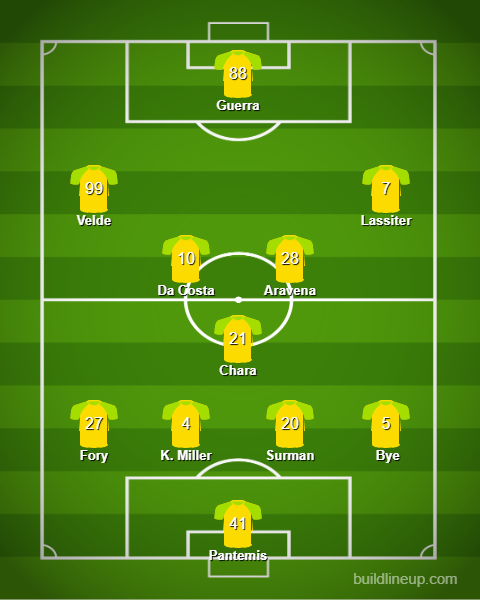
My own personal biases definitely play a part in why I love this formation so much. The most important aspect of a 4-3-3 is the inherent balance it offers all across the field. When the Timbers play a 4-2-3-1, the right back pushes high, the left back comes inside, the right winger inverts, and the structure sort of shifts into a 3-2-4-1. There’s still balance in Portland’s 4-2-3-1 shape, but I just described how it shifts in possession. When the Timbers do not have the ball, Phil Neville’s tendency has been to shift into a 4-2-4. Long-time readers (well, since about last year) will be familiar with my dislike of that aforementioned structure. However, this switch allowed the Timbers to be balanced with and without the ball for the first time since their Game 2 First Round victory against San Diego.
But their modus operandi for that San Diego win was not the same strategy for tonight’s game. Houston opted to go long for their goalkicks in the first half. Those long balls often ended with a Timbers defender winning the initial contact and a Portland player scooping up the second ball. They outnumbered Houston in the midfield, and were able to play the majority of the first half on their own terms. That’s progress!
After the Timbers won the ball, the attacking responsibility was shifted to Da Costa and Aravena, not Velde. This is a major difference between the 4-2-3-1 and the 4-3-3. When the Timbers were playing with the former, the easiest outlet balls were often to the wings. The number 10 had to go find the ball himself instead of being the first option for an outlet pass. But the Timbers have played four games this year, and those four games have been a perfect split between passive and aggressive off-ball teams. Houston was not as aggressive off-ball as Colorado or Vancouver were. This gave Portland’s midfield time and, most importantly, space.
With Portland’s attack able to progress the ball centrally, the Timbers were able to spend a fair amount of time around Houston’s box. However, they kept defaulting to the same strategy that they used with the previous structure: “Get ball out wide, create space for cross.” What made this game more fascinating was Portland’s ability to be balanced in these scenarios. There was the same amount of support on the left side as there was on the right side.
The next step to perfecting the pairing between strategy and structure (a little thing called TACTICS) is adding the center of the pitch as a method to create chances in possession. Portland did not have a good offensive game. But they were able to lay the groundwork to have control against a Houston team that spent the better part of the last three years controlling games at will.
Lack of Control
And those control habits are hard to break! The biggest change of the game occurred at halftime, when Herrera entered for Ponce. It wasn’t Ponce’s fault at all that he received the hook at the break. Instead, Houston head coach Ben Olsen decided to try to gain some control for his own team. Herrera slotted into an advanced midfield role (not quite a number 10, but occupying the same positions) and set up shop as the Dynamo’s strategy changed. They did not try to launch their goalkicks towards their target man striker anymore. Instead, with a mobile front two of Guilherme and Bogusz (a profile of player that the Timbers often struggle against) they were much more comfortable at retaining possession and using Herrera as a withdrawn focal point to draw defenders and open space for their new front two. It worked.
The Timbers can attack like this. But there are two problems: they don't make these runs and most teams don't defend like them.
This is good soccer. Portland never fully adjusted to this tactical change, and it unlocked more of McGlynn’s open-field creation from deep as well. Like most soccer teams, the Timbers are much more comfortable when they have control. However, with this new structure, controlling games should be easier. That’s a big positive. Does it outweigh this result? Unfortunately, no. Especially when the game-winning goal is a play from hell.
The Absence of Alan Page
On the play that put the words “Hail Mary” into the sports lexicon, Hall-of-Fame human and Minnesota Vikings defensive tackle Alan Page was not on the field. In order to stop the obvious prayer towards the end zone, the best backfield disruptor on the team was nowhere to be found. It’s unclear why the future Minnesota Supreme Court justice wasn’t on the field. I’m going to ask a question before I fully break down this goal: what is Portland’s equivalent of (the football player) Alan Page?
The YouTube highlight package cuts off some important parts, so here’s the full highlight with all the context necessary to see how horrendous this concession truly is.
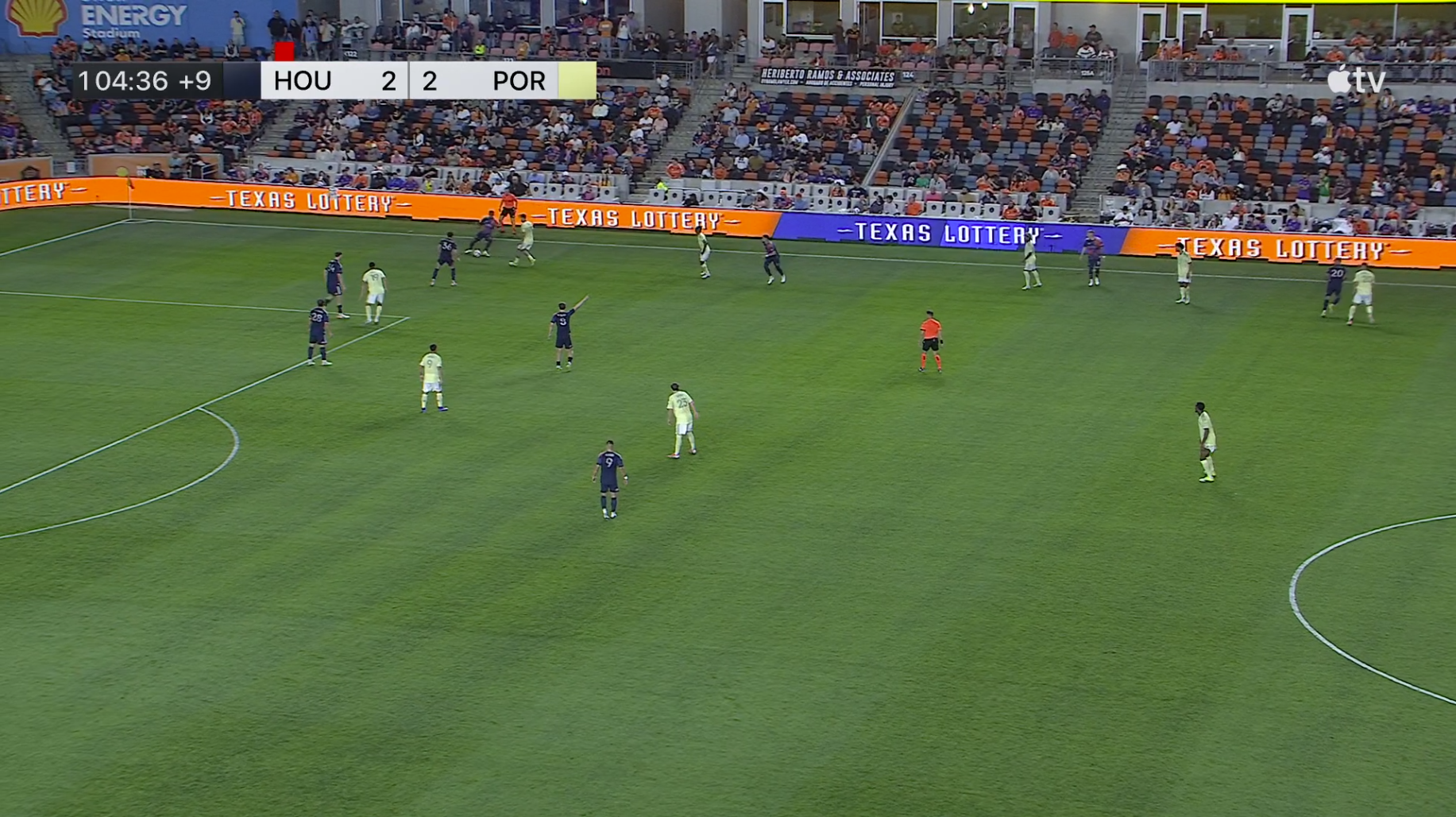
This is how the Timbers are set up to defend a deep Houston throw-in. Ibrahim Aliyu is the taker, and he doesn’t have to wait long before putting the ball in play.
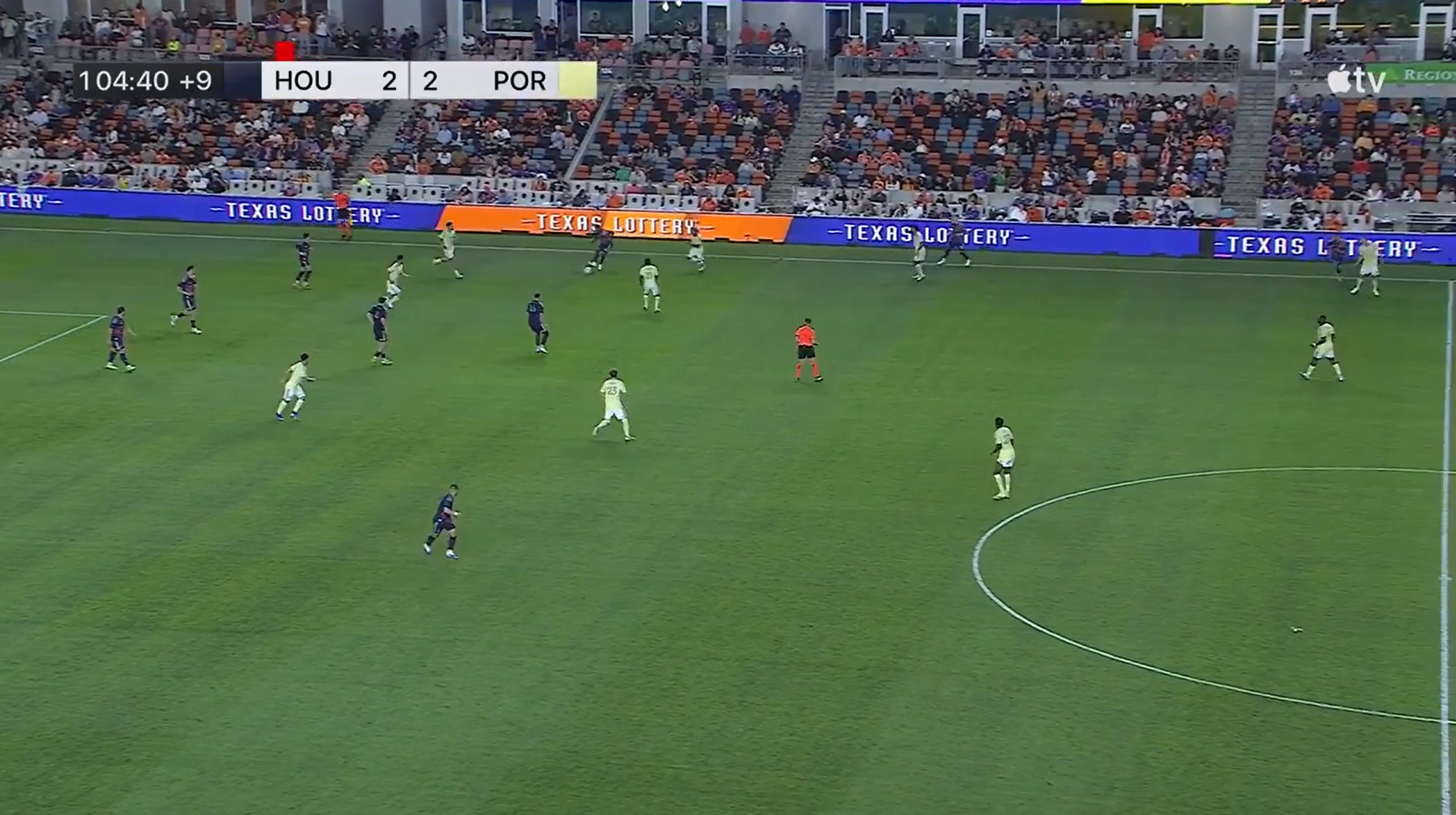
He executes a quick one-two and suddenly has the ball in a pretty good position with very little pressure around him. This pass is going right to Herrera. No one attempts to cut off the angle because two players are focused on the ball-carrier.
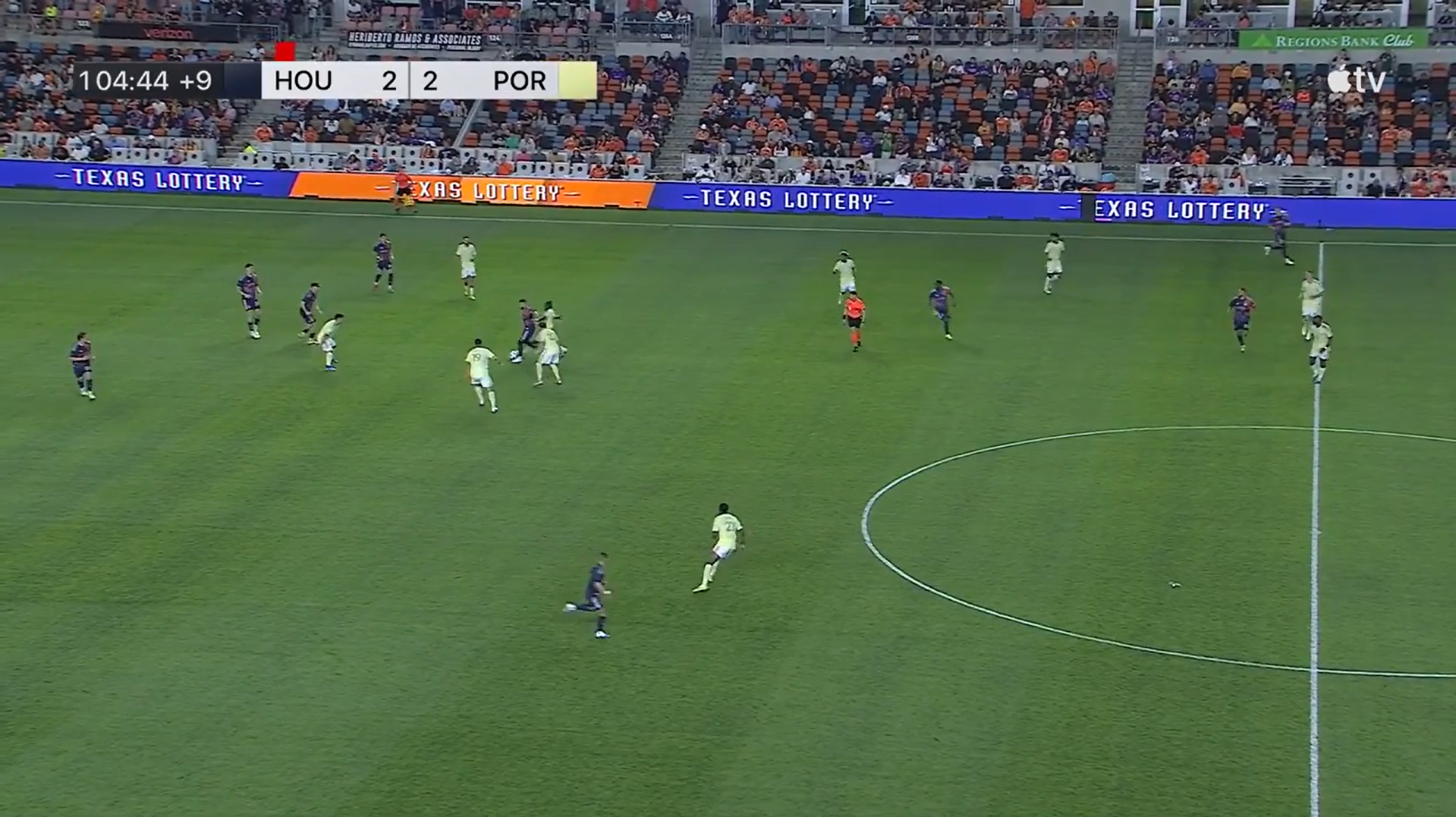
You know what’s worse than two players focused on the ball-carrier? HOW ABOUT THREE? Herrera is able to shrug off two challenges (from Chara and Smith, respectively) before Smith’s final pressure forces the Mexican legend to make a quick decision and find the first person he can see.
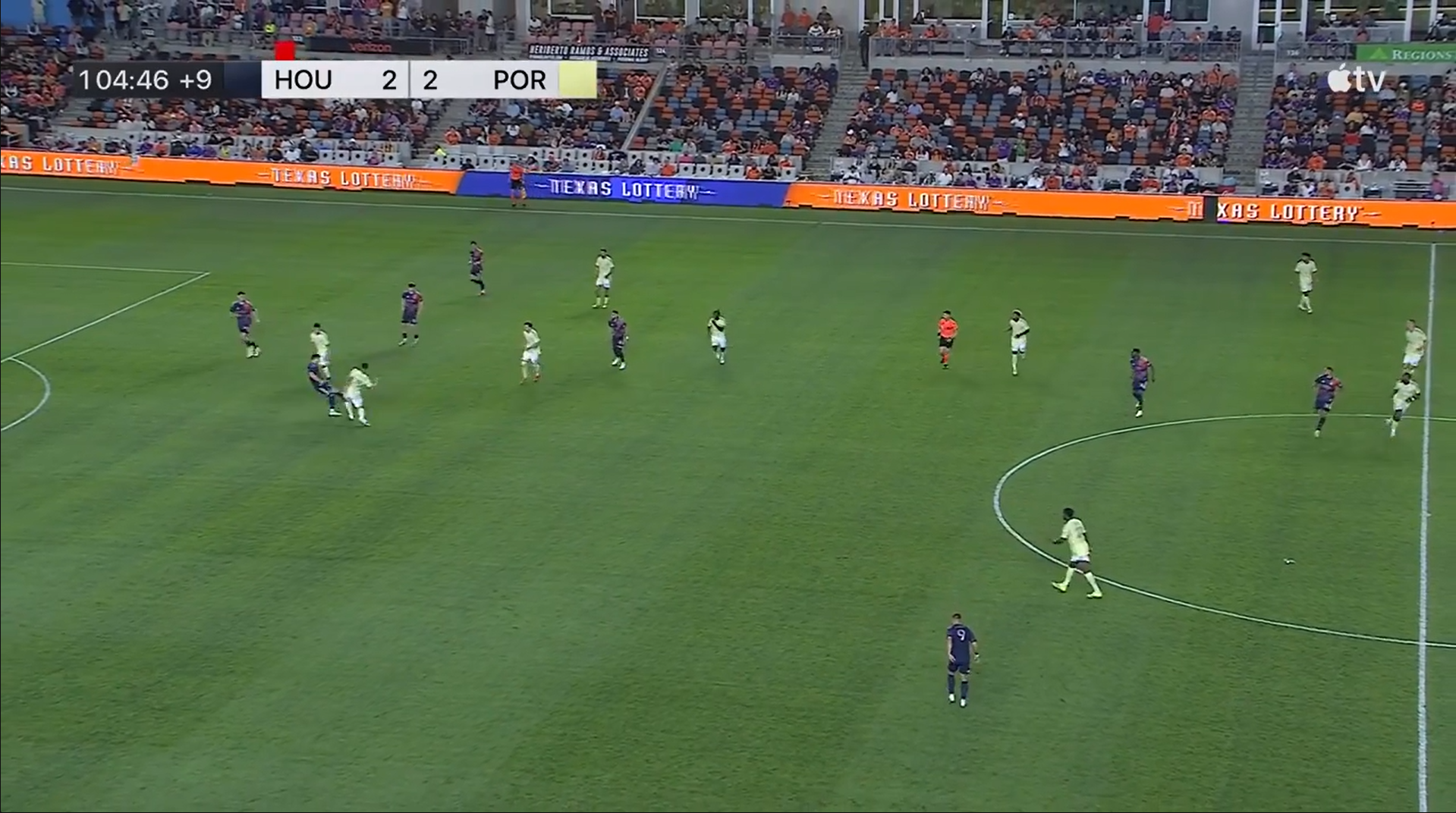
That person is Evander’s former Midtjylland teammate: Erik Sviatchenko. Kelsy attempts to cut off the pass but is a half-second too late. He probably would’ve intercepted it if he was higher up and not focused on Herrera. Mora also tries to close down the ball-carrier and leaves a ton of space to his left. I wonder what Sviatchenko is going to do with the ball with two yellow shirts closing down on him and three teammates to his left.
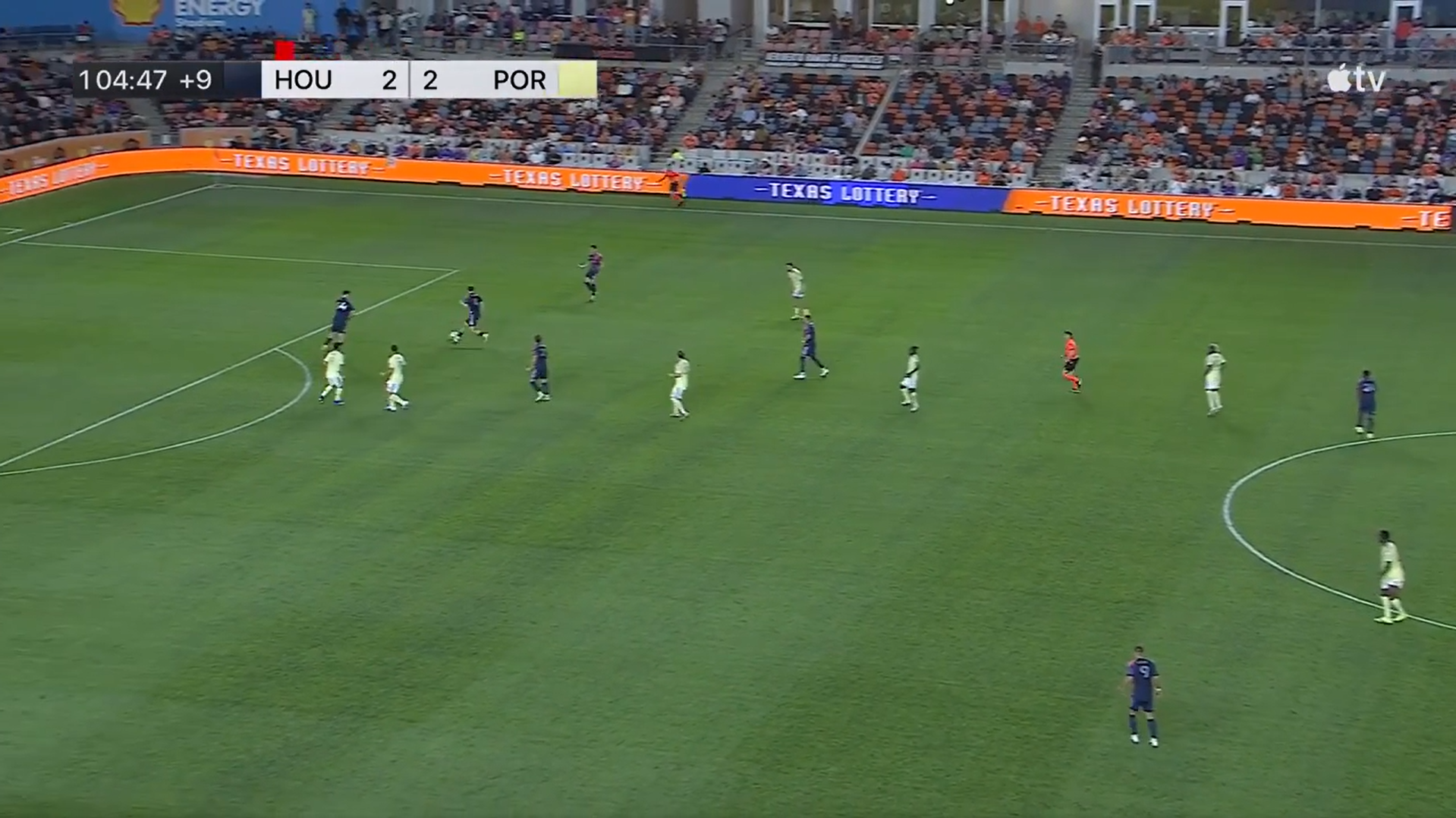
All Sviatchenko has to do is tap the ball. He has three options! And no Portland players are anywhere near the play! Horrendous!
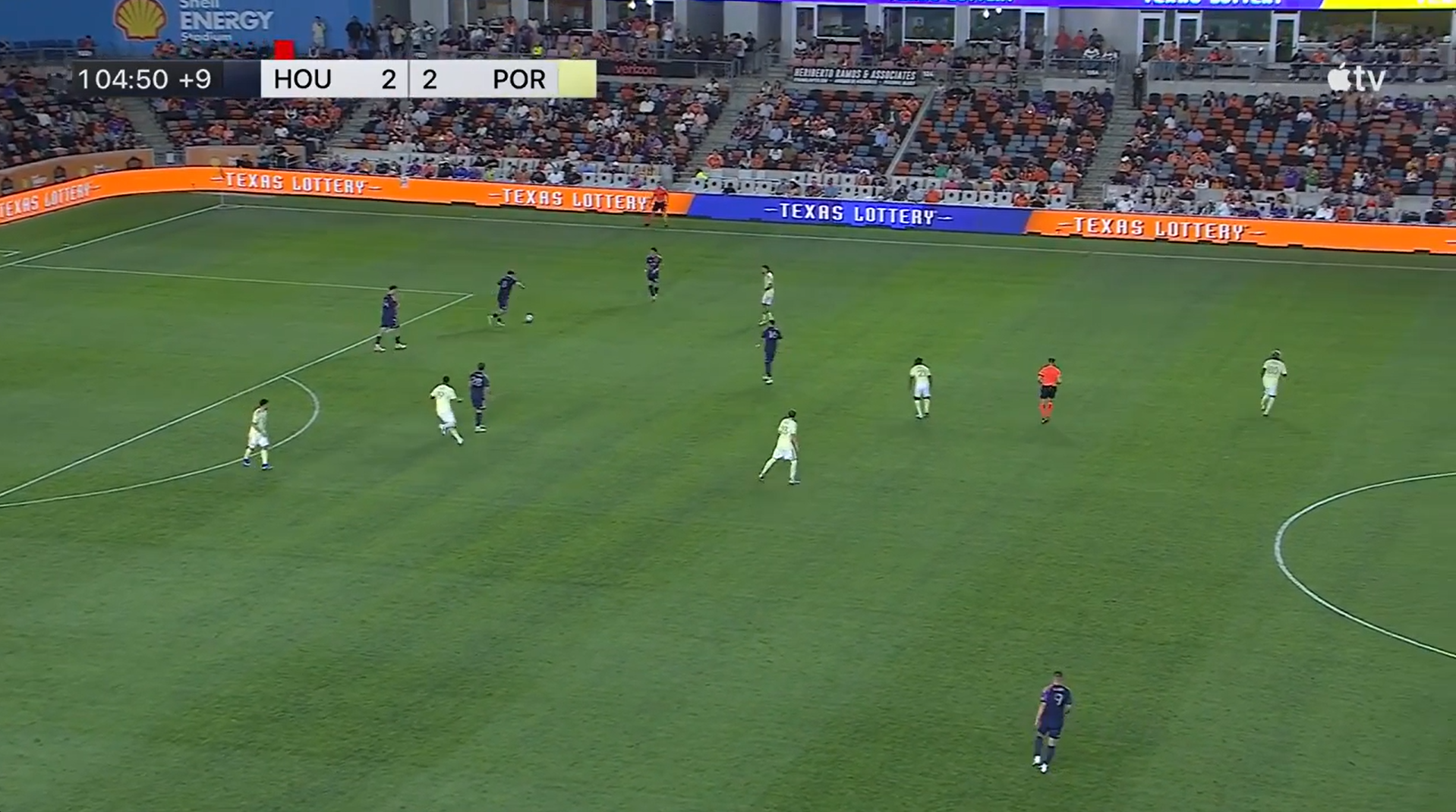
McGlynn, the quarterback, now has a clear field of view with no pass rush. Velde isn’t stepping to him. Chara is in no-mans land. Mora and Kelsy are completely out of the play. Smith (the left winger at this point in the game) is also removed. When the quarterback has the time and space to try the deep ball (especially if they know they can do it) they’re going to go for all the marbles. Jack McGlynn is about to turn into Roger Staubach. And there’s no Alan Page around to provide pressure.
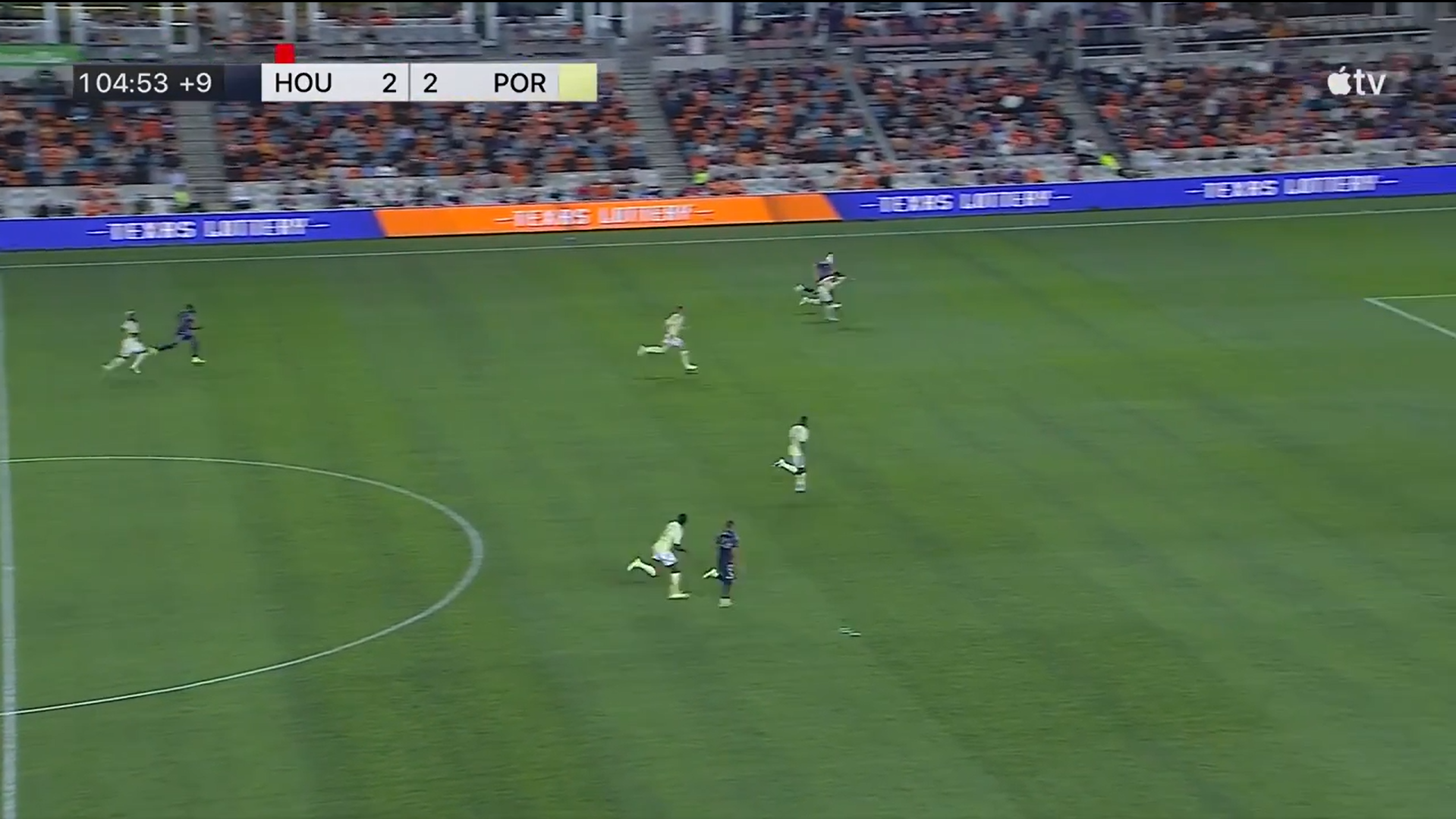
When I was watching this live, I thought Bye was pushed. There’s no other reason for him to be falling down like this. He gambled on the route. Bogusz is very fast, but receiving this pass at this velocity with a good first touch is an incredible feat of skill. This is what Bye was gambling on. He thought that Bogusz was going to be able to bring this ball down cleanly and decided that sacrificing himself for a potential diving header to push the ball away from Bogusz was the correct move. It wasn’t. And he completely removed himself from the play on this gamble. Drew Pearson is about to get this ball, although the live viewer thought that there was pass interference. There wasn’t any.
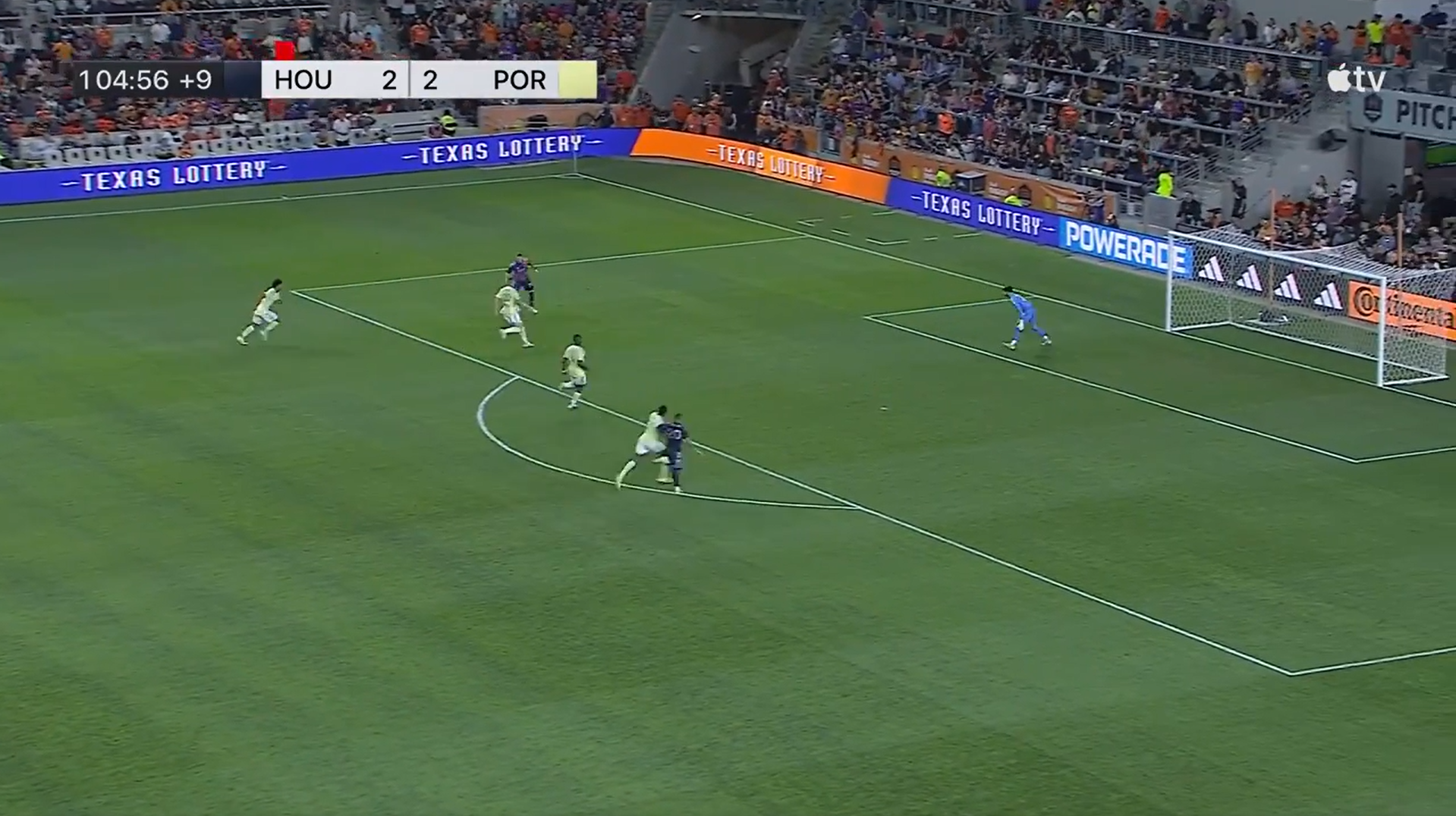
Now the Polish international has control and he’s trying to open up a good shooting angle. His first touch let him down. Bye did not need to go for the diving header. Even with no immediate pressure, Bogusz still screwed up his first touch. But he still needs to get into the end zone.
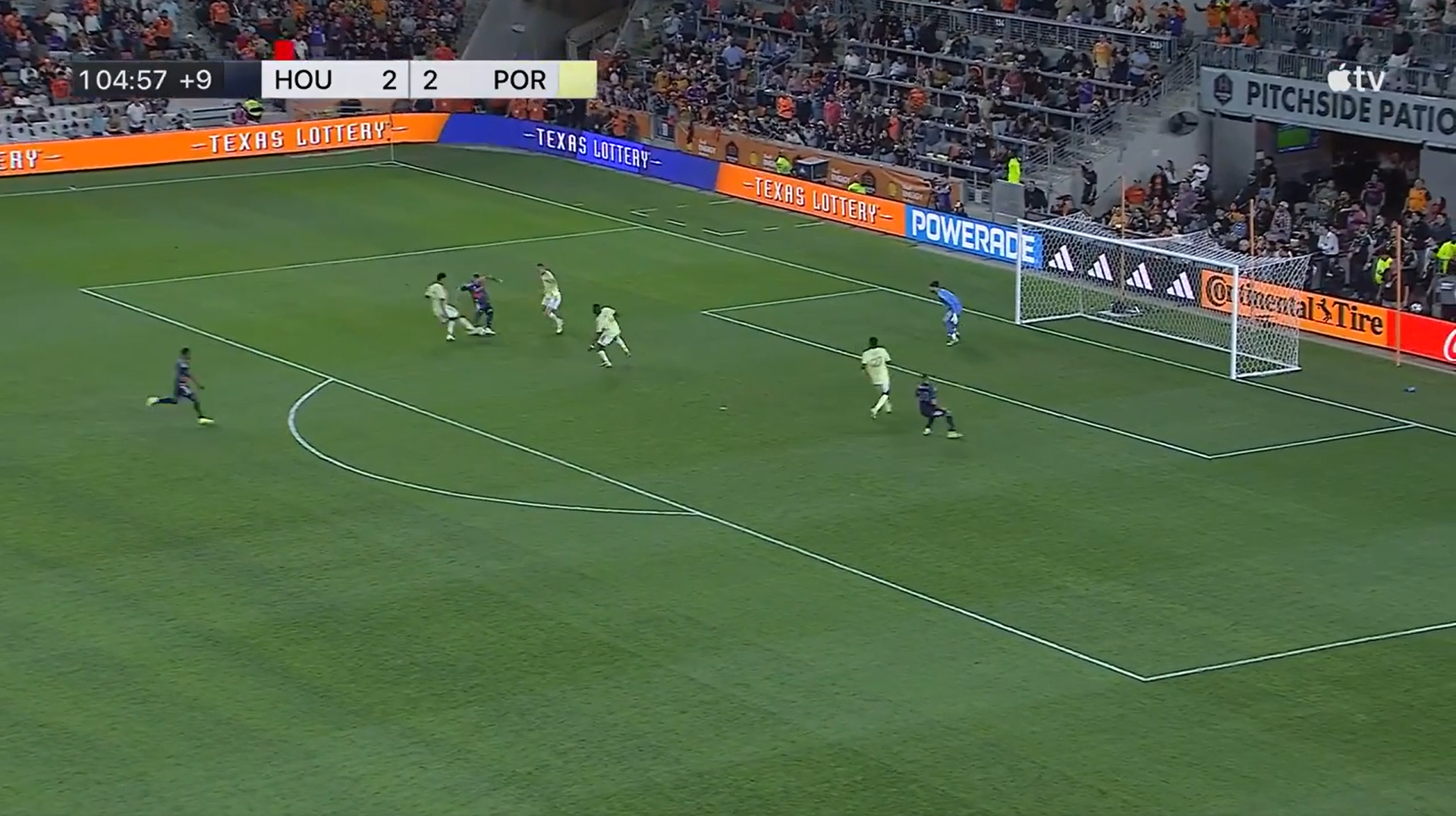
The actual shot is kind of an optical illusion. Technically, Bye recovers in time. At least that’s what it looks like on the live feed. Surman and Miller are ball-watching. Neither of them can close the space down.
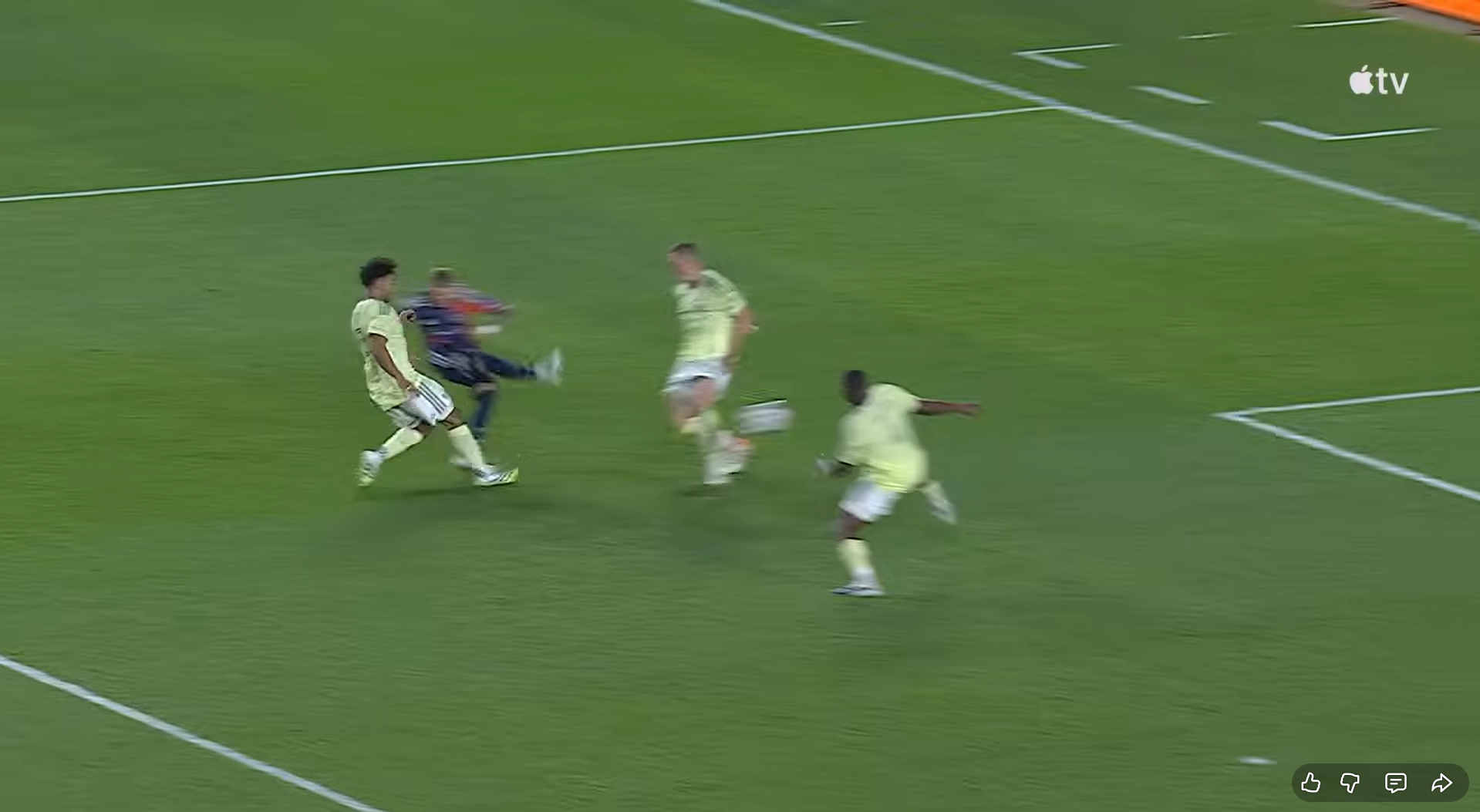
The smallest of margins. A tenth of a second. The Hail Mary is complete. Staubach and Pearson have won the game for the Cowboys. The Vikings have been defeated. Houston has snatched a victory with their backs seemingly against the wall. This game didn’t have the stakes of the original Hail Mary. Yet the improbability of this play (15th minute of stoppage time, down a man, with Portland in control) is what makes it so special for the home fans. And those in the Northwest were left with their heads in their hands.
Who is supposed to be the Alan Page here? Is it Kelsy? Is it Mora? Maybe it’s Velde? The former defensive tackle has lived a life that transcends politics, football, broadcasting, and community service. The Timbers do not have an Alan Page. Such a player would be generationally special. So they have to recreate him in the aggregate.
Portland’s first line of pressure is supposed to be Alan Page. Actually, they’re supposed to be the Purple People Eaters. Carl Eller, Jim Marshall, and Gary Larsen routinely made life hell for opposing offensive lines and quarterbacks. This Portland press does not deserve to be in the same sentence as Minnesota’s legendary defensive line. Bud Grant would not have stood for the cosmetic pressure that the Portland Timbers apply. You can’t even call this a press. It’s just an advanced block.
Portland defends upfield like how they defend around their own box. It’s up to Paul Krause (Finn Surman) and Nate Wright (Brandon Bye) to do all the dirty work. Andrade’s go-ahead goal in the 77th minute needed some form of pressure, yet no one stepped to him. McGlynn was looking for the Hail Mary, and he had a clean pocket.
The Timbers need to decide whether or not they want to be a pressing team. Neville keeps talking about how much he wants the team to press, yet they can’t find a way to consistently provide the pressure necessary for it to be effective. It's ridiculous watching this team continually fail to press and provide Interstate freeways worth of space for opposing teams to exploit. That failure falls on everybody. And it led to Houston’s humiliating game-winner.
Box Tilt
Since I defined Box Tilt as the “service provider rating” last week, I wanted to see how Portland stacked up against Houston in a relatively even game with both halves taken into account. And this metric tells an interesting story between both halves.
The first half ended with an even tally of 12-12. Five of those 12 Portland touches were shots. Houston had 3 shots inside Portland’s box during the first half. But the Timbers registered 110 passes in Houston’s half during this time frame. They’re still missing the magic skeleton key to unlock a lower block.
In the second half, Houston had a 15-14 box tilt advantage. The majority of the second period was spent in Portland’s half of the field. The Dynamo completed 129 passes in Portland’s half. I think that Portland’s box defending was superb during this game aside from Guilherme and Bogusz’s goals. That’s a positive that they can take from tonight. Houston won the box tilt battle overall by a count of 27-26. The Timbers have yet to win the box tilt battle, but they came awfully close tonight.
Player Ratings
James Pantemis: 5.8
This one is hard. Houston scored three goals, and all of them beat Pantemis at his far post. I think the second one is the worst one from a team defending and a goalkeeping perspective. The Canadian goalkeeper stayed in the game after getting cleated in the face, even though Neville had two substitutions available. I don’t think his injury affected the game’s final goal, but I am pretty concerned about his inability to command his own box. More miscommunications occurred in this game, with the culprits being players who were on the team last year. I’m not pressing the panic button yet, but I’m getting pretty close to doing so.
Brandon Bye: 5
Bye’s block in the 50th minute might be the most impressive defensive play of the game. However, he left a lot to be desired on the attacking end. Per my notes, he sent two crosses over the goal and had a very good chance to win the game in the 11th minute of second-half stoppage time. And his gamble on Bogusz’s winner was bewildering.
Finn Surman: 8.3
Let’s get the lone negative out of the way first: he overpursued on Bogusz’s game-winner. Outside of that crucial moment, he was outstanding. I think this was the most threatening he’s been on offense during his entire Timbers career. And he was credited with an assist on Velde’s goal. G+ rated the Kiwi as the best player on the pitch. Drawing a penalty and owning Portland’s box will do that. Portland’s entire defensive system is built around his ability to defend the box and cover ground. It isn’t the most sustainable strategy, but Surman rises to the occasion time after time.
Kamal Miller: 6.5
I don’t think Miller was impressive, but I don’t think he was bad either. He was willing to try long balls, and he completed 6/10 of his attempts. If I had to describe his performance, I’d use the word “solid.” Alex Bonetig’s injury paved the way for Miller’s second consecutive start, and I think that the competition for that place is a lot closer than a lot of people realize.
Jimer Fory: 6.2
The Colombian left-back got booked again and committed two additional fouls. The yellow card was deserved. But I’m more concerned about the times that he headed claimable crosses behind for corner kicks. Is that a Pantemis problem or a Fory problem? His long throw led to Velde’s equalizer. I’d like to see the Timbers keep utilizing that.
Diego Chara: 7.4
Can you hear that in the distance? Is it the first couple chords to Demi Lovato’s “Cool for the Summer?” Folks, Diego Chara played as a single pivot in a 4-3-3 tonight. I’m afraid that it’s 2015 again.
His first half was magnificent. He was the first player to the multitude of loose balls won in the air by Timbers center backs and was sharp with his passing. However, when Herrera was introduced at halftime, he was quickly overrun in the midfield. In addition to that, there were serious shouts for a penalty kick in the 59th minute when he tackled Guilherme from behind. Vazquez opted not to blow the whistle, and VAR did not recommend a review. I think he got away with one.
Alexander Aravena: 7
Playing as a twin 8, the Chilean showed a propensity for drawing fouls and picking up the right spots to show for the ball. I think the chemistry with his teammates needs some developing, but the early signs remain encouraging. Is he still a starter when Cole Bassett and Antony return from injury?
I noticed during the first half that he was dropping deeper in the midfield to facilitate ball progression. Both him and Da Costa picked their spots to drop deep while the other stayed high. He didn’t progress the ball much by himself, but he opened up space for his teammates to do so.
David Da Costa: 8.5
I’ve already talked about a fair amount of encouraging things from tonight’s game. But David Da Costa’s return is probably the most important one. And Portuguese Dave turned the encouragement dial all the way up.
There were many questions as to where Da Costa’s best fit was during 2025. Some thought that he was a true 10, others preferred him on the left wing. But David Da Costa is a left-sided 8, and this game proved it.
Despite only seeing an hour of game time, he finished second among all players in ball recoveries. He was buzzing around looking for the ball and quickly moved it on when he got it. The developing partnership between himself and Velde on the left side has the potential to revolutionize the way the Timbers attack. Da Costa will draw defenders, which will open space for Velde, and Portland can use their 2 DPs to make inroads to opposition boxes. He largely avoided contact (no problems there) and played a major role in Portland’s ability to control the first half. As his fitness waned, Portland’s control weakened. I wonder how much longer it will take for him to get full game fitness.
Ariel Lassiter: 6.4
I find it a bit odd to deploy Lassiter on the right wing given his proficiency at delivering dangerous crosses into the box. He missed a chance in the 69th minute and didn’t complete a single cross. In addition, he picked up a yellow card in first-half stoppage time for delaying a restart. Not an outstanding performance from him, but he held his position well and delivered several dangerous dead balls.
Kristoffer Velde: 7
At halftime, this rating was hovering around a 5. It’s amazing what a goal can do.
But this rating isn’t derived from the goal he scored, no matter how good the strike was. It was how his confidence immediately returned after hitting the back of the net. As the clock ticked on through stoppage time, his chest was heaving with every step. Yet he dug deep and used the remainder of his energy to power the team forward in search of a winning goal. Missing that penalty was brutal. But he made up for it later, and it appears that his confidence is back. Let’s see how the Galaxy game goes.
Gage Guerra: 6.8
This is the hardest rating to give. Guerra’s reactions were key to giving the Timbers an early lead, but I think he left a lot to be desired in possession.
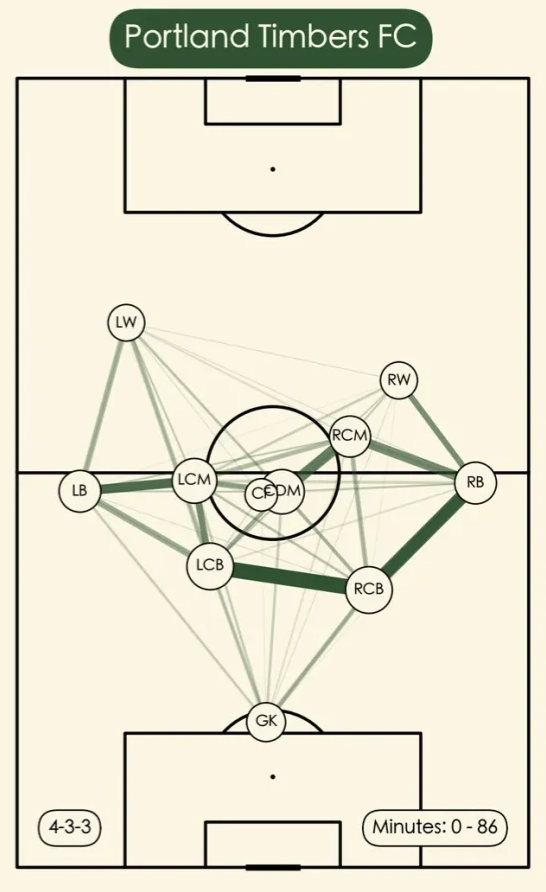
This is a good graphic for the team, but Guerra sticks out like a sore thumb. Two of Portland’s strikers (Kelsy and Mora) are able to occupy opposing center backs and effectively create a 4th line in Portland’s attack. That line is mobile, and Guerra was erased in possession today when he didn’t need to be. However, he does run hard, and maybe I should save the remainder of my thoughts for the coaching section. He got his third start of the season when the Timbers visited his hometown, and he marked the occasion with his first regular-season goal. “It’s still a learning experience but I’m incredibly grateful for the opportunities I’ve been given,” he said post-game. I’m thankful he had the opportunity to score a goal in Houston.
Joao Ortiz: 6.6
I have to give Ortiz credit after this game. He was subbed in for Da Costa and played as a number 8. Ironically, I think this suits his skillset better than being a defensive midfielder. I liked a lot of the decisions he made (not the field goal in the 14th minute of stoppage time). But he had the right idea with a lot of his passes and continues to show quicker decision-making. He’s still not a starter, and his defending is still rather subpar. But there’s a path forward for him if he continues to improve.
Ian Smith: 6.4
The second-year player from Denver played on the left side. He started as a winger and was shifted to wingback by the end of the game. I thought he offered some threat as an outlet but didn’t do too much around the box.
Felipe Mora: 6.9
He should’ve had an assist in the 11th minute of stoppage time, and he made the most out of his time on the field. None of Portland’s other strikers can effectively distribute the ball like the Chilean. I docked him a couple of points due to the pressing mistake on McGlynn’s Hail Mary. The starting striker competition is intense.
Kevin Kelsy: 6.7
The Venezuelan spent 8 minutes on the pitch and nearly scored the winner. I’ve already gone through his involvement in Portland’s pressing debacle. However, I’m very close to pressing the panic button.
Kelsy has started 1 out of Portland’s 4 games in a year where many expected him (myself included) to win Portland’s starting striker role. As the team heals, he needs to be starting some games. The Timbers would’ve had a better chance to win if Kelsy started and Guerra/Mora came in from the bench.
Coach Rating: TBD
Neville was very positive in the post-game press conference. It's a major change in tone from last weekend's angry ramble post-Vancouver. “I think for the first time this season we had a structure that I wanted, the structure that we worked towards, the structure that we’d planned, the structure that we’ve recruited for, and now we just need to get better within this structure.”
If that’s an admission that the 4-2-4 is gone, I’m all for it. However, there’s a reason why this coach rating is TBD. If this is the structure that Neville really wants, the Timbers cannot change from the 4-3-3 for the rest of the season. I do believe it’s the best structure for this team. But it needs to be implemented every week, no matter who is unavailable.
That structure still needs a lot of work, particularly when it comes to the press. I feel like tonight’s game is a real fork in the road when it comes to Neville’s ideas about defending higher up the pitch. That Bogusz goal is unacceptable. Neville chalked it up to a mistake. Bye certainly did his team no favors, but allowing that pass to be launched is the real error. They showed organization in possession, but complete miscoordination off the ball. Especially in the second half.
I didn’t have an issue with most of the subs, and I’m still torn as to whether or not Pantemis needed an early exit after the injury. However, he did pass a concussion test on the field, so I’ll err on the side of keeping him in purely because the need to take him out wasn’t immediate.
But I am very concerned for Kelsy. There has to be a legitimate reason why he’s only started one game. If Guerra is better in the press, I understand. But that press is objectively bad, and it’s not worth benching Kelsy if the press is the only reason for his lack of starts.
Some other notable quotes from this press conference include “It’s my job to make sure that the team are smart.” That’s what he said, no matter the grammatical inaccuracy and frank admission of the factual duties of a head coach. But I’d like to highlight one more quote from his presser: “Our xG was more than them in the game, so that was a real positive.”
Data is a useful resource if it is interpreted correctly. The final score matters the most, but Neville isn’t wrong here. However, his interpretation isn’t correct. Portland did win the xG battle 2.37-1.2 tonight. But 0.8 of that xG came from Velde’s penalty kick. So the Timbers did win the non-penalty xG battle in this game, but not by a gigantic margin (1.57-1.2). However, 0.76 of that total came from open play. That’s not very good. Portland tallied more xG from set pieces (0.82) than they did from live-ball scenarios. The penalty accounted for more xG than any open play chances the Timbers created. In addition, the Timbers conceded 3 second-half goals from 0.75 xG. 2024-esque, I must say.
Table Time
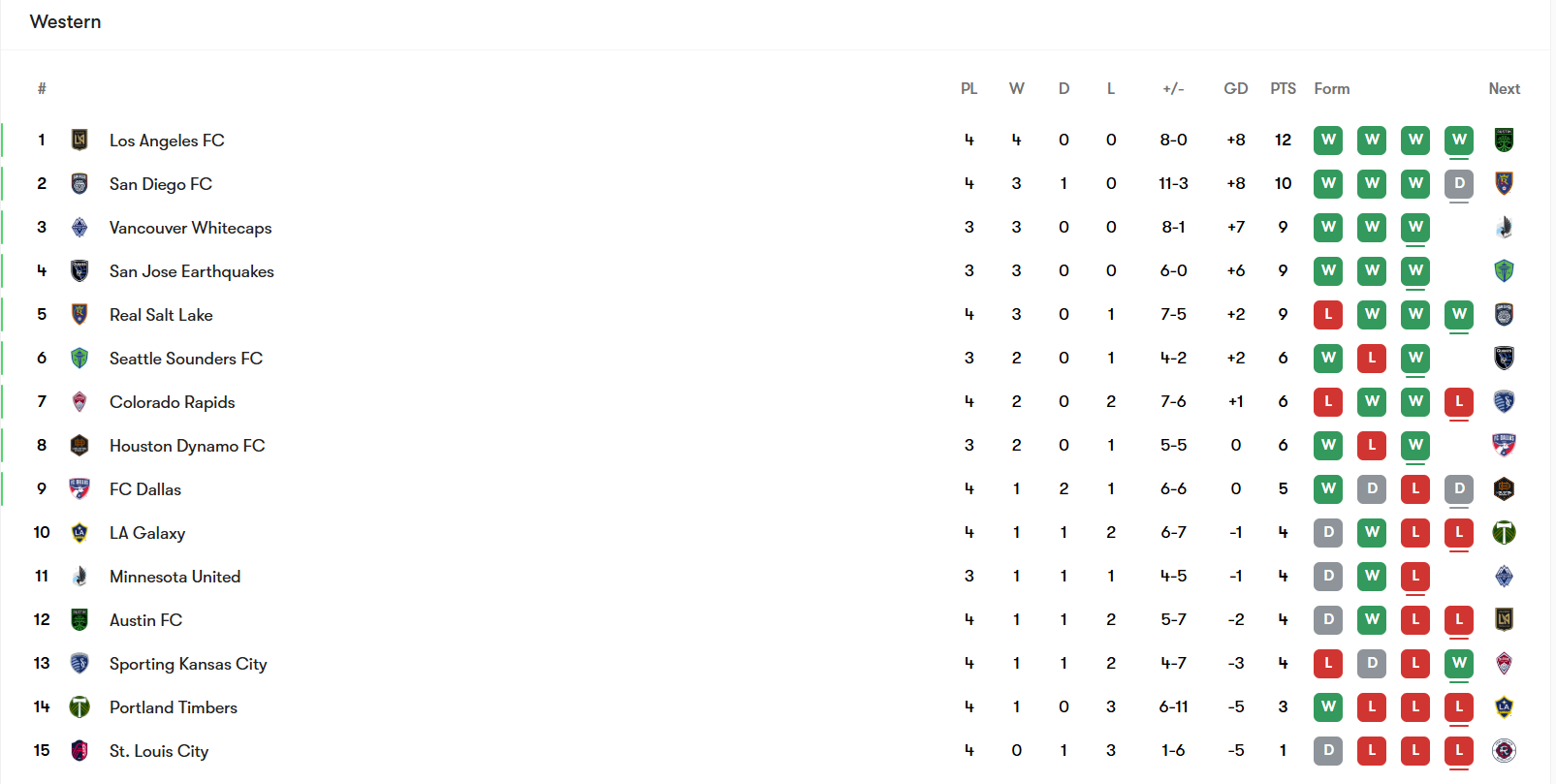
3 consecutive losses following their season-opening victory. Far from an ideal place to be. They’ll end Matchweek 4 in 14th place, only being kept off the bottom by a St. Louis team that has only scored 1 goal. The rest of the pack has already begun to separate themselves. Sure, there’s a lot of season left, but no other Western Conference team has conceded at least 10 goals.
Final Whistle
How do you properly contextualize a result with several encouraging parts but the utter taste of disappointment with the manner of the game-winning goal? I think I’ve tried my hardest to convey that. However, it’s a humongous loss at the end of the day against a team that the Timbers should be beating if they want to establish their credentials as a playoff team. Overreactions will fly around, but I don't think this game is worth an immediate outpouring of grandiose thoughts. But this is absolutely a result that will matter in the context of Portland's season.
It could be a future marker for when the Timbers finally figured out their best setup. Or, as it feels right now, it's another humiliation. Hail Marys are one of the ultimate gut-punches in the sports world. Especially when they occur outside of their natural habitat.
Maybe this is a game that doesn’t matter come crunch time. But it was a game that the Timbers needed some kind of result from. Points were already going to be at a premium in the early months of the season given the difficult schedule, and Portland effectively handed the Dynamo a game-winner tonight. That’s a Houston team that was missing a starting center back and defensive midfielder. Portland had two key absences of their own, but this is MLS. You’re only as strong as the squad you have available.
Next weekend’s game against the Galaxy is absolutely massive. After the upcoming Sunday matinee, Portland travels to Vancouver, hosts LAFC, and visits Minnesota and San Diego. It’s the toughest stretch of the season, and it comes at a very bad time. Treading water isn’t enough on Sunday. They need to win and rebound from another disappointing loss away from home. The pressure increases week after week. It’s time to capitalize on the semblances of progress shown in this game. Otherwise, tonight’s humiliating defeat will go into the folder with all the other ones from Neville’s tenure with absolutely nothing positive to take away. The climb continues.