
"If You Were To Succeed, You Had To Be Better Than the Best"
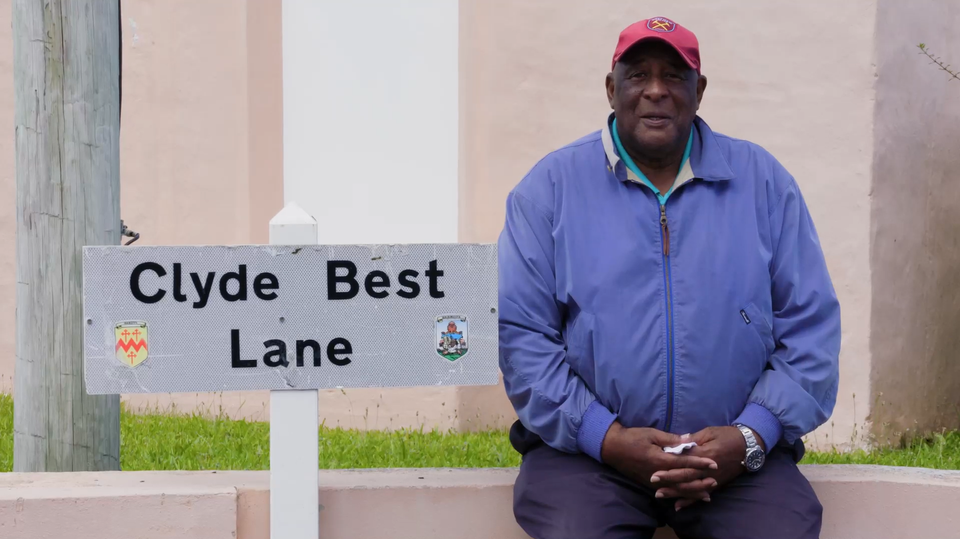
The sky is gray and rain is falling. There's no use in trying to identify the specific day on the calendar. It could be any time of the year in Portland, Oregon. And on this unknown day in 2024, three old friends and trailblazers reunited.
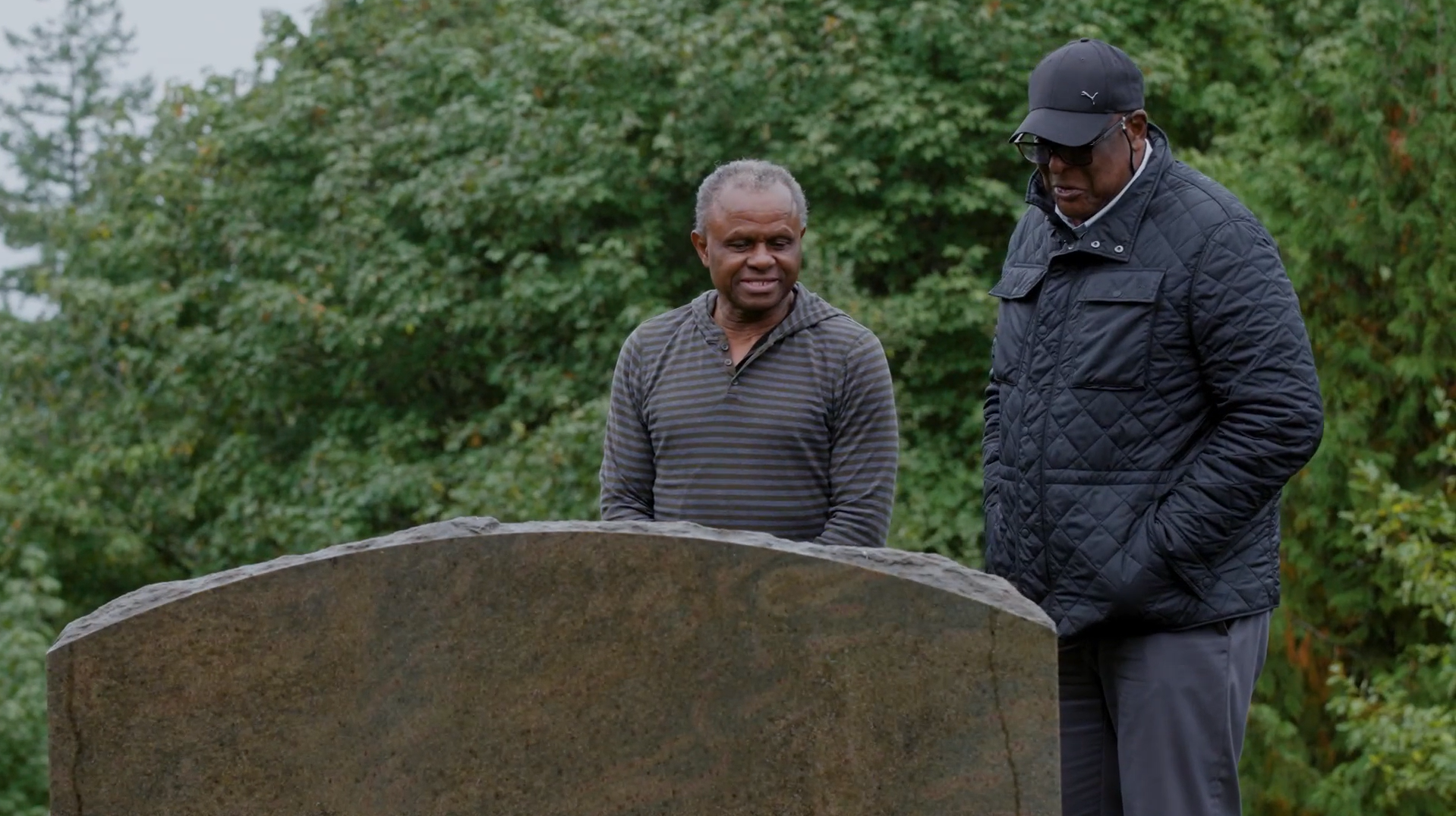
Two of them stood above the ground, paying their respects to the third. The dichotomy between the pair couldn't be any more pronounced. The shorter one, in a silver-gray striped sweater, was smiling. His taller friend, in a black jacket, kept his sunglasses on. A few words break the silence: “I used to say I wish I had a left foot like he does. But mine is only for standing on.”
Standing is something that everyone takes for granted. When you're on your feet, you never think about the action of standing. You're much more aware when you are sitting or lying down. When you stand, unless you are physically unable to do so, it takes almost zero effort at all. But the longer you stand, the more you endure the stress and weight forced onto your feet.
Ade Coker (the shorter man) and Clyde Best (the taller man), both in their 70s, spent a poignant moment at the gravesite of one of their oldest friends: Clive Charles. Fifty years ago, they were teammates at West Ham United in England. Their feet had endured so many breathless sprints, careful touches, and brilliant strikes of the soccer ball. But on April 1st, 1972, these three men made history through their endurance: becoming the first three Black players to start a game in the English top flight.
Charles, with his wand of a left foot, started at left back. At 20 years old, he found himself as the middle sibling. The 17-year-old Coker scored West Ham’s second goal in the 89th minute; putting the game to bed and securing three points for the club that judged him based on talent, not the color of his skin. Best, 21 years old, had already been in West Ham’s first team for three years. He was the veteran of the trio. This enormous feat, something that is commonplace today, was utterly revolutionary at the time. And none of it would have been possible without the unwitting suggestion from a stranger.
The movie Transforming the Beautiful Game: The Clyde Best Story (produced by Dan Egan and H. Nelson Tracey) is a biographical film about the first Black soccer player to ascend to stardom in the televised era of English football. From his hometown in Bermuda (pronounced “Bermuder” by Best) to the bright lights of England, the behemoth of a forward brought goals and smiles to millions of people around the world. However, when he landed in London as a 17-year-old from a tiny island nation, he was completely directionless. Best simply didn’t know where to go.
Despite getting confirmation from the club about his impending arrival, no one was there to pick him up from the airport. The enterprising Best hopped on a train to the West Ham station, unaware that the club was located at the Upton Park station. After waiting outside the train station for an entire day, a stranger approached him. This stranger enquired why Best was there. Best replied that he had a trial with West Ham. “They just played yesterday. The club is closed today,” the stranger said back.
Damn his bad luck. His start to life in England had already gotten off on the wrong foot. But this stranger had other plans in mind. He saw a young Black boy clearly lost and looking for direction. In his mind, there was only one place for him to go. “I want you to go with me to a family that stays across the street from the train station.” When he reached the house, he found Jessie Charles waiting for him with her two sons: John and Clive. “She took me in and treated me just like one of her own children,” Best said. He would stay in that house with Jessie, John, and Clive for six years. A warm, welcoming home for a 17-year-old who desperately needed one.
A person’s life consists of thousands of stories. Transforming the Beautiful Game, in its 93-minute runtime, tells all of the important ones in Best’s life. More stories like the one I just told populate the film. It touches on themes of societal tension, footballing excellence, and the need for Best’s story to be heard and seen by the entire world.
After the film ended, a Q&A panel was held with Best, Coker, producer H. Nelson Tracey, and several former Timbers. Best spent four years in Portland, and he left a glowing review of the city in the film. Mick Hoban and Scot Thompson echoed one particular sentiment: “Every player in an academy or starting out in soccer should watch it.”
But this isn’t just a film for soccer players. It’s a film for everybody. Best’s playing days overlapped with heightened racial tension in England and the United States. That tension is still present to this day. Best took the field under showers of monkey chants and bananas thrown onto the field. These shameful acts still occur around the world. Racism is still a humongous problem in soccer, and therefore the entire world. If our most beloved global athletic institution isn’t safe from the horrors of discrimination and bigotry, then nothing will be.
Best’s feet and legs endured the normal stresses of soccer. While he remained focused on doing his job, his brain had to endure the vitriol hurled at him simply because his skin wasn’t white. His story is one of endurance; from the hate in the stands to the pressure of being a top-flight footballer. His feet took him from Somerset, Bermuda to Portland, Oregon, with stops in Tampa and Rotterdam in between (and some stops in Cleveland, Toronto, and Los Angeles). Jackie Robinson broke baseball’s color barrier as a 28-year-old. He was a grown man, and was expected to endure as an adult. Best, at 17, had to put his head down and “just get on with it” in a foreign land. Dozens of former players were interviewed for this film. All of them credited Best for inspiring them to become a professional footballer. “If he can do it, why can’t I?”
Best stood for a better world by simply standing on a soccer field. After retiring from his playing career, he remained a strong force within the game and used his position to advocate for more diversity within the sport. This film adds to that legacy. Every single person who loves any sport or enjoys the company of other people should watch it.
While watching this film, I learned something too. As a West Bromwich Albion fan, I’m very familiar with the Three Degrees. Former Baggies Cyrille Regis, Laurie Cunningham, and Brendon Batson are widely recognized as the first three Black players to start a game for a top-flight English club. They accomplished this feat in 1978, six years after Best, Coker, and Charles did it for West Ham. I was shocked to learn that West Brom’s glittering trio were not the actual history-makers. They owed their ability to launch to stardom to Best, Coker, and Charles. So does every single person of color who is actively playing or has played in England.
Charles is unfortunately no longer with us. The patron saint of Soccer City died in 2003 after a long battle with prostate cancer. His legacy is painted on murals, adorning the fields at the University of Portland, and with a retired jersey number in Providence Park. It also lives on through the achievements of his pupils, most notably Christine Sinclair’s record-setting career.
But Best’s legacy is one of endurance and excellence. Why is Jackie Robinson an instantly recognizable name while Best is still mostly unknown to the wider globe? This film sets out to raise awareness of “Big Bestie” so he can properly get his flowers. It’s a visually striking movie that has to be seen to be believed. Pele once crowned him “the Prince.” He began as a child kicking a can down the road and went on to score 47 goals for West Ham. It’s one of the most unbelievable stories in human history. And it’s interwoven into the fabric of Portland soccer.
The World Cup kicks off today amidst a backdrop of discrimination and prejudice. This sport still has a long way to go. But without Best’s rise to glory over 50 years ago, this tournament would have a completely different flavor. “You’re playing for the people coming after you,” Best said in the film. Every player who takes the pitch, regardless of whether or not they play in England, has him to thank for their opportunity to succeed at club level and represent their country. When Bermuda lost the final of the Pan-Am Games in 1967, the entire country was beaming with pride because they didn’t expect to make it that far. Best departed to London one year later and began the domino effect of events that led to this present moment in soccer.
The story of Clyde Best, above all else, is one of humanity. It shows the ugliness of prejudice and bigotry contrasted with athletic excellence. This sport owes so much to Best, and he’s finally getting some much overdue credit with this film. Transforming the Beautiful Game: The Clyde Best Story is a victory lap while also acknowledging how much work still needs to be done. In a just and fair world, the work would have already been finished. And the film doesn’t shy away from that fact. It educates, inspires, and celebrates at the same time. From the stranger who pointed him to Jessie Charles’ doorstep, to his teammates at all the clubs he played at, Clyde Best couldn’t do it by himself. While enduring, he persevered. He had to succeed at West Ham. Not just for himself, but for all of the players who would follow in his footsteps.
Those athletes knew one truth that would follow them throughout their careers: “If you were to succeed, you had to be better than the Best.” Not “best” in the general sense. “Best” in terms of Clyde. Portland is no stranger to trailblazers. And their most important trailblazer didn’t start his unfathomable legacy in the Rose City. But he’s one of Portland’s most favorite icons, and he’s one of ours. Through the lens of Transforming the Beautiful Game, his story becomes yours. Clyde Best’s story, however, belongs to everybody. He is the sport of soccer, and he wrote his name into the history books. An icon of the sport who is finally getting the recognition he deserves.
-By Jeremy Peterman


Comments ()