
Bar-be-Two'd
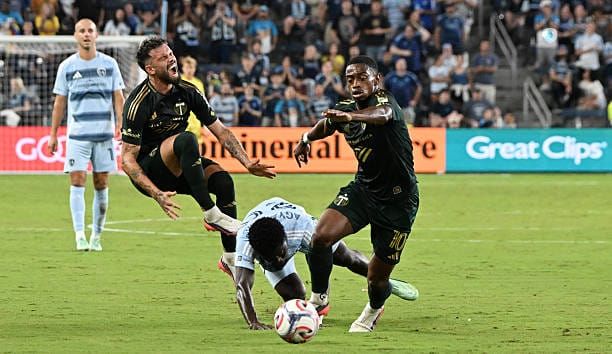
By the time the 65th minute rolled around of tonight's game in Kansas City, the Portland Timbers were in control. They had increased their lead to 3-1 and looked deadset to secure their 3rd road win of the season. In doing so, a crucial 3 points would have been earned.
But soccer is a funny sport. Momentum can swing at the drop of a hat. And these Timbers were unable to hang onto their precious lead. Tonight’s 3-3 draw with Sporting Kansas City told the viewing audience a lot about the current state of the Portland Timbers. And the two dropped points that should’ve been coming back on the plane have vanished into thin air.
Recap
The first 15 minutes were awesome.
Portland had to score the first goal. In order to reverse the season-long trend of poor starts, getting an early lead within 15 minutes was crucial. But the first chance of the game fell to SKC in the 6th minute. Vincent Janssen lost the ball in Portland’s half, which cleared the way for Andre Luiz to charge forward and take a shot from outside the box. This attempt was deflected by Kamal Miller, but the ball continued towards goal. James Pantemis fully laid out in an attempt to stop it. Unfortunately, he was unable to get a hand to the shot. But the ball bounced off of the near post, refused to hit the other post out of respect, and trickled out of bounds for an SKC corner kick. That would be SKC’s only chance to take the lead in the first half, because the Timbers were finally able to get that first goal.
In the 10th minute, Diego Chara played a progressive ground pass to Ariel Lassiter on the right wing. This left the Costa Rican winger isolated on the right against SKC center back Wyatt Meyer. No help was coming, so a quick outside-in move from Lassiter sent Meyer stumbling. He quickly found David Da Costa in the box. One touch to settle, and one touch to finish past a diving Stefan Cleveland (Sir Steve of Cleve, knighted for his bravery [coming off his line and allowing Felipe Mora to chip him for a priceless second goal in a Seattle-Portland match in 2021]). Finally, the Portland Timbers had scored the first goal again. It was their first time completing this feat since the 5-4 win in Minnesota back on September 5th.
What did Portland do next after taking this lead? They put their foot on the ball. The next 32 minutes of game time only featured three total shots. First was Taylor Calheira’s 21st-minute long-distance effort that Pantemis was able to calmly field. Kristoffer Velde fired back from the top of the box in the 25th minute from a designed set piece routine. Not to be outdone, Calvin Harris tried to curl one into the side netting in the 42nd minute, but it bounced wide of the target.
Portland was calm and composed during the first half, especially after taking the lead. They weren’t just putting their foot on the ball, but they were doing the little things right. In their quest to always be the most ethical team in the league, these Timbers rarely try to slow down restarts when they have the lead. Yet they routinely took their time getting the ball back in play during this first half. It was some good game management, which is a rarity from the Timbers. However, they weren’t just content to put their foot on the ball and try to run out the clock. If there was an opportunity to go direct, they didn’t shy away from it.
That’s what Pantemis was thinking when he launched a ball in Lassiter’s direction in the 45th minute. Emir Karic misplayed the header, which allowed Lassiter to run in behind with the ball. With a cheeky no-look pass that split a sudden double-team, the Costa Rican winger teed up a look for the onrushing Velde. He beat Jansen Miller to the spot, but couldn’t do much after his first touch. That’s because Miller recklessly flew in from the side and crumpled the Norwegian winger. Referee Pierre-Luc Lauziere signaled for a goalkick.
This was a clear-as-day penalty, and a two-minute VAR check would quickly confirm that fact. Miller was not shown a yellow card. Now Vincent Janssen stepped up to the spot (this probably should’ve been Velde’s kick to take, but he was still hobbled after receiving the brunt force of that Miller challenge). A calm penalty taken directly down the middle doubled Portland’s lead in the 4th minute of first-half stoppage time.
Now a quick note about the refereeing needs to be introduced. Because the Timbers were so successful at putting their foot on the ball during the first half, only one minute of stoppage time was awarded. Due to the foul, VAR review, and penalty kick, 4 minutes of stoppage time were already gone by the time SKC got the ball back in play following Janssen’s spot-kick. Technically, because no actual soccer had been played during stoppage time yet, SKC would get one minute to try and make something happen before the halftime whistle. Would you like to wager a guess about what happened next?
Not even a full minute had passed by the time disaster struck the Timbers. The game intelligence that flashed during parts of the first half suddenly took a departure. A strong Jimer Fory tackle on Andre Luiz left the Timbers in a good position to just clear the ball away, get the halftime whistle, and enter the break up 2-0. Instead, Fory played the ball short to Velde, who tried to dribble through two players before losing the ball in his own half. Instead of simply clearing the danger and likely taking the game to halftime, Velde opted to take an unneccessary risk. This forced Chara into some emergency defense to clean up the suddenly dangerous situation that had been birthed from Velde’s folly. As the club captain was forced to nutmeg Calheira at the top of his own box, Stephen Afrifa arrived to take advantage of the Colombian’s heavy touch. Afrifa slid the ball to Calheira, who attempted a shot that got blocked by Joel Waterman. Play seemingly over. Until Lauziere pointed to the penalty spot.
By the letter of the law, this is a penalty kick. Chara is technically late on the challenge and doesn’t get the ball at all. It should probably be a yellow card too. But I don’t think a single VAR official is getting in Lauziere’s ear to send him to the monitor if he doesn’t give a PK on the field. It’s a quick bang-bang challenge, and much more ambiguous than Miller’s attempted chopping of Velde. It felt like an SKC make-up call, if anything.
Which is exactly what led Pantemis to declare “ball don’t lie.” Luiz stepped up to take the penalty kick, went to Pantemis’ left, and the Canadian goalkeeper dove to the left to save the kick. However, the rebound deflected off the post, fell to Luiz in the center of the box, and the Brazilian winger calmly tapped it home. 2-1 Timbers, with almost the last kick of the half.
Entering halftime with a 2-1 lead seemed harsh considering Portland's controlled first-half domination. It was a near-perfect execution of Marti Cifuentes’ system, especially in terms of counterpressing. The Timbers practically lived in SKC's final third. Although some cutting-edge quality was missing when it came to converting that superb field tilt into chances, there were far more positives than negatives. Even with a late penalty cutting their lead to 1, it gave the Timbers another opportunity to overcome adversity. At least that's how I saw it.
However, SKC was able to begin the second half on the front foot. The Wizards took the first two shots during the second half. The most threatening of these attempts was a 53rd-minute Miller header from a corner kick that floated over the bar (with Chara on marking duty). But the Timbers were able to weather this early second-half pressure. And they were able to re-establish their 2-goal lead in the 64th minute.
This play begins from a throw-in. Fory threw the ball to Da Costa, which allowed a quick exchange between midfielder and fullback to occur. Portuguese Dave slipped in a pass to a channel-crashing Fory, who cut the ball back towards the penalty spot. That's where Lassiter was waiting to slot home the third goal. A really good sequence authored by Portland's left-sided combinations and finished by the inverting right winger finding space at the penalty spot.
As previously stated, this should have been the death knell for any SKC comeback. A 3-1 lead in the 64th minute should not leave the door open for the current Wooden Spoon frontrunners. However, sometimes all it takes is a bit of luck.
In the 70th minute (6 minutes after Lassiter's goal, I must note) SKC progressed the ball to the left side of the final third. Afrifa sent a low cross into the box, which was met by a loose touch from Jose Caicedo. That touch caused Caicedo to slightly lose balance, which gave Calheira the chance to get around the Colombian midfielder and secure the ball. Calheira passed it backwards to Justin Reynolds, who took a speculative effort with his weaker left foot. This shot deflected off of Waterman's shoulder, which took it past Pantemis. Brutally unfortunate deflection, but all credit goes to Calheira for keeping the play alive.
Now it's 3-2. The Portland Timbers had taken two 2-goal leads by this point. They held them for a combined 9 minutes. But Portland still had a one-goal lead, and now they had to grapple with one of the unquestioned truths of trying to win a road game: you cannot, under any circumstance, allow the crowd to get back into it.
Another unquestioned truth, unrelated to road games, was also brought to light: you cannot score a goal if you don’t shoot. Reynolds’ decision to have a go paid off because of a deflection. And now SKC had momentum AND a re-energized crowd on their side. Time for the Timbers to respond to the adversity again. Three minutes later, disaster struck again.
In the 72nd minute, Lassiter slipped a pass to an overlapping Ronald Hernandez. This is the box that Hernandez is attempting an aerial cross into:
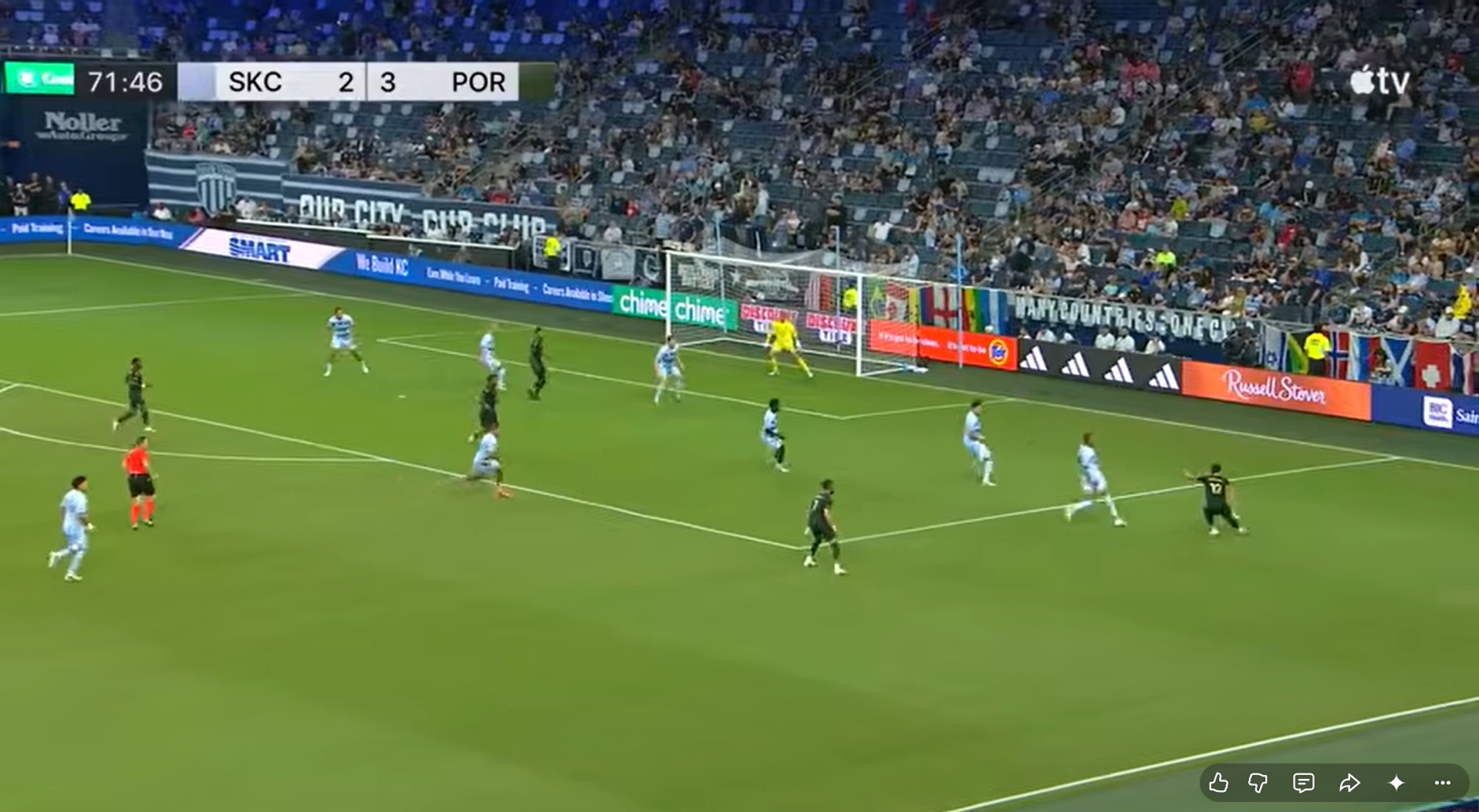
I do not hate the decision from Hernandez to try and float this ball into the penalty area. However, he does have some space to take a couple extra touches and attempt to play another cutback cross into a box that will undoubtedly be more occupied than it is now. The number of players that get into the box are about to make a serious difference in regards to what happens next.
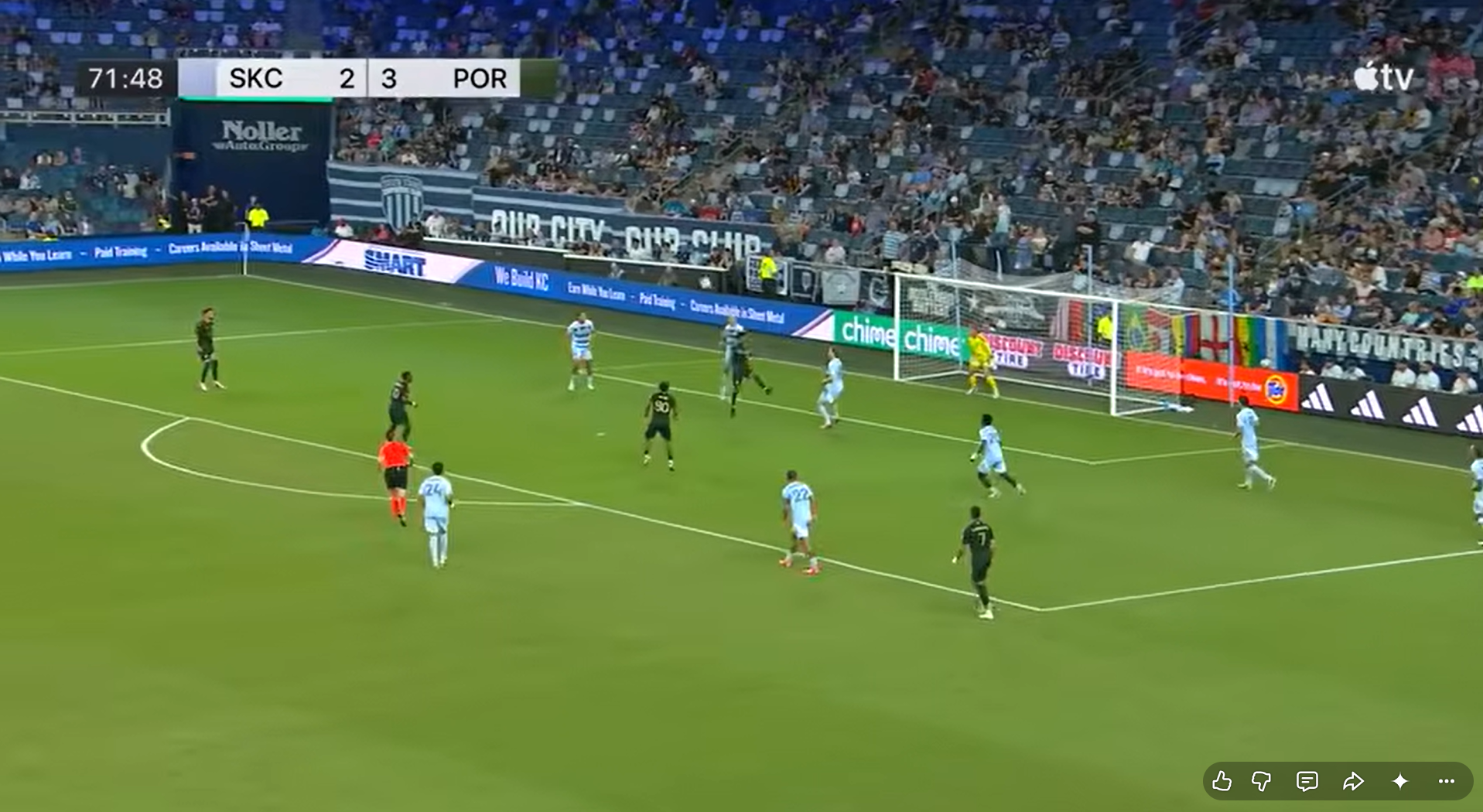
Antony is not an aerial threat, and he isn’t expected to be one. No surprises as Miller wins this header. However, with Hernandez effectively counting as another attacker, there are now 6 committed Timbers in the vicinity of the penalty area. Miller’s header is about to present a second-ball opportunity. The Timbers spent the majority of the first half vacuuming up second balls in order to keep SKC pinned in their own half. A Timber has to win this second ball. If not, a catastrophe could unfold.
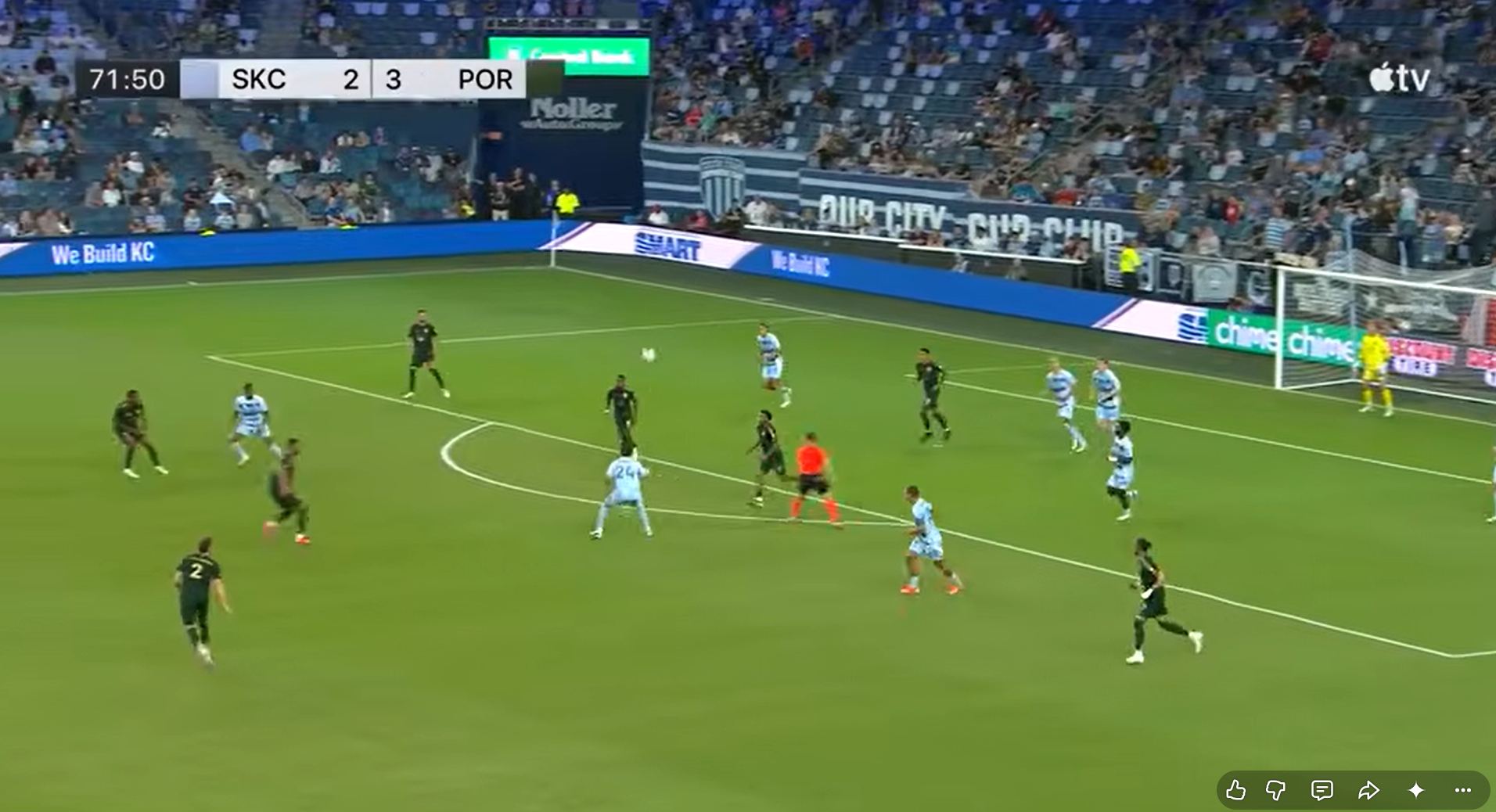
Cue the catastrophe. Ruben Ramos Jr has only been on the field for one minute. But the gravity of this ball is pulling Ortiz, Da Costa, and Caicedo towards it. None of these Timbers are going to be able to win it.
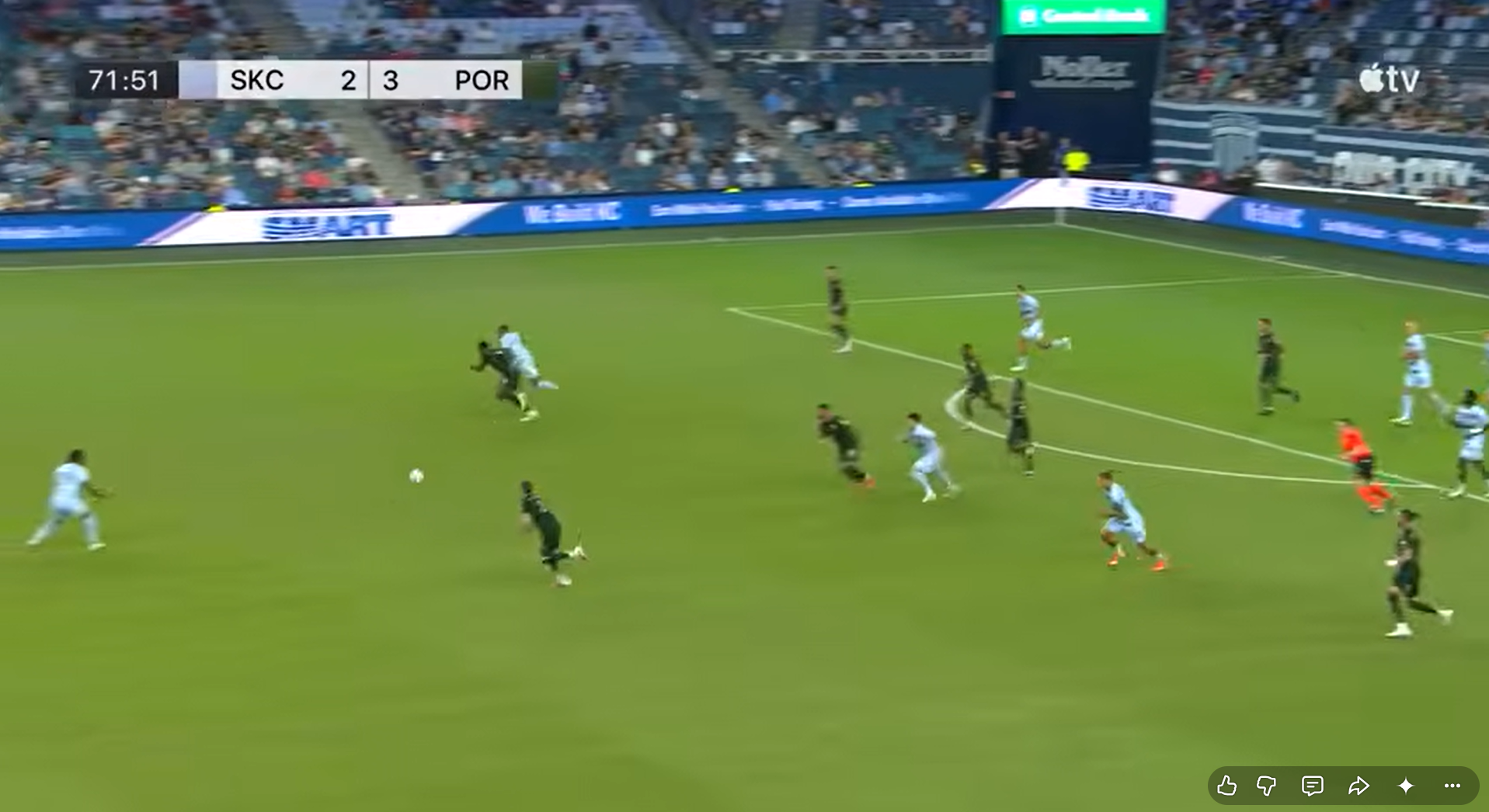
The Timbers had 6 committed attackers when Hernandez floated the initial cross in. Caicedo was a rest defender. He came into the picture as he converged on Ramos to try and win the second ball that he had no chance of getting to. Now two of Portland’s other three rest defenders enter the picture. Fory and Waterman have stepped way up. It was a reaction to Caicedo’s advancement. Ramos doesn’t even need to settle the ball. He can flick it approximately 15 yards forward to Seymour Reid.
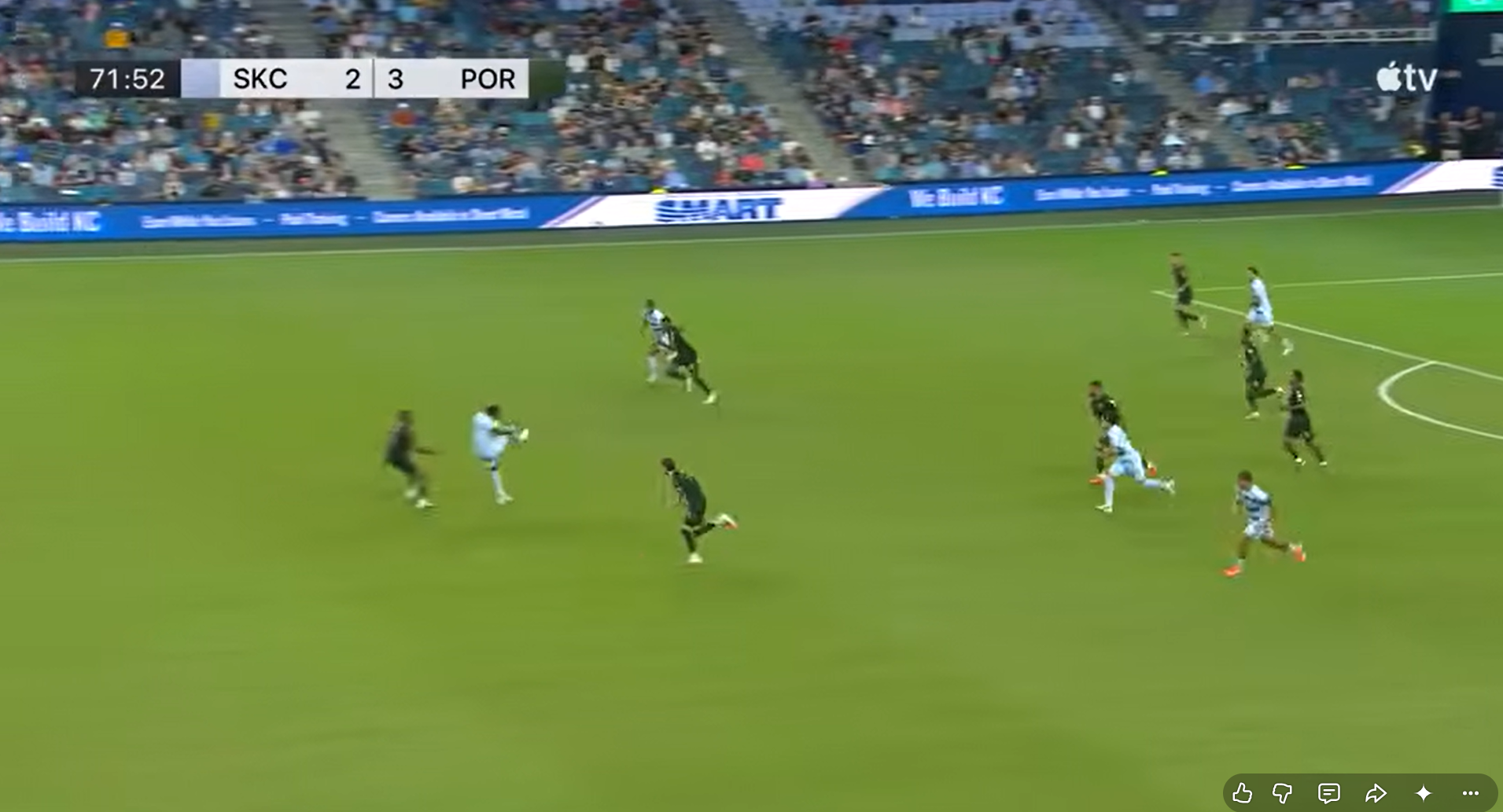
If Ramos didn’t need to settle the ball, Reid absolutely doesn’t either. Kamal Miller, Portland’s final rest defender, has to mark him. Fory knows where Reid’s pass is going. Luiz has just started picking up steam. The Brazilian winger is the fastest player on the pitch. Lord have mercy.
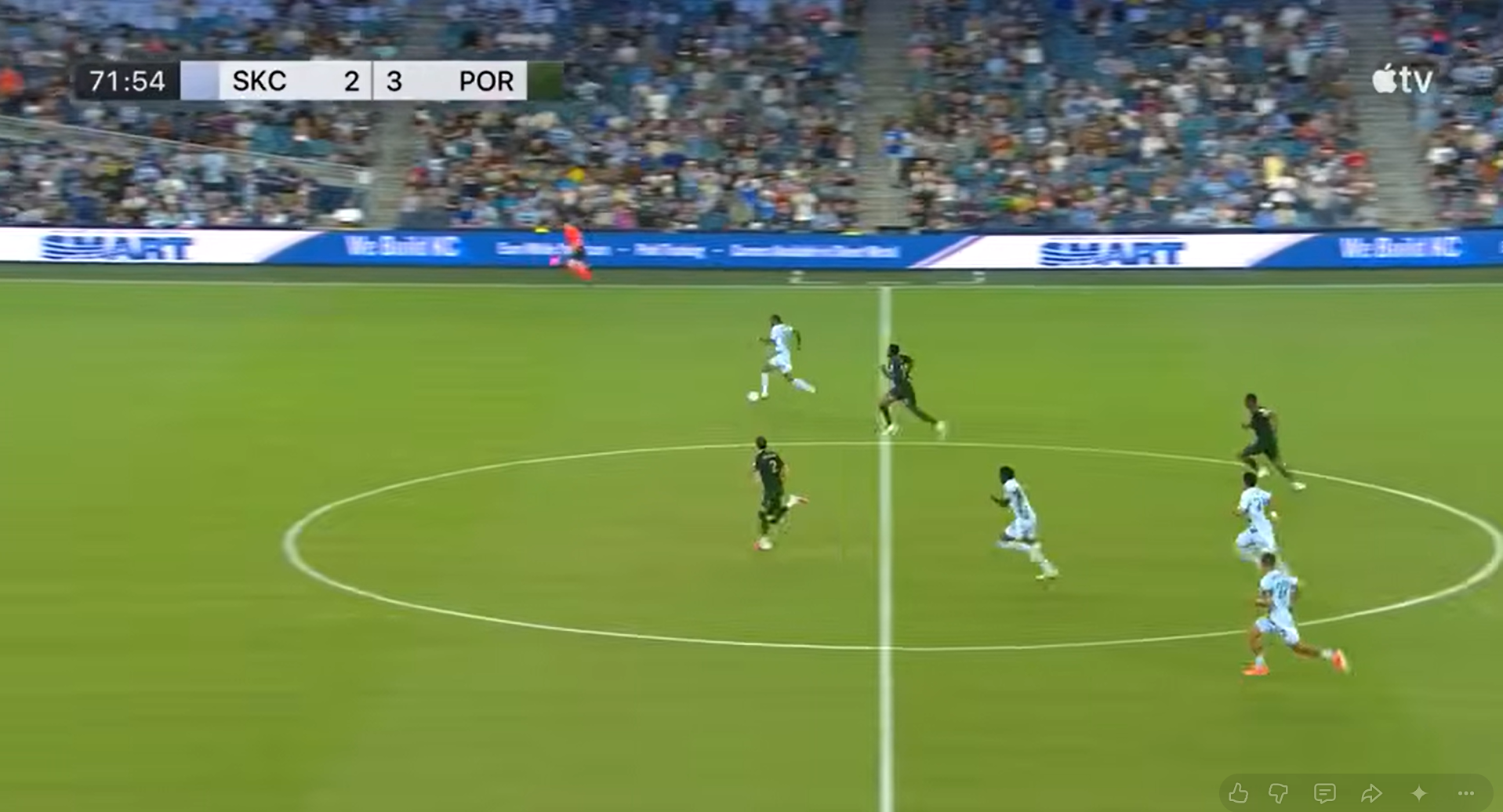
This is where Luiz takes his first touch.
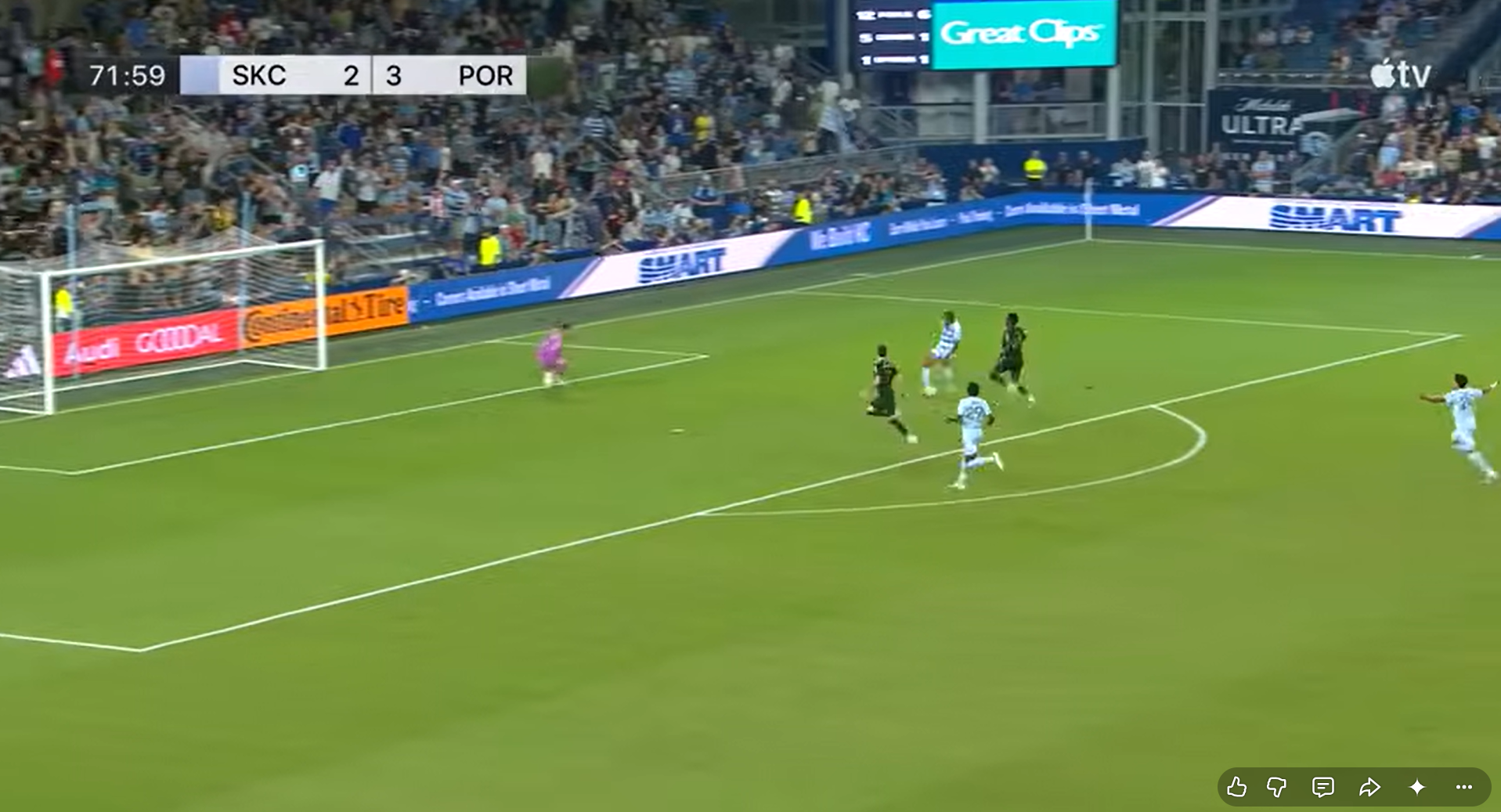
Luiz slows down to make sure he absolutely doesn’t screw up this chance. He has time, after all. He puts it past Pantemis to tie the game. 3-3. 73rd minute.
The Timbers blew a 3-goal lead against Minnesota through some genuinely tragic defending. Tonight, their leads were erased because of a debatable penalty kick, an off-balanced touch leading to a terribly deflected shot, and one failure to win a second ball.
9 minutes passed without either team taking a shot. However, the Wizards were able to remain on the front foot. Portland had a brief spell of possession in the 81st minute, which led to Eric Izoita testing Sir Steve of Cleve from distance (the shot was hit directly at him, but it was encouraging to see Portland’s foremost academy graduate dribble through the midfield and have the confidence to try something). Four minutes later, Antony and Lassiter combined on the right wing to send the Brazilian winger streaking down the right side. Miller tailed him, shut down his escape route, and Antony was forced to play a pass into the middle of the pitch from the corner flag. Not a single Timber had made a supporting run, and the loose ball was easily scooped up by SKC.
Could that Antony pass to no one fall into the “bad body language” category? I think it does, and that assertion is backed up by another sequence 6 minutes later.
In the 90+1', Alexander Aravena makes a strong backpress. He jostles the ball loose, but the ball sprays backward through a crowd of green shirts and springs Harris through on goal. In theory, a strong counterpress like this should be able to work. But luck is not on Portland’s side. When Aravena gets the ball loose, he has plenty of green shirts around him. But the ball squirts through and every single player briefly drops their heads. Harris breaks through, and only his inability to finish a golden chance keeps the Timbers from completely blowing the game.
After SKC blew their chance to win, it was time for the Timbers to get one. In the 5th minute of second-half stoppage time, Ian Smith found Izoita inside the box. A nifty dribble created some space, and Aravena picked up the ball.
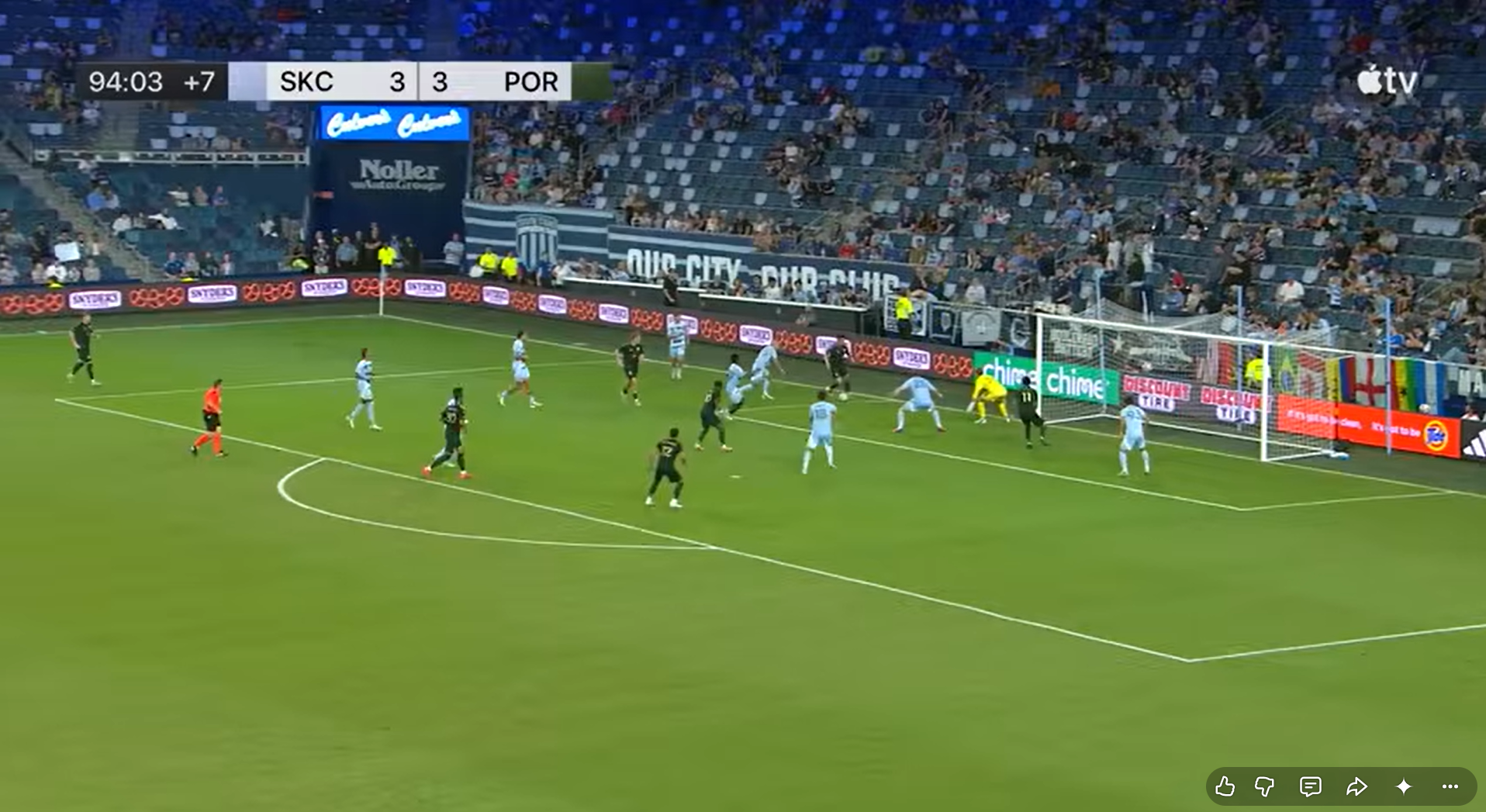
In the dying moments of the famous victory in Seattle earlier this year, Da Costa had the ball in a similar position with Aravena offering the perfect cutback option. Portuguese Dave teed up the on-loan Chilean so he could open his Timbers account. It ended up hitting the scoresheet as the fifth goal in a 5-1 rout. This situation is much more important. The Portland Timbers need to find a victory. And the roles are reversed. Aravena is now on the touchline, and Da Costa is the cutback option. The lane is open for Aravena to play the pass. Da Costa wouldn’t even need to take a touch. He could slot it into the unguarded net with Antony acting as a legal screen. Portland’s game-winning goal is in sight.
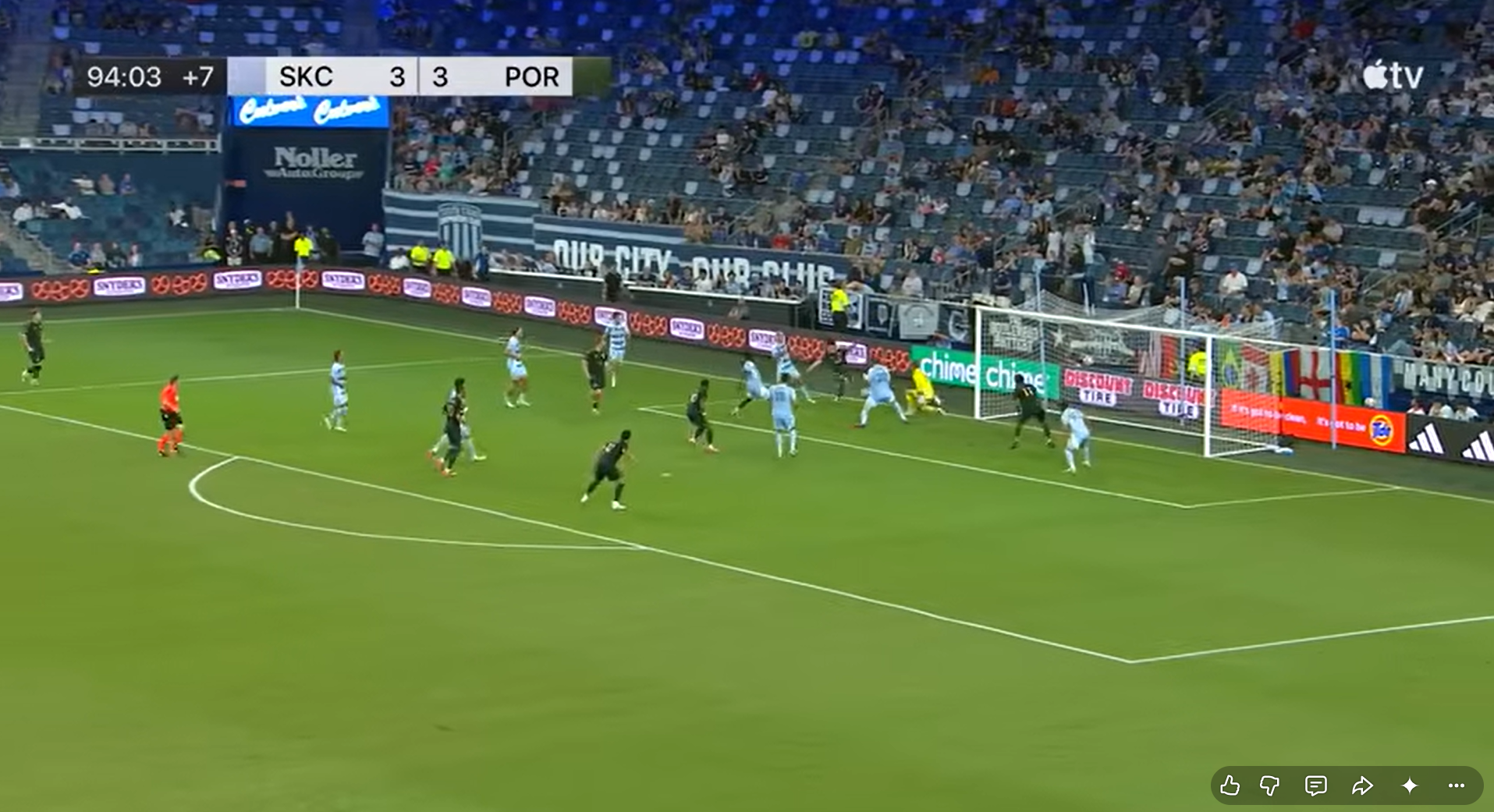
And Aravena chooses to shoot from an extremely tight angle with Sir Steve of Cleve perfectly blocking all available approaches to the goal. The Chilean winger doesn’t try to go through Cleveland’s legs. He hits this shot directly into Cleveland’s chest. In the second most notable Cleveland sports moment of the night, SKC’s goalkeeper protects the draw.
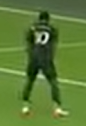
Da Costa can’t believe it. Neither can everyone else who has a rooting interest in the Portland Timbers. Izoita and Aravena did all the work necessary to bring the ball to the doorstep of the goal. One more pass was all that was needed. And Portland’s biggest chance to win goes begging.
The last notable action in this game is Da Costa’s attempt to try and win a penalty in the 6th minute of stoppage time. Aside from a desperate and blocked Caicedo volley in the 90+8’, the Timbers do not take another shot after Aravena’s missed opportunity. The Portland Timbers keep their unbeaten streak against the Wizards alive (6 games), but two dropped points cast the biggest shadow.
Nine (Seven) Minutes
Let me make a quick adjustment to the record. According to the game log, the Timbers maintained both of their two-goal leads for a combined 9 minutes. But that number is misleading. It took SKC one minute to drive down the field and win the penalty kick that turned into their first goal. So that number is actually 7 minutes instead of 9.
In theory, scoring a goal gives the scoring team momentum, while conceding a goal acts in the opposite manner. Therefore, it is completely inexplicable that the Timbers continue to be so vulnerable after scoring. Every single one of SKC’s goals were scored within a period of 10 minutes after a Portland goal. It is a pattern that has held under every head coach and every bit of roster churn. These Timbers do need some roster upgrades, yes. But those upgrades need to properly replace one player that is still waiting for their shoes to be filled.
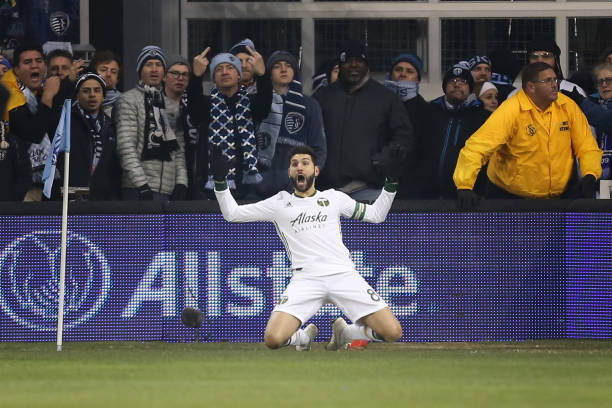
Isn’t this picture such a work of art? And you all know exactly where this picture comes from! But I don’t want to talk about Diego Valeri’s statistical contributions. Of course the Timbers would love to have a prime Valeri to call upon from an attacking perspective. Every team in the league would! But there’s been one aspect of Valeri’s game that has been missing since his departure after the 2021 season: genuine on-field leadership.
Some players have tried to pick up that torch in the past five years to varying degrees of success. I’d like to highlight Janssen very briefly. He’s one of the most vocal players on the team, guiding players to marking assignments and being a dominating voice on the training ground. His booming instructions were very audible throughout last night’s game. Which is why I don’t think it’s a coincidence that Portland’s collapse started occurring once Janssen was subbed off in the 63rd minute. There is a serious on-field leadership vacuum in this team. It has existed for years, with plenty of blown games and poor starts as evidence. The body language on this team shouldn’t be this bad when circumstances turn against them. One of these attacking players needs to take on the primary leadership role, or a new signing will be tasked with doing so.
There are active candidates for that role on this team. Velde is the front-runner, but his leadership contributions vary from game to game. Janssen is not a 90-minute guarantee every week. I thought Cole Bassett could be a top leader on this team, but that development hasn’t occurred yet. One of these attackers has to take up the leadership mantle.
But why focus on the attackers when the Timbers scored 3 goals and blew a lead? Didn’t the attackers do their job? Let’s take a look at some primary defensive leaders. Finn Surman is the default vice captain, and he’s still growing into that role. Kamal Miller is one of the most respected veterans in the locker room, but he’s not a locked-in starter in a fully healthy and available squad. Pantemis is a goalkeeper who is still struggling to command his own box. Caicedo has been the most intriguing option to step into the leadership vacuum, especially considering he’s often observed directing traffic with the ball at his feet. Maybe Caicedo can blossom into that role.
The inability to bring in a bonafide leader for this young squad rests firmly at Ned Grabavoy’s feet. A healthy squad has a proper balance between younger players and veterans. This squad is still woefully unbalanced towards younger key contributors. There is not a guaranteed veteran starter (aside from Janssen and Kamal Miller) with the leadership credentials that this team desperately needs. Although Diego Chara is the model soccer player and human, he simply isn’t vocal enough to fill that role. Valeri grew into that role during his time in Portland. Defaulting to the 2/4 roster model works if the veterans brought in to support the U22s actually provide that support. The Timbers are still trying to learn from their Phil Neville-related mistakes. Cifuentes is a different kind of coach. He’s not going to be yelling and demonstrating from the sideline during the vast majority of a game. Finding that leader is paramount during the offseason. Otherwise, these kinds of collapses and disappointing results are going to keep happening. That is not an opinion, it is a fact.
A Different Tilt
I’m not going to do a box tilt breakdown this week. Nor will I go over the duel numbers. You don’t need me to say that the Timbers dominated the ground duels and just finished behind SKC in aerial duels. That was apparent from watching this game, particularly in the first half.
But you’d probably like some explanation about this graphic.
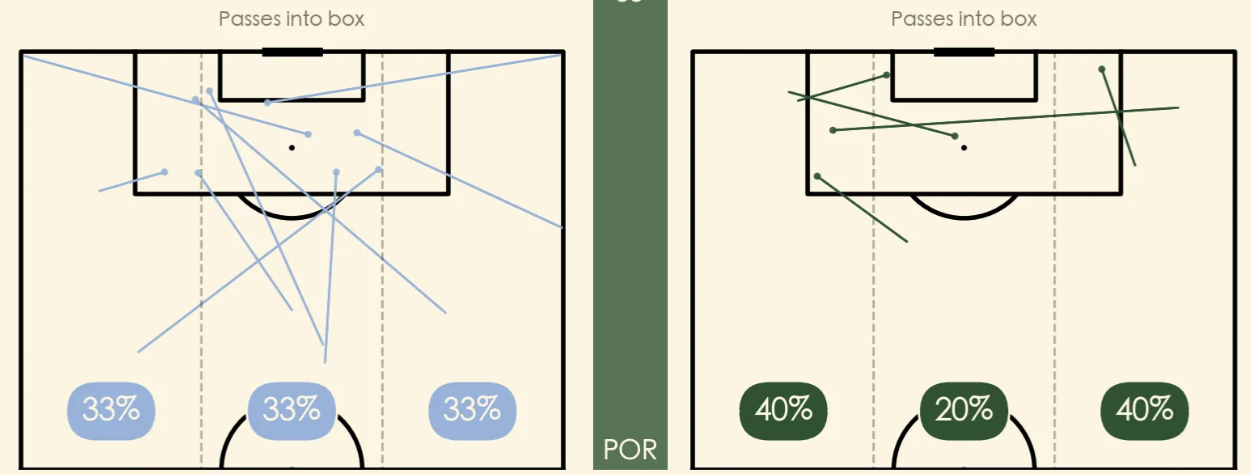
Here is your snapshot of Portland’s continued push-and-pull between risk and control. Controlling the game in the first half led to a very composed performance, but it only resulted in 4 shots (one of which came from the penalty spot). The rotations and passing sequences were well-executed, but the “breakthrough balls” were few and far between.
I think that can still be attributed to a lack of consistently dangerous off-ball movement, which is the final key to the puzzle of Cifuentes’ desired attacking structure. Lassiter’s goal is a prime example. Fory makes the underlapping run to get in position to deliver that sweet cutback cross. More and more patterns from the training ground are carrying over into the games. There are good signs! But there is still an underlying need for more risks to be taken. Which is why Portland’s floor under Cifuentes will be set by their counterpress.
A strong counterpress provides the platform for those risks to be taken. If losing the ball can quickly be reversed by regaining the ball through counter-pressing, those risks become much more manageable. Which is why the first half is so encouraging in both the short and long term. Second balls were gobbled up by Timbers. The pressure was never taken off SKC, and even their brief forays into Portland’s half were stymied. Counterpressing is the most important part of the plane. And if the Timbers’ counterpress fails, they concede a fast break goal to Andre Luiz. Any talk of defensive solidity begins with counterpressing. If the Timbers can continue living in the opposition half, they’ll win a lot more games.
One last counterpressing note before I move on. Here’s Cifuentes’ assessment of when things started to go wrong, particularly when the Timbers started to drop their line of confrontation: “We started with the aim to be very compact, but we started to drop too much. We would love to see that same compactness but higher up on the pitch.”
That compactness is crucial. The lack of compactness on SKC’s 3rd goal is mind-boggling. Part of the Neville era is still carrying over when giant gaps open in midfield because the team doesn’t move as a unit when they’re defending. The high-level counterpressing teams move their structure up and down the field in sync. Portland still has a way to go to reach that level. But it can be done, as the first half proved.
Player Ratings
James Pantemis: 7.8
The Canadian goalkeeper deserved a start for his country during the international break. Since Jesse Marsch decided not to reward him, Pantemis responded by saving another penalty. It's the 5th PK save of his career, with all of them occurring in a Timbers kit. But Pantemis was only able to make one other save tonight (on Calheira's 21st-minute 30-yard attempt). None of the 3 concessions can be blamed on him. Definitely a frustrating night at the office.
Ronald Hernandez: 7.3
Would you like to see a really good Ronald Hernandez tackle?
Apple is being rather difficult. Go to the 57th minute to see Ronald Hernandez make a really good tackle.
He's been acquitted himself very well in a Timbers jersey given the circumstances. I remain a big fan of the long balls he keeps trying, even if a couple of them didn't work out. It was a really solid outing from the Venezuelan fullback.
Joel Waterman: 6.8
The Canadian center back wasn't called into action too often defensively. The deflection that turned into SKC's second goal seemed unlucky at worst. However, there is an aspect of his game that I'm not too sure how to feel about.
31st minute, Waterman gets caught really high upfield on a press but his teammates cover for him.
If the Timbers want to be a pressing team, the rest of the squad needs to share Waterman's off-ball aggression. It's interesting having such an aggressive “stepper” in the backline. Plus Waterman is an asset with the ball at his feet. He became the safe option for the Timbers to keep the ball during the first half. Very well done.
Kamal Miller: 8.2
Make no mistake about it: Kamal Miller was stupendous yesterday. 2 tackles, 1 block, 7 clearances, 1 interception, and 2 ball recoveries constitute a really good day at the office. That statline includes another trademark slide tackle. Miller is one of the most entertaining players to watch when he's playing with his hair on fire. The Miller/Waterman partnership weren't at fault for any of Portland's 3 concessions. And it was their first time starting together since they were teammates in Montreal back in 2023! Pantemis gets included too!
Jimer Fory: 7.5
The toughest duty for any Timbers player was Fory's instructions to limit Andre Luiz. Sure, he had a lot of help from his teammates, but it was his primary duty and he largely passed with flying colors. Can he really be blamed for losing that footrace? His part in SKC's 3rd goal is pretty minor considering the errors in front of him. And his assist was excellent! Fory has been one of Portland's top players since Cifuentes joined the club. I don't think that's up for debate.
Diego Chara: 6.5
Chara spent time alternating between covering ground in the midfield and double-teaming Luiz. However, his most notable action was conceding the penalty. While the action wasn't the most worthy of the punishment, it certainly was within reason. Another unfortunate break. However, on the fortunate side, Chara was lucky not to get booked on that challenge. But how fortunate is it when Lauziere robbed him of an opportunity to keep adding to his league-record tally of Yellow cards? Can you get an I.O.U. for bookings?
Chara was subbed off in the 63rd minute. For a brief thought exercise, let's consider how many MLS minutes have been up for grabs during Cifuentes’ tenure. 10 games equals 900 minutes, and Chara has played 495 of them. That's 55%. Goodness me. He's 40.
Joao Ortiz: 8.1
Folks, Joao Ortiz has arrived.
Not only was the gameplan perfectly tailored to his strengths, he excelled at the game management aspects that the Timbers usually struggle with. I do not think he made a single bad decision during the 75 minutes he was on the pitch. Those decisions include drawing fouls to slow the game down (he drew 2 of them), making the right passing choices (and completing 32/33 of his attempts), and owning the right channel. There are some games where he should start, but I think he’s the ultimate security blanket to bring in to protect a lead.
David Da Costa: 9
One goal and one secondary assist will surely grab the headlines, but there’s one stat that stands out above all else. Portuguese Dave led all players with 10 ball recoveries.
That’s more than double his season average, and he earned every single one of them. He became the double on the Luiz double-team, while frequently being observed tracking back with regularity. He was making dangerous runs, and remained dangerous on the ball. And, most frustratingly, he was in the perfect position to slot home the potential game-winning goal. If only he received the cutback.
Da Costa’s game has reached new heights as Marti Cifuentes has discovered how tailor-made the Portuguese playmaker is for his system. He has 4g/1a since Cifuentes took charge. And that doesn’t count his secondary assist from tonight. That’s 42% of his goal involvements coming in the last 10 games. Excellent.
Ariel Lassiter: 9.3
The Costa Rican winger directly contributed to every Timbers goal. A primary assist on the first, a primary assist on the penalty (that’s a real thing), and scoring the third. And C.I. DeMann provided a very useful stat on Bluesky in regards to Lassiter’s efficiency.
Assuming that Lassiter maintained his current pace of goal contributions, he’d have 10g/12a if you doubled the amount of minutes he’s played. Of course, that’s taking secondary assists into account, but 2026 is already Lassiter’s most impressive statistical season in MLS from a primary standpoint. He has 12 total goal contributions this season (8g/4a), which beats his 2022 output from Miami (6g/4a). It still bewilders me that he only played FORTY-EIGHT minutes across both April and May.
“We know that after the last couple of games, the first half hasn’t always been the best. So I feel like we started off pretty well. We started off so strong. To give up a goal at the end of the half like that with so much momentum was really difficult,” Lassiter said post-game. In addition, I think he summed up the night pretty succinctly. “I think that we can all look at ourselves and say that we could do more and be better defensively, as a group and as a unit.”
Kristoffer Velde: 6.2
That missed opportunity to clear the ball and send the game to halftime ended up inadvertently costing the Timbers a goal. I’ll have more to say about Velde ahead of the Galaxy game, but I want to keep it relatively simple for tonight’s game and only hit on the major points.
There is an uneasy pattern that is beginning to emerge in Velde’s game, and Portland’s future success revolves around finding a way to fix it.
The biggest positional mismatch in MLS, in theory, is supposed to be a DP winger against any fullback. Fullback spots are rarely occupied by players on high wages, and are a common spot for teams to try and find bargain-bin players. Henceforth, a common battle on a MLS pitch is between a DP winger and a fullback who occupies a Supplemental Roster slot.
SKC’s Justin Reynolds doesn’t occupy a Supplemental slot this year, but he would on any other team. Velde was routinely put in the doghouse by Reynolds throughout this game. This performance falls in the same category as Velde's ineffectiveness against Atlanta’s Matthew Edwards on September 19th. He needs to be winning these battles consistently. That’s the expectation of being a DP winger in MLS. In addition, he wasn’t able to gain an advantage when Ian James (SKC’s current 4th-string center back) deputized at right back. That’s awfully concerning.
And being a DP provides him no favors in regards to the referee’s whistle. Velde was fishing for whistles tonight, often going down at the slightest convenience. It’s hard to shake that reputation with a fair amount of evidence, especially if legitimate challenges end up passing by the wayside. Velde still managed to draw six fouls, including the penalty kick at the end of the first half. I’d like to end this section by noting a curiosity. I noticed Velde defending his own box during defensive corner kicks. I don’t remember seeing that too often before, but I’ll keep an eye out for it in the future.
Vincent Janssen: 7
I think Janssen’s yellow card was extremely harsh, especially considering the challenges that came after it. That booking occurred in the 12th minute, and I think it forced the Dutch striker to tone down his usual off-ball aggression. A pretty unfortunate development, if I must say. Janssen’s ability to lead the press is one of the better aspects of his game.
But on the attacking side, it seemed like he wasn’t at his sharpest. Several loose touches stood out in addition to a couple missed or late runs into the box. However, he is the only natural striker who is penciled into the starting lineup each and every game if he’s healthy. Did you guys notice that Gage Guerra, Portland’s nominal backup striker and the only other natural striker on the roster, didn’t travel with the team to Kansas City?
Jose Caicedo: 5
There are two inevitable truths about Jose Caicedo. First of all, his effort can never be questioned. But the second inevitable truth was what really stood out tonight: it takes him a while to get into the flow of a game. That’s true regardless of whether or not he’s starting or coming off the bench. And as he entered tonight’s game in the 63rd minute for his first action since September 5th, it took him a while to warm up.
A rusty Caicedo was primarily at fault for both SKC goals in the second half. It was his shanked clearance and resulting loss of possession that kept the play alive on SKC’s second goal, while his aggressive step on SKC’s third forced his backline to push up as well, opening space in behind. I really want to chalk those plays up to rust, compounded with entering the game as a lone 6. I wonder how many minutes he’s cleared for on Wednesday. Portland’s floor generally gets raised when Caicedo is on the field, but tonight it was lowered. Unfortunate.
Antony: 6.4
As Andre Luiz was sprang free on the breakaway that became SKC’s 3rd goal, I was reminded of the rapid Brazilian winger on the other team. Antony’s superpower remains his speed and effectiveness on the counterattack. When the Timbers got one of those opportunities in the 85th minute, none of his teammates ran forward to help him. The resulting centering pass to no one is going to stick in my mind for a bit.
In addition, it was slightly odd to see him playing as a striker with Velde and Da Costa on the field. There were ways for the Timbers to use his speed out wide, so it was odd given the game state to play him up top.
Eric Izoita: The Future And The Present
Here’s a hot take that might not be so hot: the Timbers should be preparing to enter the sprint season with Eric Izoita penciled in as a starter in the right-sided 8 role.
Izoita puts in the work defensively (2 tackles and 1 clearance) while also looking to propel the game forward. You can feel the energy change when he enters the game. It would be a massive mistake if the Timbers decided to recruit over him. This was a game that he probably should’ve started, and I’m wondering about his availability for Wednesday with the NEXTPRO playoff game on Friday.
Ian Smith: 6.8
Smith showed some intriguing chemistry on the left side with Izoita and kept pushing the play forward in his 10 minutes of game time. Can’t ask for much more than that.
Alexander Aravena: 5.8
The Aravena experience continues to be intriguing and frustrating. In terms of his movement, he was excellent; gliding through SKC defenders with ease. However, the Timbers do take all 3 points if Aravena is able to cut the ball back to Da Costa. I do not like the trend of poor Aravena decisions at the end of games. Tonight’s error joins the screwed up counter in Vancouver and the backpass giveaway against Dallas as entries into that unfortunate club. I wonder if he’s going to start in Carson or against Colorado this week.
Coach Rating: 6.5
I am only going to say this once. It is going to be my final offering on the subject. I do not want to hear any disagreements. Rehashing the same point over and over and over again is beyond tiring.
Jack Cassidy was given a pillow-soft schedule and went 4-1-1 with only one road game. That road game was in Seattle, where the Timbers have amassed a 7-5-2 record since the start of 2017. The ceiling that Marti Cifuentes can provide is much more exciting than the floor of Cassidy. This should be pretty clear and understandable to a majority of you. A new head coach is going to bring growing pains, and those growing pains would surely have hit if Cassidy was still in charge after Leagues Cup.
The pile of injuries and lack of squad reinforcement have already made Cifuentes’ job a lot harder than usual. I do not need to relitigate the list of grievances. Instead, the Catalonian head coach can only work with the cards that he has been dealt. Amidst these challenges, it’s clear to see that incremental progress is being made.
You cannot look at this game without praising the first half as a near ideal expression of Cifuentes’ system. And yet, there will remain things to work on. SKC managed to create 0.85 xG from open play. That’s a pretty good number, but it can be better. Meanwhile, the Timbers were only able to create 0.34 xG from open play. That can absolutely be improved. The collective responses to scoring and conceding still need work too.
But I’m also left with a couple of questions about personnel choices and the motivations behind them. For the first time as a Timber, Cole Bassett was in the matchday squad but didn’t get on the field. Antony played through the middle instead of out wide, with Cifuentes insisting that the team dropped into a back three with Antony and Aravena up top after the final substitution window. The structure largely looked the same to me, but I’ll give the head coach the benefit of the doubt here. He does like to go to a back three late in games, so this switch isn’t something out of the ordinary. I just wish that the structural change was more apparent.
And it’s still blatantly clear that any snap judgements about Cifuentes hold zero validity given the manner of his appointment, the lack of reinforcements in the summer, and the ongoing injury crisis. It does not make for a very appetizing soup, and it’s certainly not a soup of excuses either. It’s just a matter of observing the situation with practicality.
So in light of this result, I wondered if Cifuentes would view this game differently if Aravena was able to convert the chance at the very end of second-half stoppage time. “For me, ‘almost’ never exists in football. It’s the same way that I speak about ‘deserving’: I don’t care. I think we need to compete much better. I think we need to be much more consistent. ‘Almost’ is a different world than reality. And the reality is that we allowed them to create a lot of chances. We dropped a two-goal advantage two times. And we allowed them to score in the last second of the first half, which is a bit ‘naive,’ to say. That’s the reason I’m here, to make sure that the team improves in those sorts of situations. And not thinking about the ‘if’ or ‘almost’ because then every game will have an explanation or an excuse, and I’m not that kind of guy.”
Unfortunately, I cannot subscribe to Cifuentes’ beliefs concerning the ‘if’ or ‘almost.’ Some of these games will have excuses attached, there’s no denying it. However, I would like to see Cifuentes increase the level of “game intelligence” in the squad. It was very refreshing watching the Timbers take the maximum amount of time on restarts in the first half, which is not against the rules and works in favor of a possession team. When the game intelligence began to slip, so did the Timbers. No, it’s not passing patterns and pressing structures, but those little things are very important when it comes to winning games of soccer.
Table Time
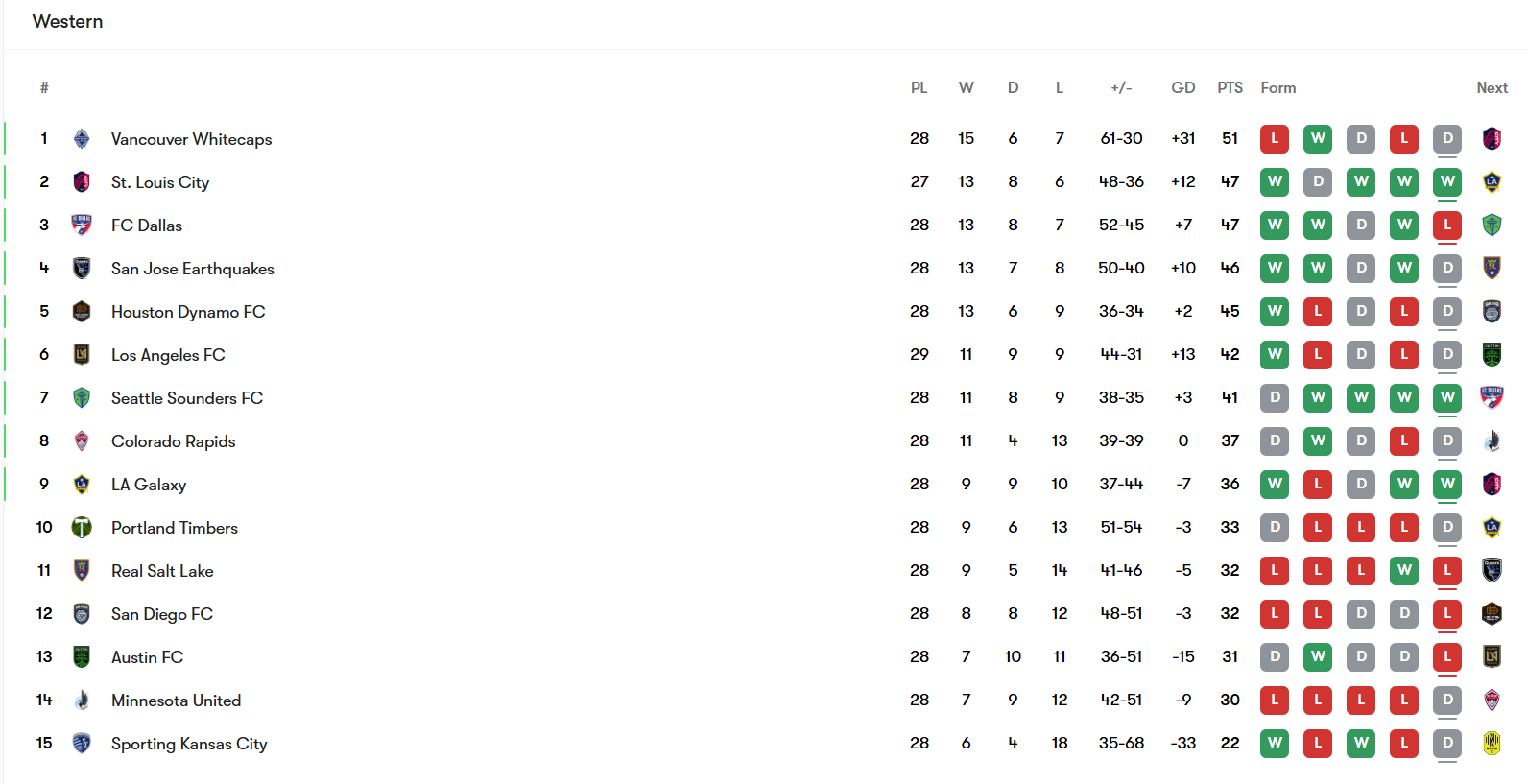
3 points is the base gap between the Timbers and the playoffs, but they have to fend off four hungry-ish teams below them who are all within striking distance. I do not want to talk about the other results around the league except Colorado’s 1-1 draw with San Jose (2 points dropped). Four points now separate the Rapids and Timbers ahead of their gigantic six-pointer next Saturday. The Galaxy play on Sunday “night” (soccer) against St. Louis.
And just for kicks, the Seattle Sounders’ 13-game winless streak has quickly morphed into a 9-game unbeaten streak. The streaks were bridged by a run of 5 consecutive draws that have quickly given way to 4 consecutive wins. Are you surprised? I’m not. Hope you got your licks in while you could. I told you to savor it. The dial always flips back to “getting away with it” eventually.
Final Whistle
Meanwhile, the opportunity to travel for these games opens my eyes to new MLS environments and, therefore, new traditions. And last night, amidst songs about Andre Luiz and a celebration of a draw that felt like a win, there was a slight bit of sadness in the KC Cauldron. Brisket Bob was nowhere to be found.
Some fan traditions are born out of original ideas, while others are imitations of ones done abroad. However, Brisket Bob is inspired by a fellow domestic team. When the Portland Timbers joined MLS in 2011 and brought their Victory Log to the national audience, Sporting Kansas City fans saw an opportunity to troll. At every SKC-Portland game since 2011, Brisket Bob makes an appearance to throw brisket slices into the crowd after every SKC goal. This mocking tradition only exists when the Timbers come to town. After the original Brisket Bob tragically passed away, a monument was erected in his honor at Sporting Park.
Since Brisket Bob is only present during Timbers games, a fair amount of SKC fans were severely disappointed that he wasn’t in attendance yesterday. This led some of them to loudly proclaim that they could do Brisket Bob’s job and that they wanted to bring back the “Barbeque” chant. I’d chalk it up to the thrill of a draw that felt like a win that was delivered by an $18M player who looks like that pricetag might be a bargain. Just allow them to get rowdy and have fun. SKC has endured a miserable season, and they need something to celebrate. It’s Kansas City, for God’s sake. That metropolitan area was created as a monument to the controlled-access highway.
Kansas City is definitely better than that little jab, given that it’s a hub of barbeque and the home of the Negro League Museum. But as things currently stand, Kansas City is the home of the unquestioned worst team in MLS. A group that has tried in vain to climb the table and avoid taking home the Wooden Spoon for the first time in their history. The Timbers did not blow a lead against a team in a similar situation that was also fighting for a playoff spot. They blew that 2-goal lead to a team that is guaranteed to finish on the bottom of the Western Conference barring an absolute miracle. A loss like this to a normal team is enough cause for concern, but taking one measly point from the Sunflower State feels just as bad.
How long do the Timbers have to lick their wounds? Not long enough. They’re back at it again in Carson on Wednesday against an actual playoff rival. The LA Galaxy are still in the process of figuring out whether a star player’s ultra-long term injury is worth sacrificing some present success in the wake of a 2024 MLS Cup victory. And the Timbers are still beginning a new era with growing pains and a disappointing run of results.
Those disappointing results are doing nothing but creating more and more discourse for the upcoming offseason. 6 games remain for the Timbers to secure another Wild Card berth for the 3rd year in a row, but teams who find their way to make the postseason surely can hang onto a 3-1 lead against a woeful SKC team on the road. The prospects for the 2026 playoffs continue to look bleaker and bleaker. But the Timbers aren’t eliminated yet. There’s still plenty to fight for. And now a humongous six-pointer awaits. The climb continues.

Comments ()