
The Case For Humanity (#SaveTheCaps)
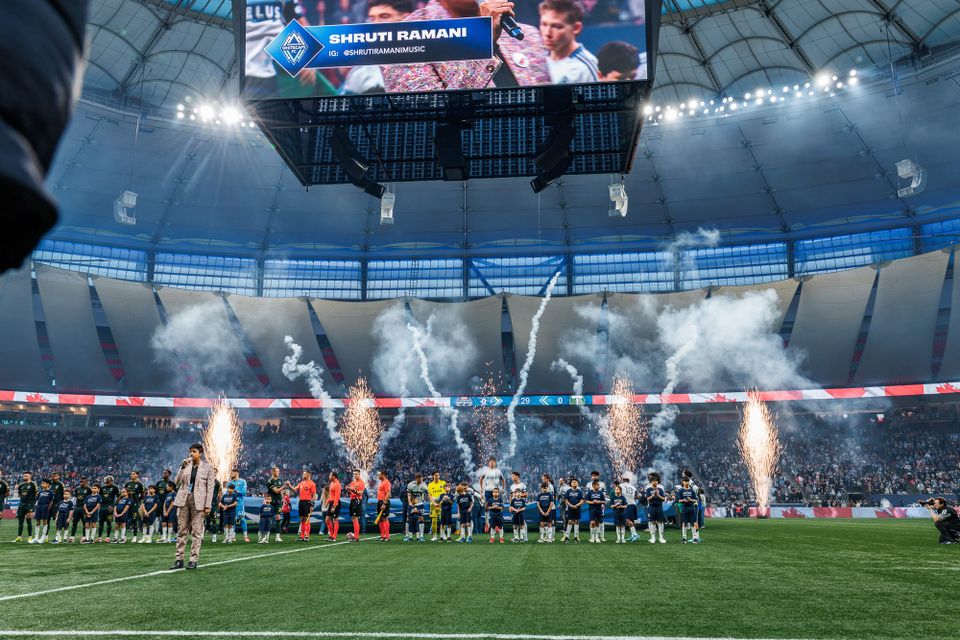
As the sun rises on another weekend chock-full of MLS matches, an ideological battle wages in Portland's neighboring city 6 hours to the north. The Vancouver Whitecaps are in a war for their own right to survive. And this battle is inching closer and closer to a conclusion; one that threatens every single entity involved in the Major League Soccer landscape.
Since the Timbers have played the Whitecaps twice this year (and lost both times), regular readers of this website (thank you) should have a basic understanding of the immense threat that currently hangs over the 50-year-old Canadian club. Time for an update for how their precarious situation has evolved over the past couple of months.
In December 2024, Vancouver’s ownership group (led by majority owner Greg Kerfoot with minority owners Steve Luzco, Jeff Mallett, and failed NBA head coach Steve Nash) decided to put the club up for sale. This decision was made due to a lopsided revenue agreement with PavCo, a government corporation that operates the Vancouver Convention Center and BC Place. The Whitecaps only take 12% of matchday revenue at the stadium; a figure far below the rest of the teams in MLS. BC Place is a wonderful stadium (with a crappy surface) with a perfect location. It makes perfect sense that the Whitecaps would want to play there.
However, it isn’t economically feasible for the team to do so given the current revenue split. Their lease agreement was scheduled to expire at the end of 2025, but an emergency one-year extension was approved for 2026. Since the team hasn’t been sold, questions surrounding the Whitecaps’ future in Vancouver began to bubble to the surface in the early months of this year.
Vancouver’s ownership group has stated that they’ve entertained “100s of potential buyers” in a quest to find the right deal that would keep the Whitecaps in the city. However, this week’s events have thrown doubt on that statement and increased speculation about the primary reason that a sale hasn’t been reached yet. Early on in the process, it appeared that the ownership group was hell-bent on finding a local buyer to keep the Whitecaps in Vancouver. But this week has thrown even more doubt on that line of reasoning. Instead, it appears that Kerfoot and company are solely focused on one thing: money.
There is nothing that MLS loves more than crowing about how valuable its franchises are. Every year, Sportico publishes a list of the most valuable franchises in the league. This is something that the league touts as a viability index. The Whitecaps are valued at $450 million, which is the 2nd-lowest in the league (just ahead of Montreal). Based on that valuation, it would seem like Vancouver’s owners would like to receive a payout for a similar fee. However, because rich people are the greediest people on Earth (not people on food stamps, I’m utterly shocked to report) it appears that Kerfoot and company are only intent on finding the best possible deal for themselves.
This is not my original opinion, as a matter of fact. But it’s what the Whitecaps fanbase largely believes. Over the past week, grievances have been raised over how little capital has been infused into the club. They have a point. Vancouver has routinely been one of the cheaper teams in MLS since entering the league alongside the Timbers in 2011. Success has been hard to come by, and it’s hard to see the team’s revitalization over the past few years as anything more than a serious effort from ownership to increase the visibility and success of the club as a PowerPoint to potential buyers. “Look at what this team can become with a little bit of effort! You could be in charge of this organization with a passionate fanbase (who likes to show up when the team is good)! Here’s Thomas Muller, a genuine soccer legend! Don’t you like what you see?”
Vancouver fans have become quite jaded, and their weariness is starting to rub off on me as well. However, their collective fatigue over the state of their favorite team (ONE THAT HAS EXISTED IN A PROFESSIONAL CAPACITY SINCE 1974) isn’t the only emotion present. The most common feeling is anger.
INTERMISSION: READ THIS ARTICLE
I’m lucky enough to employ several talented creatives at this wonderful website. I usually don’t do a great job of promoting their work alongside my own. Consider this some long overdue credit to the wonderful Cascadia FC team that has been assembled over the past four years. Alex Bowen put together this wonderful piece featuring a couple original photos that gives even more background to this horrendous situation. Please read it before continuing.
#SaveTheCaps, Continued
On Monday, it was reported that a “special committee” of MLS owners met earlier in April to discuss a potential Whitecaps relocation to Las Vegas. That move came on the heels of Saturday's home game; the last time the Whitecaps will play at home until August. This game (a 3-1 victory against Colorado) featured a massive fan-led protest centered around keeping the Whitecaps in Vancouver. The reporting of this committee meeting made it seem like relocation was closer to a reality than a pure concept. But no official bids were tabled when that article was published on The Athletic. Maybe, just maybe, someone would lodge a bid with so much speculation around the franchise.
In what seems like a pivotal moment for the global game, the wider soccer world descended on Vancouver for the 76th FIFA Congress this week. While Gianni Infantino (a certified douche who hands out fake Peace Prizes to war criminals) got on stage to speak a whole lot of nonsense and attempt to get the Israeli and Palestinian delegates to pose for a photo-op together (a scenario that evoked images of a grieving mother forced to smile and wave with the police officer who killed their innocent child without facing any criminal charges except for the voracious [and completely righteous] refusal of the mother to do so) Whitecaps fans protested outside the Vancouver Convention Center (a building ironically controlled by PavCo which is where the Congress was being held).
This collective image of FIFA paired with the common man should infuriate all of you. While Infantino brings his vociferous appetite for money to the city where the fans of the city’s biggest club are simply begging for their team to remain at home, a formalized bid was reported while FIFA’s president showered himself in praise and adoration surrounded by cowardly lick-spittles who clapped at his every word and those fans spent the weekday morning on the sidewalk chanting until their voices became hoarse.
That bid, from a 30-year-old grandson of a billionaire (which makes him a billionaire by inheritance, lovely) outlined a clear vision for the future of the Whitecaps: in Las Vegas. Grant Gustavson, whose mother is worth $8.5B, currently lives in the monument to humanity’s vices located in the middle of a sweltering desert. No official figures have been reported, but one thing is perfectly clear: Gustavson wants a MLS team.
SO WHAT IS STOPPING HIM FROM PAYING AN EXPANSION FEE AND RECEIVING A TEAM OF HIS OWN? To think from the potential owner’s perspective (embarking on this thought exercise does not mean that I endorse it) it’s probably worth a thought or two about the decision between expansion or relocation. The Whitecaps have owners that are definitely willing to sell, so the total cost of purchasing the Whitecaps and paying a relocation fee is probably cheaper than a potential expansion fee. That fee, mind you, would probably be north of $500M; the price that San Diego’s ownership group paid to enter the league in May 2023. Expansion would also necessitate a couple of years of infrastructure development before the team would be ready to begin play (this happens with every MLS expansion team).
However, given the desperation of Vancouver’s lease agreement, acquiring the Whitecaps would provide a potential buyer with an already completed roster and club infrastructure minus facilities. A buyer could opt to pursue the stadium site that British Columbia and the Whitecaps have signed a memorandum of understanding over (Alex talked about this, go read his article for more details on this MOU). Maybe the potential buyer could try to negotiate with PavCo for a more favorable stadium lease (which could lead to an actually profitable agreement given the amount of pressure PavCo is under) while a permanent stadium site in Vancouver is developed. However, those notions are the wishes of a fool. Gustavson wants his MLS team to be in Las Vegas. If this deal goes through, relocation is a certainty, not a possibility.
I do not know if Gustavson’s bid will be accepted. All I know is that it has been lodged. There are three entities engaged in this dilemma who actually have control over the proceedings. MLS, Vancouver’s ownership group, and the local provincial government are the only ones who possess the ability to make a decision about the future of the Whitecaps. The fans do not play a part in that. They can only provide significant pressure.
This is how every potential (and actual) relocation plays out. The fans merely exist as a reminder of the humanity that sports provide. This species has been engaging in sports for millenia. From the Mayan ball games to the ancient Olympics to Cherokee games of lacrosse to the advent of professional sports around the turn of the 20th century and the commercialized hellscape that professional (and “amateur”) sports has become in the present day, humans have always wanted to compete with each other in athletic events.
When sports became professionalized, the top athletes began to earn money for their exploits and the wealthy promptly began to rake in profits and keep those athletes from earning their fair share. Some might say that today’s athletes are WILDLY underpaid for the money that they provide to their employers. However, that could be said about so many humans currently occupying the workforce and generating capital for their bosses. Those non-athletes still love the competition and camaraderie that sports provide, so they spend their time and money by supporting the teams that they love. Those fans are what sports are for. “These are the people who write your paychecks” is a common refrain used by coaches across all sports to motivate their players ahead of games. Above all else, athletes play for the fans. Their professional career is dependent on their own performances, but those careers wouldn’t actually be careers without people in the stands or watching on TV.
That’s what our Big 3 entities have to understand. Throughout the history of American sports, relocations have been far too common. But most of those moves were done in a different era. To properly assess the folly of trying to relocate a team in the 21st century, let’s take a look at recent moves that have proven to be anti-human instead of gloriously successful.
The lone relocation that seems to have brought any form of success to a new metro area was Clay Bennett’s decision to move the Seattle Sonics to Oklahoma City. Like every major sports team owner (well, not every owner, Merritt Paulson has never done this [which doesn't excuse his own misdeeds at all, it's just the bare minimum social contract that every owner of a professional sport team should meet]) Bennett successfully pulled the “Dickhead Gambit.”
What is the “Dickhead Gambit?” Well, it’s a tried-and-true method used by rich people to try and get local communities to raise public funds for team infrastructure instead of footing the bill themselves by threatening to relocate the team if the public funds never arrived. The Portland Trail Blazers were recently acquired by Tom Dundon on April 6th, who wasted no time and pulled the Dickhead Gambit immediately upon arrival. On April 27th (THREE DAYS AGO, I MIGHT ADD) Oregon Governor Tina Kotek signed a bill that would fund a renovation of the Rose Garden. That deal isn’t finalized yet, but everyone is expecting it to pass. It will be enacted without A SINGLE DOLLAR being contributed by the Trail Blazers. Something this important probably should've required a public vote, but that didn't happen and now MILLIONS OF TAXPAYER DOLLARS will go towards arena renovations that could be privately financed by a literal billionaire. Dundon hasn’t even been in charge for ONE MONTH and he got the Dickhead Gambit to work.
Back to Bennett. He bought the Sonics from another noted dickhead (Starbucks’ union-busting CEO Howard Schultz) in 2006. Bennett immediately put pressure on Seattle, demanding $500M in tax revenue to build a new arena or he’d move the team to Oklahoma City. Seattle, to their credit, didn’t give in to Bennett’s wishes. Their righteous stubbornness (not a sin, actually something to be admired) merely caused Bennett to move the Sonics to OKC. There are only two reasons why this move worked: Hurricane Katrina and Oklahoma City itself. When the New Orleans Hornets were forced to temporarily relocate due to the fallout from the generationally cataclysmic storm in 2005, Oklahoma City was chosen as their temporary home. The residents of OKC, who didn’t have a single professional sports team besides the Triple-A affiliate of the Los Angeles Dodgers, took a liking to the NBA. Can you blame them? They had nothing better to do except be illiterate and build surface parking lots in their city centers. After the Hornets returned to the Crescent City, OKC was left hungry for basketball. It had already proven to be successful with the Hornets, so Bennett’s decision paid off.
Seattle has been floated as a NBA expansion city in recent years, but nothing has come of it. The Sacramento Kings were almost relocated to Seattle in 2013, but the NBA Board of Governors voted against relocation (with Bennett being one of the “no” votes). Other teams have been relocated but have been awarded expansion franchises in return. Look at the Charlotte Bobcats (now Hornets) and Houston Texans as proof. The Cleveland Browns were also brought back from the dead as an expansion team after Baltimore pulled a reverse Robert Irsay on them in 1996. That relocation was hotly contested, featuring legal threats and fan revolts. That pressure earned the city of Cleveland the right to have the Browns again. HOWEVER, those Browns that left were highly successful, winning a Super Bowl within 5 years of relocation. The expansion Browns are the sorriest franchise in NFL history, especially with the success of the Ravens hanging over their heads (and I say that as a New York Jets fan).
Do you notice the one thing in common here? These cities had teams stolen from underneath them and were replaced by shells of the teams that left. The Bobcats (Hornets) famously authored the worst season in NBA history in 2011-12. The new Browns and Texans haven’t reached a Super Bowl yet. But those teams are also the last vestiges of an old era in American sports: the expansion era. Only one team within the major 4 leagues (NOT MLS) has entered as an expansion team since 2004: the Vegas Golden Knights. More on them later.
(Edit: I forgot about the Seattle Kraken. They should do a better job of reminding people that they exist.)
The Sonics’ relocation began the era of American sports known as the “Sporting Death.” During this time, cities that were the victim of team relocation didn’t get an expansion team to replace their loss. Technically, this era began with the Vancouver Grizzlies’ relocation to Memphis. More on that later. Men’s professional basketball is dead in Seattle. Same with Atlanta hockey, Oakland football and baseball, Montreal baseball, St. Louis football, San Diego football, and Phoenix hockey. All of those cities deserved a chance to cheer on a professional team in those respective sports. Now they all have holes in their collective hearts; robbed of a chance for civic pride through athletic competition. Something that all of humanity has had for millenia. Gone in a flash.
Oakland, in particular, was robbed of their community assets because of Las Vegas. The Athletics and Raiders crossed state lines to play in a city that doesn’t want them. Because neither of them are Vegas’ teams. The Golden Knights, whatever you might think of them, did not steal another team in order to exist. That is the team that Las Vegas natives rally behind because it is their own and no one else’s. Not the Athletics (who haven’t even properly moved yet) and not the Raiders. Those are Oakland’s, and everyone knows it. Sure, the Athletics in particular have been yanked around the country throughout their long history as a professional baseball club (from Philadelphia to Kansas City to Oakland). Same with the Raiders, who went from Los Angeles to Oakland before settling in the Nevada desert. But the active generations of fans know and recognize them as Oakland’s. Those East Bay residents were struck with the double-punch of losing a baseball, football, and basketball team over the most recent decade (at least the Warriors moved across the water and not ACROSS STATE LINES).
Several of these teams fell prey to the Dickhead Gambit. However, Las Vegas simply became a sports destination after the advent of legalized sports betting (another scourge on society). Some leagues wanted a team in Vegas no matter what. As a result, Raiders home games simply become an away game for two different fanbases.
That is the future that MLS is looking at from the human perspective if Gustavson gets what he wants. They are looking dead in the face of a team that will become instantly despised with a local population unwilling to claim it. Las Vegas already has its own professional soccer team: the Lights, who play in USL. Those Lights are currently averaging the 5th-worst attendance league-wide. If you think that bringing a relocated soccer team to a city that can’t even support their own soccer team will result in success, you are dumber than a bowl of rocks.
But you can afford to be dumber than a bowl of rocks when money is the only driving factor behind your decisions. When the Columbus Crew were held hostage by Anthony Precourt in the late 2010s (once again, using the Dickhead Gambit) it took a state-backed lawsuit (using a statute created from the fallout of the Browns relocation) to buy the club enough time to find a suitable buyer. That buyer (the Haslam family) built the stadium, and Precourt was awarded an expansion franchise in Austin. The Verde-and-Black began play in 2021. To this day, they have never played a game in Columbus. Intentional? I think so.
Meanwhile, MLS has largely quashed relocation efforts aside from San Jose’s relocation to Houston in 2006. The Bay Area city got an expansion team a few months later, but it took two years for that team to begin playing games. In many ways, Precourt’s adventure proved that MLS is still in the ‘80s and ‘90s mindset regarding relocation. Expansion was available to Austin’s rotten owner after his Dickhead Gambit failed. However, Vancouver’s potential move comes with no such guarantees.
Expansion fees have ratcheted up over the years, and those prices are even more complicated given the stadium situation in British Columbia. Based on these factors, the Whitecaps have to be saved now or they’ll be gone forever.
Vancouver previously lost the Grizzlies in 2001. The NBA is a vastly different league with different types of players than MLS, and those players didn’t want to live in Canada and objected to the cold weather. No “Dickhead Gambit” was present when Vancouver’s basketball team packed up and left. They simply failed to make money due to poor personnel decisions and a brutal exchange rate between Canadian and American dollars; lowering the potential revenue that the Grizzlies could earn based on inflated salaries and few corporate sponsors. It just wasn’t feasible to operate a Vancouver basketball team in the late ‘90s.
That is the same line of logic that the current Whitecaps owners are trying to use to justify their inability to come to an agreement on another BC Place deal. They would rather cash out and rob Vancouver of a cultural pride point that deserves top-tier investment; something they could rarely provide despite the stability that MLS provides. Until they face the media, this is the only assumption you can hold about them. Their lack of communication speaks volumes.
On the BC side, they could choose to offer more favorable terms to the Whitecaps to keep them at BC Place for another period of time. However, the Whitecaps owners haven’t reached out. The public pressure seems to indicate that the government is willing to offer these terms. Not much they can do when they’re communicating with a brick wall. But they have to offer those terms, period. BC Place likely cannot operate without the Vancouver Whitecaps.
The spotlight is primarily on MLS. Their response to this situation will be the defining moment of the decade for America’s top soccer league. Forget Lionel Messi or the Apple deal. Both of those decisions were offered as a way to expand internationally and get foreign fans to engage with their league. However, they still need to earn the trust of the citizens in their home countries. This saga has proved that they do not have the goodwill built up to defend the league in the face of such peril.
They’re presented with this opportunity to prove that they’re not one of the other American sports leagues. After all, those are still their direct competition. Most Americans do not view MLS as a major sports league. This move would utterly alienate those people who have become attached to a MLS club. Losing those fans would doom the league beyond any sporting decision or major scandal. This is not a lie. My pants aren’t on fire. A Whitecaps relocation would completely overstep the standard of global soccer as well. Another entity that MLS is desperately craving legitimacy from. It simply cannot happen for MLS in 2026 if they have any hope of wanting to survive in the long term.
But this isn’t about the Vancouver owners, or the BC provincial government, or even MLS. Like all sports, it’s about the people. In this case, it’s about the people of Vancouver and all Canadians. The Whitecaps academy has developed the most successful MLS export of all time: Alphonso Davies. Thousands of people and hundreds of players are currently involved in an academy that is growing the future of Canadian soccer. The Whitecaps’ relocation would put an end to that pipeline of talent. For the people of Vancouver, they would lose another community asset. The loss of this organization would affect thousands of people, from fans to media to team employees and everybody who benefits from the existence of the Vancouver Whitecaps. They have the most to lose. The cost for Vancouver’s owners is purely financial. The cost for BC’s government is utter embarrassment. For MLS, they lose any integrity and sense of legitimacy. But it’s always the people who suffer at the hands of the decision-makers. They are the ones who will ache, agonize, grieve, and endure the pain of losing their beloved team. It brought them all together. Now it stands on the most precarious of ledges; balancing between safe and destroyed.
MLS has the most power in this scenario. They’re caught in the middle of the perfect storm between sports and the real world. Real life is utterly controlled by capital and financial interests. Every decision at the highest level in the USA is being made by people who only want to enrich themselves or their friends. The average citizen gets stomped on, shit on, sucker punched, disenfranchised, bled dry, and thrown onto the heap of “acceptable losses” so the biggest decision-makers can grow their wallets at the expense of mankind.
This isn’t a battle for one sports team’s ability to remain in their home. It’s a battle for humanity against currency. MLS, above all else, cannot choose the side of capital and expect their ascent to continue. In fact, it would be the exact moment when their illegitimacy becomes clear for all to see. The global soccer world rejects relocation. It is utterly taboo. If MLS approves of a Whitecaps relocation, it will no longer be worth investing time, money, and energy towards America’s top tier soccer league. It would utterly kill the game in the countries that are set to host the World Cup. Or bring about some serious reform at the lower league level, who are just as greedy and shameless as MLS. The only correct outcome is finding a way to keep the Whitecaps in Vancouver. That would be a victory for humanity. If the Whitecaps depart, aided by Don “Pants on Fire” Garber and the wider majority of league owners, those decision-makers would be signing their death warrants. Not for their own life, of which they probably care very little for, but the life of their investments. Those club valuations carry more weight than actual human life in their mind. The only way for them to change that perspective is for them to do the right thing, for humanity’s sake.
As the world turns more and more anti-human, relatively small battles like this pale in comparison to genocide, aid withdrawal, war, high costs of living, and the numerous other problems that plague our world.

Recently, a group of heroes embarked on a voyage longer and more distant than any other human had ventured in the history of our species. They reminded us just how small we really are.
The largest overarching threat to our survival is the near-irreversible way that our species has changed this astoundingly unique world we all occupy. Humans evolved beyond hunting and gathering, moved into societies, and suddenly became enveloped in a global landscape of fellow primates. Humanity’s evolution into this global world has been a boon and a disaster. For one, it is a true gift that the freedom to travel (at a certain monetary cost) exists and people can experience the beauty of other cultures. That’s something that should never be taken for granted. However, our own ignorance as a species has led to the various divides and conflicts that are ever-present in our world, often driven by the ruling class pitting other minority classes against each other to increase their control of the planet. Throughout all of the innovations humanity has been able to produce, our species hasn’t evolved enough to unconditionally love.
Every human has this ability. Through our upbringings and other environmental factors, this characteristic cannot be found in every human that occupies this planet. There are definitely times that you make decisions based out of ignorance or hate too. However, it's not too late to change your perspective.
Love and compassion need to be the primary decision-making forces towards the treatment of our fellow man (and woman). It’s not too late to start making decisions motivated by love for humanity instead of utter revulsion towards other people. Or, in MLS’ case, the love of money instead of community. Both of these ideological battles have to come to a head. The Vancouver Whitecaps hang in the balance between good and evil. Everything is at risk for the upstart soccer league that has thus far succeeded when others have continually said it would fail. Losing the Whitecaps wouldn’t cause the world to end. Unless you are someone who has devoted their money, time, and energy towards the team. It might be the Whitecaps today, but it could be your team tomorrow. Let love triumph over hate. Let humanity triumph over capital. And let the Vancouver Whitecaps, a team that carries everyone’s collective hope on their shoulders, remain in their home. Prove to everyone, once and for all, that hate and greed cannot win without serious consequences. Let love and humanity reign supreme.
Except for the Seattle Sounders. I hate those guys. #SaveTheCaps
By Jeremy Peterman



Comments ()