
The Heart of the Deal
Life is controlled by transactions. Money must be spent and goods/services must be acquired. If you have more money, you can simply make more transactions. Simple purchases like food barely require a second thought. But there are some transactions that necessitate different dimensions of thinking. You have to think beyond the immediate present. You have to imagine yourself in five years, wondering if this purchase will still bear fruit so far in the future. Yeah, it’s going to impact you now, but what about the imperceptible and unknowable future?
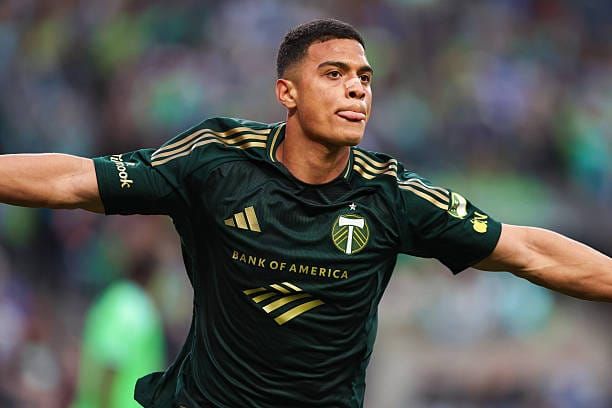
Three hours after Kevin Kelsy became the Portland Timbers’ record sale, I walked into a car dealership.
The Past
I didn’t want to trade in my car today. But after 9 years and over 100,000 miles (and a transmission that could go at any moment), I knew that the time was right to say goodbye and move on.
A silver 2016 Nissan Versa (affectionately christened “Ahmed,” with extra emphasis on the *akh*) became my car in August 2017. Over the previous 9 years of our faithful partnership, Ahmed traveled near, far, and everywhere in between at my behest. Sometimes the road took us to California, or the Oregon Coast, or 5eatt1e, or simply just around the block. No matter what was asked of Ahmed, he always delivered.
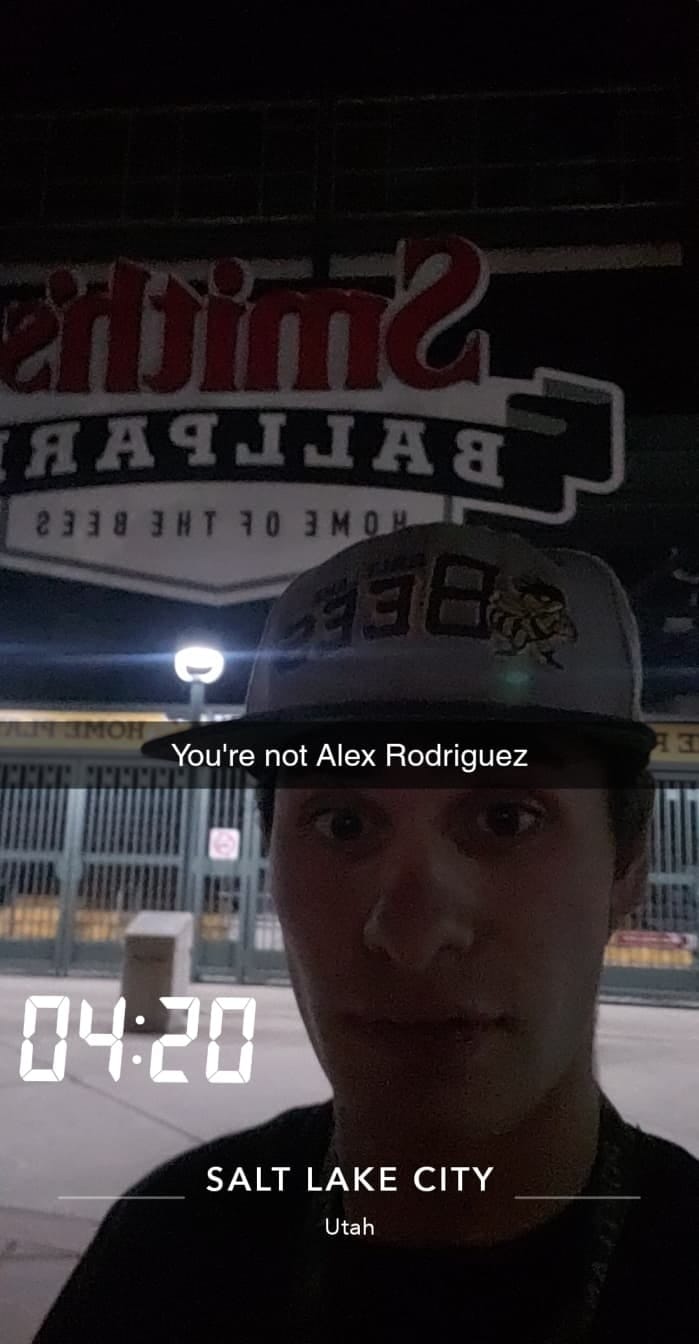
My defining moment with Ahmed was a pandemic-induced marathon of a sprint around the entire West Coast. In the span of 44 hours, a friend and I traveled in a loop from Hood River, to Boise, to Salt Lake City, to Las Vegas, to Los Angeles, to Santa Barbara, to San Francisco, to Portland, and finally back to Hood River. Ahmed was an absolute warrior on that trip. He coasted into Ontario on literal fumes, causing the two passengers to worry if their grand adventure would end before it could truly begin. He parked outside of Smith’s Ballpark in Salt Lake at 4:20 AM, just so his beloved companion could take a dumb picture referencing a ridiculously stupid inside joke that only three people on Snapchat would get.
He was piloted by two of the most tired people in existence, who observed a vacant Las Vegas Strip five hours after the sun rose over the Wasatch Range. He got caught in 405 traffic before making a beeline up the coast to Santa Barbara. As he flew through the northern California night, across a deserted Bay Bridge, and kept on chugging long enough to watch the sunrise illuminate Mount Shasta, he never thought of croaking. When Hood River finally appeared around one of the numerous bends of I-84, he could finally rest. So could his occupants, who hailed the grittiest silver sedan that has ever existed.
Yet the ticking time bomb of a notoriously unreliable transmission kept pinging in the back of my head. It wouldn’t go out now, with so many necessary missions ahead. Chief among them was a critical and sudden voyage to Los Angeles five months later, which Ahmed completed despite being in crucial need of a brake pad replacement. He was back in LA within a year, for pleasure this time. He loved the stretch of the 101 between Santa Barbara and Oxnard, with the highway hugging the coast and in plain view of the sparkling Pacific water. And he needed to see it again, but he didn’t know it would be the last time.
Ahmed’s wild adolescence was soon to be over, as was the congruent experience for his partner. Soon enough, he was resigned to daily drives to work and necessary trips that barely took him farther than a three-hour range from his home. That home, which had morphed from a driveway to an assigned sheltered parking spot to a curbside space on a very narrow street, was now his permanent residence. His duties were simple. And he still performed them, to the peak of his ability.
Kevin Kelsy arrived in Portland as a 6’4” 20-year-old. For a fee of $6M, the Portland Timbers were enthused with the idea of what the Venezuelan striker could be, rather than the player that he was upon arrival. That player was talented, gifted, headstrong, but was barely able to show those traits amidst a series of various dysfunctions. The beast of a striker craved service, yet barely got the ball in areas to score. The blueprint was laid on a cold March night in Colorado, as Kelsy got into the box and smashed home a perfect Jimer Fory cross to increase Portland’s lead to 3-0 in the 75th minute and effectively secure a massive road win.
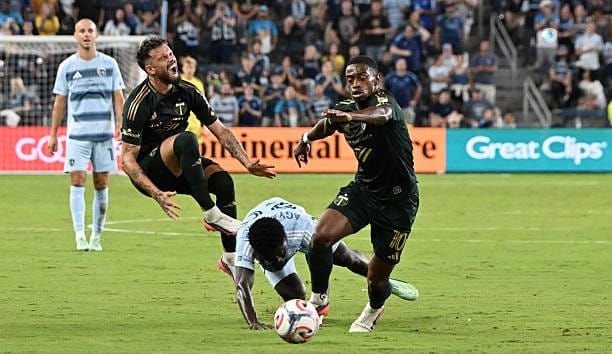
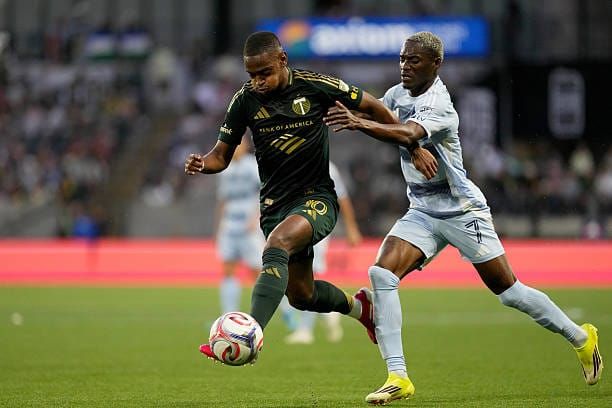
He continued getting starts on the road, which led to an inadvertent brace against SKC on April 13th. The goals kept coming: one in Carson from distance and a game-winning penalty at Starfire. When would he finally net one at Providence Park? A game-winner against Colorado would suffice. Then he went 9 MLS games without a goal as the Timbers stumbled through the early summer (Kelsy did find the net against Atletico San Luis in Leagues Cup, but that’s not a real tournament). When his old club, FC Cincinnati, came to town, Kelsy scored another brace but was outshone by the other big-name attacker playing against his former club. That attacker, whose name you already know, is no longer Portland’s record sale.
That mark belongs to the big Venezuelan striker, who has been scapegoated throughout this 2025 season so far. The fans don’t like his body language, or his tendency to take an extra touch, or his obvious frustration as his teammates didn’t get him the ball in dangerous spots. 75% of them couldn’t even spell his name correctly, opting for an extra “E” when only one would have sufficed. The vision was clear, even if Kelsy was clearly an unfinished product. But it didn’t take a genius to see that in a good situation, the Venezuelan would not stop scoring.
Those two goals were the last strikes of Kelsy’s debut season in Portland, one that had been delivered from a smuggler’s truck in Venezuela through war-torn Ukraine and the barren wasteland of Cincinnati. The price tag was high, yet the raw potential couldn’t be kept below the surface. Boasting calf muscles the size of actual baby cows, the work rate of an angry wasp, and the height of a point guard, Kevin Kelsy was set to be Portland’s starting striker in 2026. Surely he would be given an extended run in the team and a chance to show his quality.
The Present
The belt kept squeaking. At first it was a slight annoyance, and then it became an expectation. The gas pedal would be pressed, and the whirring would start. Heads would turn. The ears of various other animals would perk up. It wasn’t a serious issue for Ahmed, yet it persisted.
While his exterior voice began to grow, his internal monologue was slightly fading. Two speakers had blown out, and the replacements were not up to standard. Due to limited space at home, his trunk had been converted to a portable storage unit of sorts. His regular check-ups had continued, with the precious transmission still performing as expected. As he chugged above 140,000 miles throughout his life, the trips became few and far between. His last hurrah was a crowded voyage to Seattle (on a goddamn THURSDAY) and a joyous ride home. One last bath cleansed him of the fallen debris showered upon him by the large oak he sheltered under for the past few years. Sooner or later, it was time to make his last drive to his presumed final resting place.
He arrived at the car dealership with a weathered shine. Sure, the bath had brought him back to his former glory, but the evidence of mishaps peppered his frame. A couple dents on the passenger side, a slight scuffing on his front bumper, and a mysterious scrape on the caboose with unknown origins were front and center. The seller was less than enthused at these honorable injuries, none of which affected Ahmed’s performance.
Kelsy wasn’t injured at the start of 2026, yet he began each of the first 2 matches on the bench. David Da Costa was injured, however, and the team shifted to account for his absence. This led to Gage Guerra starting both games before Kelsy returned to the starting lineup against Vancouver. The first 6 games passed without incident, before a desperate 2-minute cameo against LAFC produced a game-winning moment. Brandon Bye headed Kristoffer Velde’s cross directly into the center of the box, where the striker who was begging for this type of service was able to head it home with a freshly shaved head. Two weeks later, in San Diego, Kelsy grabbed the starting job in phenomenal fashion.
He robbed Jeppe Tverskov, carried the ball forward, gave Chris McVey a mouthful of grass, and finished confidently to the near post. This was the sequence that provided the foundation for the rest of the season. Two goals against SKC and one goal against Montreal sent Kelsy into the World Cup break as the team’s top scorer.
The break and a coaching change refreshed the team, and Kevin Kelsy announced Portland’s upswing in form with a delightful brace against Seattle in a historic 5-1 victory. The Venezuelan striker was responsible for goals 1 and 4, and both of these strikes showcased more of Kelsy’s ability. The charging run up the middle was the first thing to catch the eye, before a stunning header off of a Fory long ball further widened the eyes and caused the jaw to drop. The fourth goal was a classic poacher’s finish, accomplished by being in the right place at the right time. The Summer Of Kelsy was in full swing. A goal against Dallas tied the game (as a confused Kelsy tapped the ball over the line with some slight hesitation). Another goal against Seattle tied the game as well.
Aside from the goals, the Venezuelan striker looked like he was enjoying his play more than anything else. He looked confident, satisfied, yet still hungry for more. His final goal was the first goal of the Marti Cifuentes era: a smashing finish from close range fed by a Fory cross. Almost identical to his first goal in Green-and-Gold.
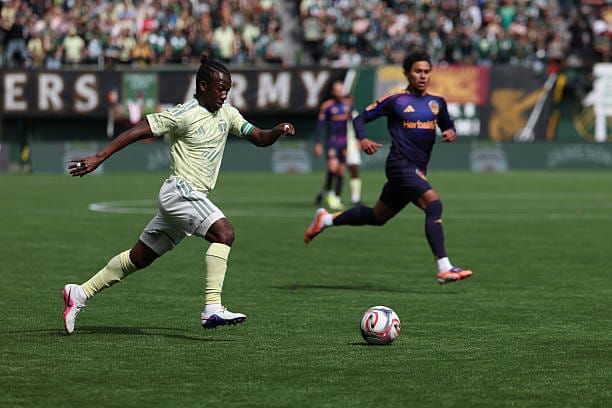
Yet his last action at Providence Park was the real reminder of the player that fans grew to love over his 18 months in Portland. Amidst transfer rumors involving Scottish club Rangers, Kelsy leaped into the air to swat an Antony cross on target using his hand. The superb leaping ability combined with unmatched comedic timing was Kelsy in a nutshell. Physically gifted, immensely talented, but a fun-loving kid at the same time.
Video credit to Amy FRAIZER.
Those Rangers links were real, however. An initial bid of $10M was rejected in early August. Two things were reported by Tom Bogert of The Athletic in conjunction with this news: the Portland Timbers were not looking to sell and Kelsy wasn’t looking to leave. Multiple clubs were interested in the young striker, but Rangers’ current situation (losing their starting striker to an ACL tear) brought some desperation to the table. Not that signing Kelsy in general would be desperate, but the serious advancement of their pursuit.
It wasn’t going to be possible unless the Scottish club raised their bid. So they did. For a fee of $13M with add-ons and a sell-on clause, Kevin Kelsy became a Rangers player. This news broke at 5:16 AM, dooming Timbers fans to an uncomfortable morning. In 23 matches across two competitions in 2026, Kelsy tallied 10g/3a. Portland’s top scorer is off to Scotland.
The Future
The test drive was expected to be a formality. Buyer gets in car, drives car, approves of car, and goes inside to fill out paperwork. However, this buyer stepped into a brand-new car and was immediately repulsed. Staring back at him was a cinematic touchscreen display that belonged in a stadium instead of a vehicle. The speedometer, signified by a digital graphic instead of analog dials. Temperature controls that couldn’t be adjusted by feel and required the removal of eyes from the road to correctly operate. Various “safety features” that completely limited the practical effectiveness of the car. Despite these flaws, the vehicle had more power than Ahmed, yet didn’t feel like an adequate replacement.
So the paperwork was brought out, and the trade-in value of a beloved companion was assessed in writing. One. Hundred. And. Fifty. Dollars.
That was the price that the dealership was willing to pay to “take it off my hands.” Despite some creakiness and flawed cosmetics, Ahmed was only worth $150 to this dealership. After signing paper after paper while simultaneously trying to convince myself that I liked the new car and was just upset about losing the services of a humble machine that I (foolishly) expected to survive until the next Summer Olympics, I had to take a sidebar.
The first reaction to any transfer announcement is a phenomenon I’d like to call “live market-adjustment.” In theory, a player is worth X amount. Transfermarkt calculates a market value based on future trajectory, injury history, contract length, and various other factors. Those market values are always estimated, but serve as a helpful benchmark. However, in the same vein as the car dealership’s estimation of my stalwart yet bruised car, the market value of a player is only worth as much as a team is willing to pay for him.
$13M is not an insignificant amount of money. Kelsy was bought for half of that fee, while the other half could hypothetically be used to buy David Da Costa again. Three million dollars is a lot of money, although it may seem small given the global scale of spending. This amount represented a club record for both parties; one for selling and the other for buying. Future add-ons and the sell-on clause could bring this fee to even greater heights in the future.
But the timing was objectively terrible. Ahmed still had time to faithfully deliver me to work and other errands. Kelsy’s contract expired in 18 months, with a club option that could extend it until December 2029. Surely the Timbers could have waited a little longer, let Kelsy keep producing, and reap the benefits of a potentially larger fee in the winter or after the sprint season? The transfer window closes in one week. Is that enough time to bring in a replacement?
However, there are other factors to consider. And some of those factors were ignored last summer, which may have led to the timing surrounding this Kelsy sale. The Timbers fielded an offer for Antony last summer, which would have allegedly “doubled their money” on the Brazilian winger. However, the bid was declined, and it’s impossible to deny the mistake that the Timbers made by rejecting that offer. Antony’s stock was at its highest in the summer of 2025 as he delivered an excellent first half of the season (6g/5a in 14 games). However, due to a hamstring injury suffered in that 14th game and a constantly rotating and shifting structure causing game-to-game positional shifts, Antony finished 2025 with 1g/2a in the final 16 games of the season. He’s sunk even lower in 2026. The Timbers, intent on winning, failed to recognize the optimal moment to sell a player and are currently dealing with the consequences of that decision. Could Ahmed’s transmission finally give out? Would a brief glance at the TOUCHSCREEN TEMPERATURE CONTROLS cause an inadvertent car crash?
After a contested sidebar, the seller re-entered the room, this time with her manager. They had a job to do, and it was to sell me a car. Upon learning that a brand-new model of a fairly common passenger sedan was not up to my standards, I set out to describe the car that could properly replace Ahmed. “I’m OK with technology,” I exclaimed, using my hands to gesture in a normal, human-like sense, “but I am a dummy and I require buttons and knobs for my temperature controls and dashboard controls. I do like the base components of this model, but I need it in an earlier year. The correct balance between analog and digital needs to be achieved. I want to spend another 10 years with this next car. I cannot last that long with this current model.”
So the manager, desperate to keep my business, quickly pulled up their used inventory. A year-old model was available, so I took it for a test drive. The passenger door opened, and a smile lit up my face. A tiny screen, enough for a navigation system yet not overbearing. Knobs and buttons everywhere. As I turned the car around the block back into the dealership’s parking lot, I was ready to leave with a new set of keys.
However, the mileage was far too high for the price. A much better deal could be found for the same car with less mileage from a different seller. Instead of taking a new car back to my apartment, Ahmed’s familiar seats provided me with one more ride home. His time hadn’t come yet. More miles and trips were required. A better market opportunity had presented itself, and the silver warrior’s tour wasn’t over yet.
Those car prices were fixed, yet transfer fees are negotiated and re-negotiated countless times until an acceptable compromise can be reached. Portland’s price for Kelsy surely wasn’t their preferred option, but it was good enough to accept. Now the focus turns to the future, because the Portland Timbers have one week left to shore up three areas of the squad.
But before a squad analysis can be digested, a look at Portland’s roster profile is in order. They entered this summer transfer window with an open U22 slot. Kelsy’s sale makes that two U22 slots, with Cole Bassett and Antony set to come off the tag in the offseason. The Portland Timbers are about to have 4 open U22 slots, something that general manager Ned Grabavoy is quite excited about. “We feel like we’ve gone through a cycle of sort of 4 or 5 or 6 of these first U22 players and we have to start that process going again, because it’s something that our club leans on heavily.”
This is how the Timbers have been trying to compensate for the years of academy rot. With the U22 model seemingly in full swing, it’s unlikely that the Timbers will add a 3rd DP this summer. I think that’s a mistake.
The obvious positional vacancy is striker. Vincent Janssen is the de facto starter, with Gage Guerra backing him up. The next name on the teamsheet is T2 striker Daniel Cervantes, who has 10 goals in 24 MLS NEXTPRO games this season. However, he’s 23 and hasn’t signed a first-team contract. He’s a more valuable member to playoff-bound T2 than he could be as a 3rd-stringer with the first team.
Although Tom Bogert’s reporting indicated that the Timbers are fine with their current striker duo, it’s worth reminding everyone that Janssen is suspended for this weekend’s game against Austin. Three strikers are a necessity, for injury and other potential absences. The answer to the striker question is simple: do a like-for-like.
You do not need a DP striker to get DP production from the position. Kelsy proved that. Dejan Joveljic proved that as a U22 striker as well. The U22 Initiative encourages this type of purchase, and a U22 striker surrounded by other high-value attackers (like the 2024 Galaxy, who provided the blueprint to a game-changing attacking roster build) will be able to score at a rate that rivals or even succeeds a DP player in that same position.
I’m fully against using DP-level funds on the striker position. I think it’s very stupid. From a Timbers perspective, their last 3 DP strikers were Brian Fernandez (a winger), Jaroslaw Niezgoda (who was an elite finisher before tearing his ACL and losing the movement that made him one of the most efficient scorers in MLS history) and Jonathan Rodriguez (a top-level goalscorer, albeit on the left wing). All three of those players were successful in front of goal, yet they were surrounded by elite creators. Diego Valeri and Sebastian Blanco fed Fernandez and Niezgoda, while Evander’s chemistry with Rodriguez was flawless.
Use the U22 Initiative for a starting striker. Save the DP spot for creators. The Timbers already have two DPs in the attacking group, and both function as creators and finishers. Velde and Da Costa can absolutely raise the ceiling of this team, but another DP on the right wing would push that ceiling towards the atmosphere. If there is a place to get a DP-level talent, it is on the right wing. Unfortunately, this looks unlikely to happen due to the insistence on using the U22 model. While another U22 winger seems appetizing, this front office still needs to prove that they’re running a big-boy club. A 3rd DP on the right wing is a big-boy club move. So is selling Kelsy, to an extent.
Now the right back question can enter the picture. A U22 right back seems ludicrous given the long-term focus on that type of player. Juan Mosquera and Brandon Bye will be back in time for the calendar switch in a year. Do you really want to engrain a U22 right back during that time just for him to potentially lose his starting spot? Especially with other areas on the roster (center back) providing a more intriguing option for a U22 player to get settled and break into the first team? That’s what happened with Finn Surman, albeit without the special roster designation.
Right back requires either a loan or no move at all to solve. The idea of an Eric Miller/Sawyer Jura platoon doesn’t concern me as much when a potential panic-buy is out there. With Kelsy gone, and seemingly no desire to find an immediate replacement, a 10-month loan seems like a proper solution. Is a spare Jorge Moreira-type around? Maybe an Alvas Powell, whose contract expires at the end of the sprint season and is seemingly surplus to requirements in Cincinnati? The Jamaican right back still lives in the area, you know.
These three positions have a higher degree of priority. Despite the immediate hole in the striker corps following Kelsy’s departure, I think a new striker is second on the shopping list behind a DP winger. The right back is 3rd, but not too far behind the other positional needs. With that in order, it’s time to play a little game: Should I Press The Panic Button?
TANGENT: LET’S PLAY A GAME!
Are you concerned about the timing of this sale? Does the departure of Portland’s top goalscorer immediately strike fear into your heart? Well, come on down, because you’re the next contestant on everyone’s favorite game show: Should I Press The Panic Button?
No. You do not need to press the panic button.
The Future, Continued
However, you should keep it handy. With one week left before the transfer window closes, the Timbers need to sign some players and fill three positional holes. Is it possible? Can it be done?
Let’s start with the “not panicking” button. The Timbers’ only signing of the summer window was a replacement for the recently departed Felipe Mora. That deal was announced on the heels of Mora’s last game. They’ve been working quickly this year, despite some protracted negotiations for Jose Caicedo back in the winter/spring. The impetus to sign players, and sign them quickly, has been prioritized in 2026. Now that philosophy is getting put to the test.
Faults were found with Ahmed’s potential replacement. These faults (like a touchscreen that belonged in an IMAX theater) prevented the deal from being executed. It was expected to be completed, but circumstances changed. A different replacement was offered, yet it didn’t meet the standards either. A better deal for a less-used vehicle could be found from another seller, much to the dismay of today’s unlucky saleswomen. Someone else is going to come in and buy the car that disgusted me so badly. They’ll probably crash it while trying to change the A/C. But there will be a buyer, and there will always be a seller.
Now Ahmed is not going to be replaced until the proper vehicle can be acquired. The Timbers did not do this with Kevin Kelsy, who I regrettably keep comparing to a car. But they do need to find a replacement for the U22 spot he occupied, and are trying to get a player who can be just as productive. You know what they can also do with this transfer fee? Convert up to $3M to GAM. It hasn’t been reported whether or not the Timbers took GAM from the David Ayala transfer back in January. Maybe all of that GAM can still be converted, and the Timbers can pivot away from the U22 model and sign a DP winger. It’s possible. It would certainly be a big-boy club move too!
Alas, now we must turn to the panic button, which some of you have already smashed. You have a good reason to. Portland’s transfer history is littered with lateness, and it does take a while to reverse a perception that has been so deeply ingrained. Is it possible for the club to conclude three deals over the next week?
If they can, it would be a major signifier towards big-boy club status. However, with well-sourced reporting already indicating that a new striker is unlikely, two spots remain for the Timbers to strengthen. If a right back arrives, it will be a solid summer window. Not spectacular, not great, but acceptable. If a right winger arrives, the status will upgrade from “acceptable” to “good.” If both arrive, the window qualifies as “very good.” The ceiling is already limited due to the lack of interest in a new striker. This would force one of Portland’s attackers to play out of position, if necessary. And who knows what kind of trouble the future could bring?
However, as the most doom-brained people are already concluding, it is possible that the Timbers do not complete another transaction within the next week. I think that would cause a panic button for 2026 and 2026 only. The pressure would immediately pile on during the upcoming winter. I think this option is unlikely, so I’m not going to go into it much further. But this is the biggest stress test of Portland’s perceived (and actual) “lateness.” It’s one that they have to pass.
I also believe that this Kelsy sale rules out the possibility of a Finn Surman departure in the next week. Despite some serious links to Burnley, I think Surman is more important to Portland’s competitive floor than Kelsy was. Kelsy’s departure lowers the Timbers’ ceiling, yes, but it doesn’t lower their floor. I still believe that a Surman sale would occur in the winter after the Timbers exercise his contract option. That isn’t written in stone (the sale part) but it’s a reasonable expectation to have.
Ahmed’s tenure as my personal vehicle nearly ended today, but I decided to hold out for a better deal. Kevin Kelsy, meanwhile, is about to become the unquestioned starter at a prestigious club because the Timbers were satisfied with the deal they had reached with Rangers.
I really wish it wasn’t Rangers. That club’s fanbase is a polar opposite from Portland’s, yet circumstances now require me to cheer for them purely due to Kelsy. I wish they could lose all of their games with Kelsy still managing to tally 25 goals. The Venezuelan doesn’t stick around in one place for very long. Sooner or later the Timbers will rake in more money from that sell-on clause. I wish him the best, and I hope that Rangers fans adore him. I don’t believe that he received the level of adoration he deserved in Portland. Hopefully he can return soon. I never got to ask him about that handball, and the salmon isn’t as good in Scotland.
The Portland Timbers took another step towards being a big-boy club today. They made a record sale and are now going to put the incoming funds to good use. Well, that’s what the expectation is. Hiring Marti Cifuentes was a humongous step in the right direction. A transfer like this can throw a stumbling block into the momentum that has built up over the past month, or it can provide the launching point to new heights. The Timbers have to make sure that they can launch, or climb, rather than sink. One week remains for their improvements to be realized. That’s what the big-boy clubs do, after all. The only limit for them is their imagination. Like deciding to drive around the entire West Coast in two days, or rising above the Providence Park turf to joyously smack a cross on target using the one body part you explicitly cannot use. Thank you, Kevin Kelsy. You brought goals, smiles, and $13M to Portland. Keep climbing the footballing ladder. I know you can. The climb continues.

Comments ()