
Tripping Over The Stumbling Block
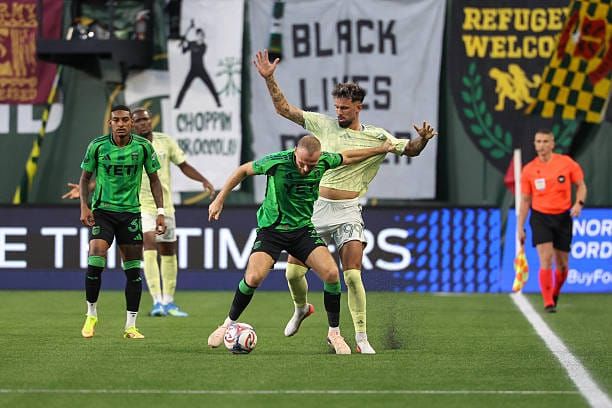
Marti Cifuentes finally got his first full week of training. After a breathless run of 4 games in 9 days to start his tenure as the head coach of the Portland Timbers, a full week to prepare for Austin FC’s annual visit to Portland seemed like a gift from the soccer gods. While Portland’s week consisted of rest and an increased focus on the training ground, their opponents were treated to the full MLS experience.
Austin to New Jersey to Portland. A terrible schedule, made even more complicated by a stupid tournament that shouldn’t exist anymore. Yet when the opening whistle blew on Saturday night at Providence Park, it was the supposedly exhausted Austin that actually showed up to win a game of soccer. They did exactly that; beating the Timbers 2-1 to send the vibes dial spinning back towards humiliation.
Recap
The first 15 minutes were terrible, but the Portland Timbers didn’t concede a goal.
However, they did concede the first shot. Right after the first minute had ticked over, Jorge Alastuey received a pass in the middle of the field with no Timber around him. He dribbled forward and took a shot from distance that James Pantemis easily fielded. Since this game was absolutely infuriating, I think a change of pace is in order.
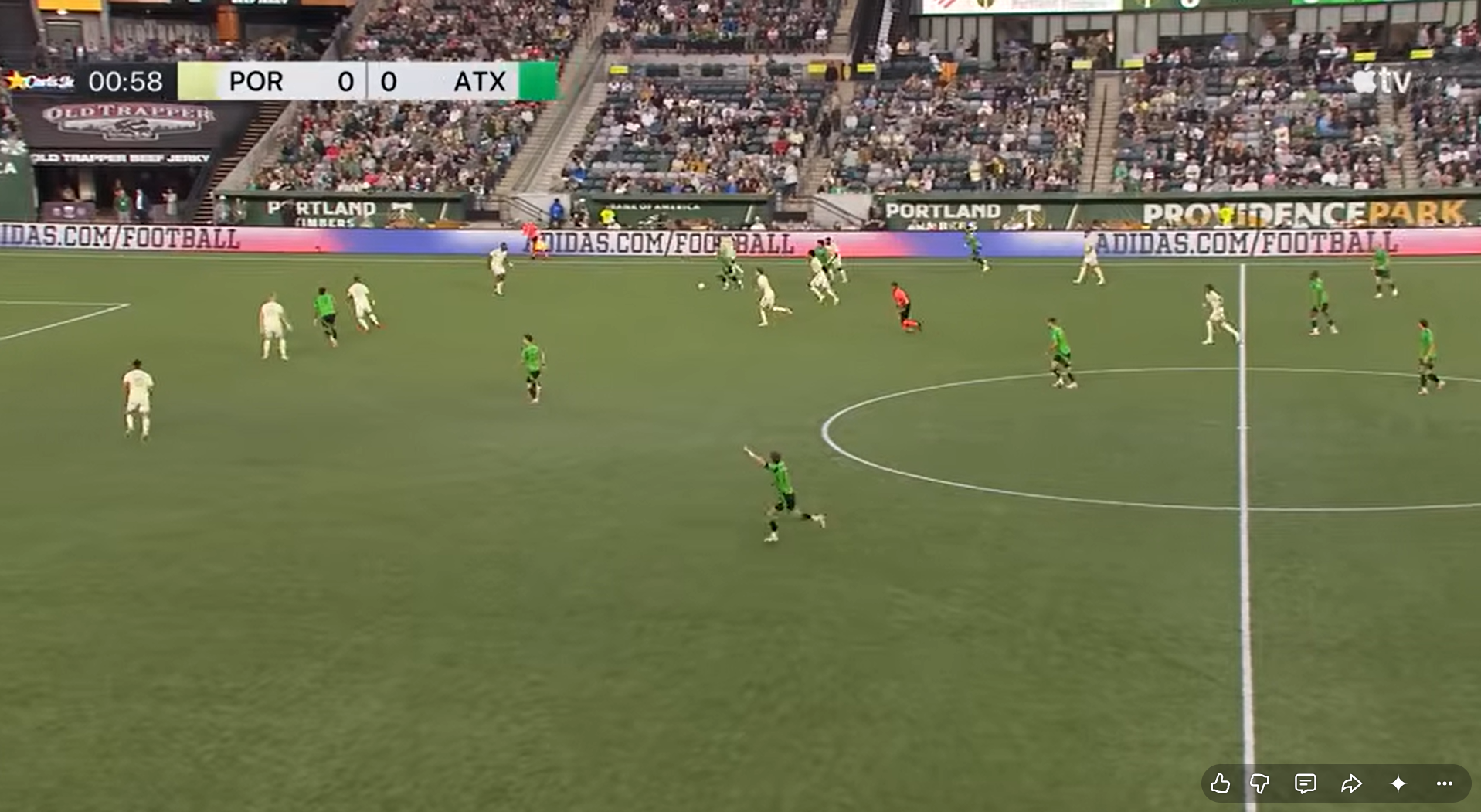
This screenshot is taken about 3 seconds before Alastuey shoots the ball. Ervin Torres is the player with the ball currently at his feet. All of Portland’s defending woes are present in this screenshot. First of all, the Timbers have a numerical advantage on their left side of the field. Look how many yellow shirts are over there! Yet the vast majority of them are ball-watching. How do I know that? All it takes is two easy passes from Joseph Rosales and Facundo Torres to find a wide-open Ervin, who doesn’t need to be a genius to find Alastuey camping out between Portland’s wide-open lines. For the rest of this game, the Timbers would be wildly disorganized. The space between the lines that Alastuey is occupying would never get compressed. It would remain open. It’s also worth noting that Pantemis’ save on Alastuey’s shot is the only save that he will make for the rest of the night. Yuck.
Just for good measure, I’m going to include one more screenshot.
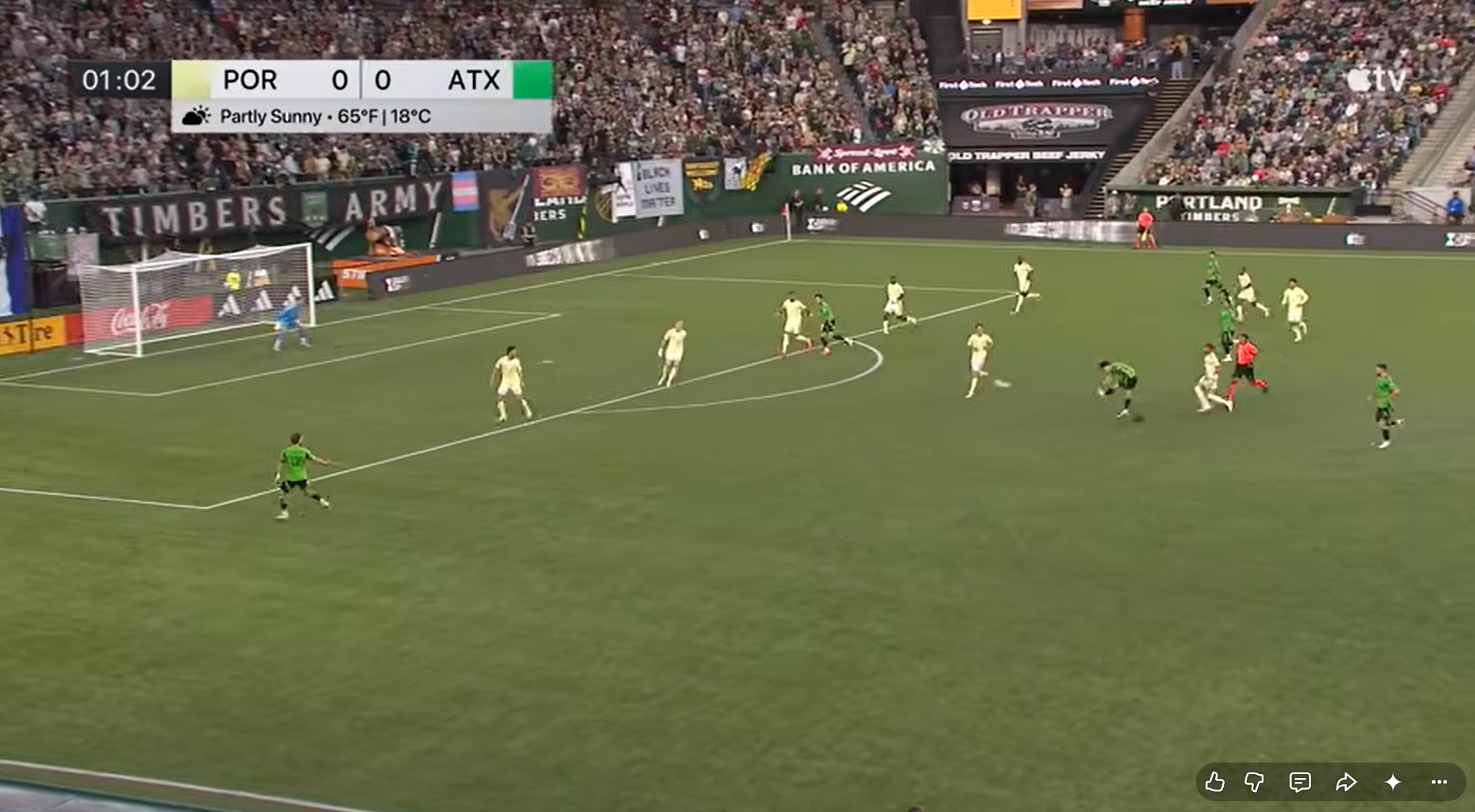
The Timbers are going to make mistakes in this game. A whole lot of them, as a matter of fact. However, this is a problem that should have been immediately rectified by Cifuentes. There was absolutely no reason that the Timbers needed to have five players in their backline tonight. This strategy awarded control of the midfield to Austin. Portland wouldn’t get any semblance of midfield control for the rest of the night. Bewildering.
After Pantemis clutched the ball to his body for his only save of the night in the 2nd minute, the Timbers responded by losing the ball a lot. These turnovers came in a variety of ways: misplaced passes, strong Austin tackles, weak Austin tackles, poor first touches, you name it. Until it’s proven otherwise, and I doubt it will be, it’s safe to assume that the 2026 Timbers will never be able to properly start a game on the front foot. They were woefully disorganized from the opening whistle, for crying out loud!
After the Timbers ended the first 15 minutes with 0 shots, the Broccolis had their second shot of the game in the 18th minute. Rosales sent an inswinging cross towards the far post, and Jon Gallagher nodded it wide. It was basically a free header, by the way. Portland continued to lose the ball, and it was another one of these turnovers that led to Austin’s opening goal.
Before Austin to score, they had to win the ball back. Cole Bassett tackled Rosales at the top of Portland’s box as the clock turned to the 25th minute. A quick pass to Ariel Lassiter was instantaneously progressed to Kristoffer Velde in the left channel. However, Austin’s Mikkel Desler was already smothering the Norwegian, and some light contact caused Velde to fall to the ground. Referee Guido Gonzales Jr did not blow his whistle (more on that later), and Desler recovered the ball with no pressure on him.
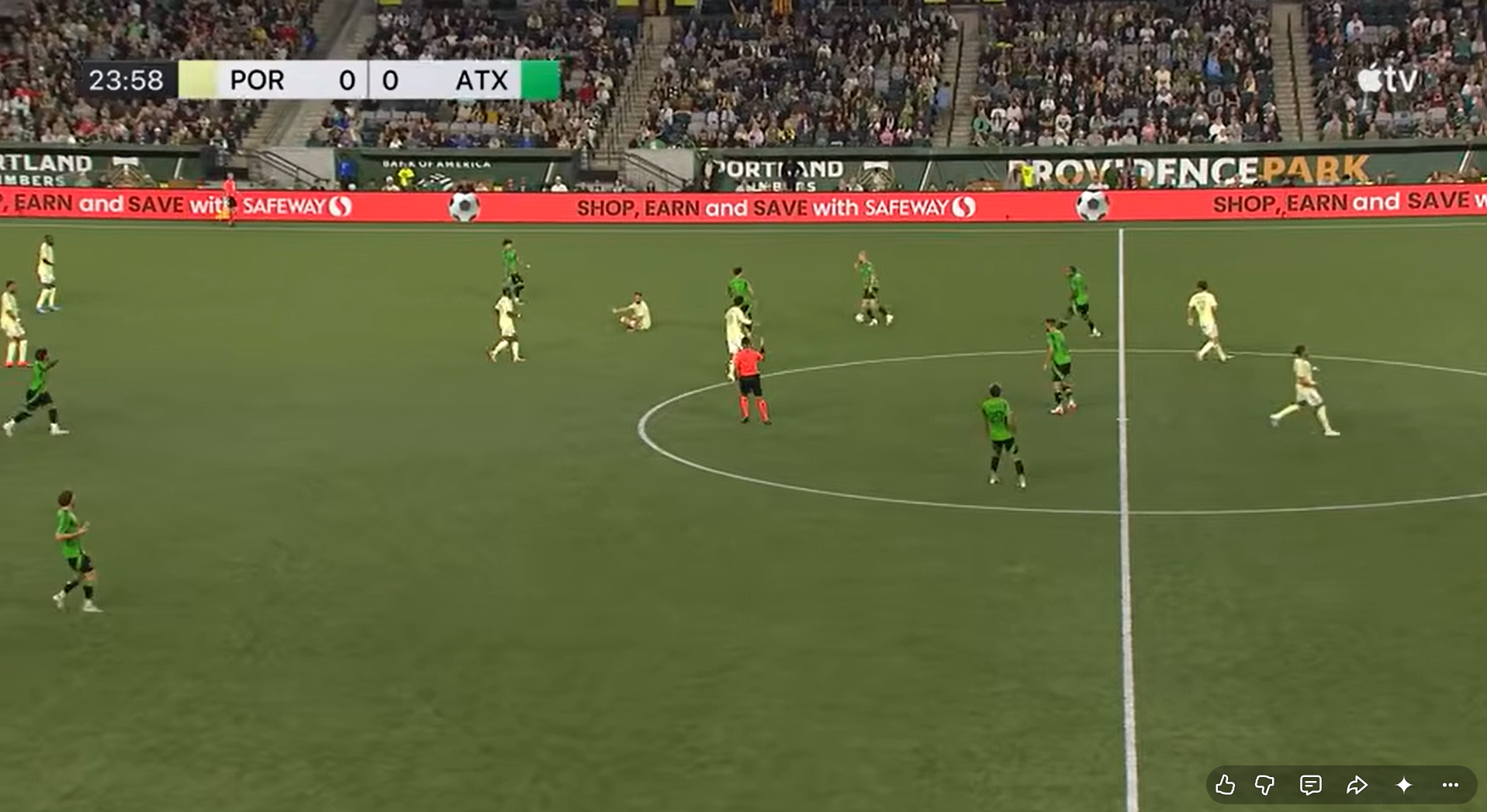
Here’s where the ball is when Velde finally gets up.
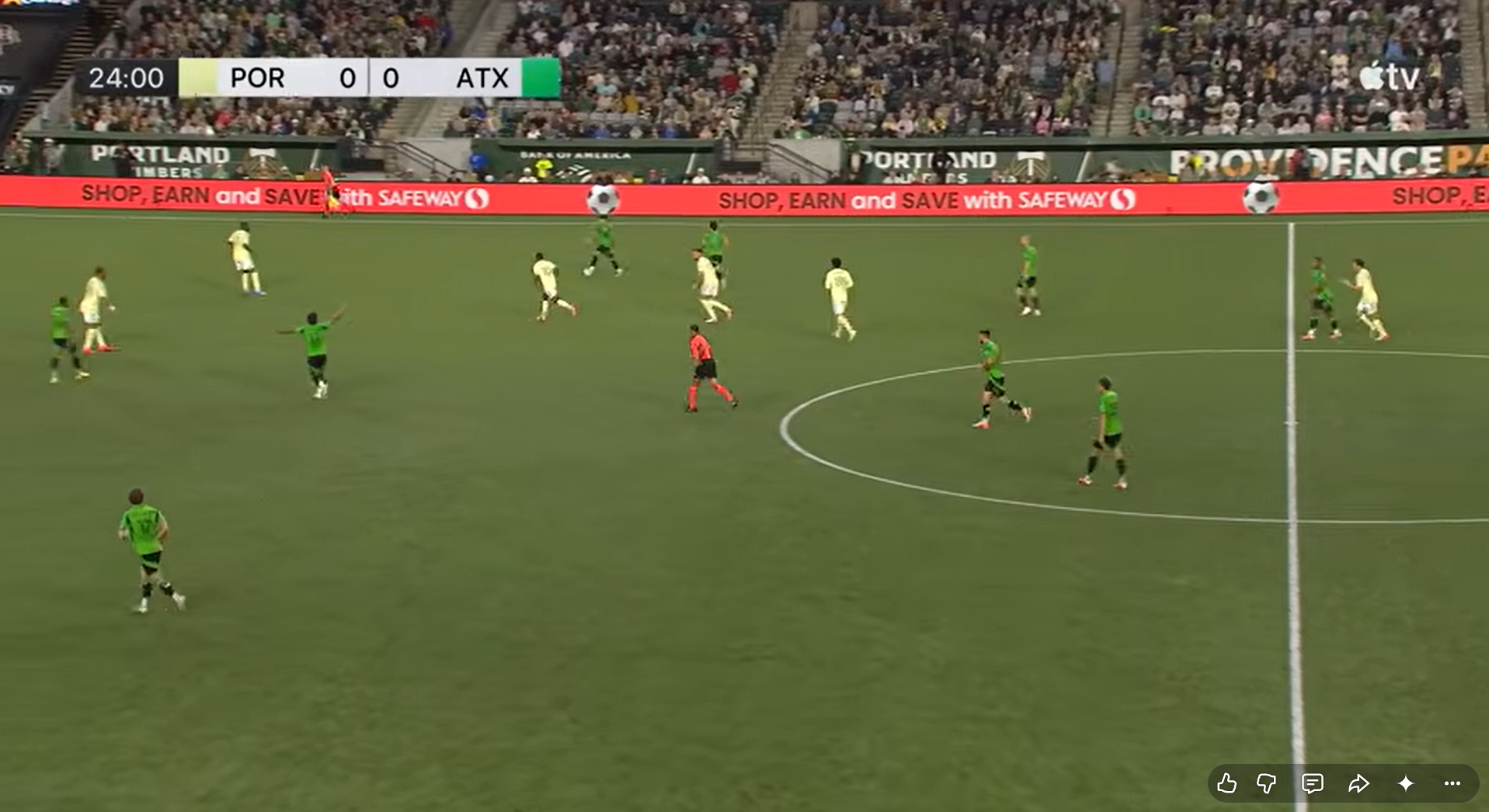
However, it isn’t quite the end of the world yet. But the next three Austin passes illustrate just how doomed the Timbers are. All three of them are easy completions without a single ounce of ball pressure to speak of. Besard Sabovic plays a pass directly to Rosales’ feet, and the Honduran wingback (now occupying a defender in the box) flicks the ball effortlessly to an onrushing Facundo Torres, who beats a sliding Kamal Miller to the ball and finishes past Pantemis. It’s 1-0 to Austin in the 25th minute.
This is exactly the type of start that the visitors wanted. If they were able to score the first goal, they could drop their defensive line deeper. You might have forgotten that Austin’s backline was parked higher than usual before Facundo found the breakthrough. The Timbers didn’t realize it, because they were unwilling to try long balls to test the backline and instead opted to pass the ball in the middle of the field until they turned it over.
Portland’s first shot came in the 28th minute. Bassett’s weak-footed strike from distance became an easy grounder for Brad Stuver to field. The Timbers were only able to create one more chance in the first half. Lassiter sent a cross into the box in the 42nd minute which was met by a sliding Eric Miller. The shot chart says that he missed wide right, but the action earned a corner kick, so maybe it took a deflection. Either way, the very rested Timbers managed to get two shots off in the first half against Austin. Ugh.
The second half began, and the story remained the same. However, Ariel Lassiter was able to force Stuver into a difficult save from a free-kick in the 58th minute. In the 69th minute, a Kamal Miller diagonal found Antony on the left wing. The Brazilian found David Da Costa in the middle of the field, whose curling shot was caught by Stuver. Finally, Portland was able to get on the front foot and pin Austin deeper and deeper into their own half.
In the 75th minute, Jose Caicedo launched a diagonal to Antony on the left wing. Antony tried to chip the ball into the box for Da Costa, but Jon Bell got his head on it. Antony recovered the second ball (which was actually a third ball) before staying with the ball through a tight space and charging forward through the middle. He played a slip pass to Velde, who got his feet wrong and sent a weak shot directly at Stuver from a promising angle. Yikes.
Have you noticed that Antony is starting to play a major role in this game? That chance he just created would be the best open-play Portland chance of the night. But he’d play a part in creating Portland’s biggest scoring opportunity. In the 85th minute, Da Costa played Antony into space on the left wing with a ball over the top. Austin had the advantage of having three defenders for rest defense, and Brendan Hines-Ike ranged over to get a body between Antony and the goal. The Brazilian tried to shoot because all three of Portland’s attackers who got into the box decided to occupy the same space. However, this shot took a deflection off of Hines-Ike’s arm. Gonzales Jr didn’t immediately blow for a penalty kick despite being right next to the play. VAR Lukasz Szpala (still making amends for the Asterisk, I see you) beckoned Gonzales Jr to the monitor, and a penalty kick was awarded seconds later after a quick viewing of the infraction.
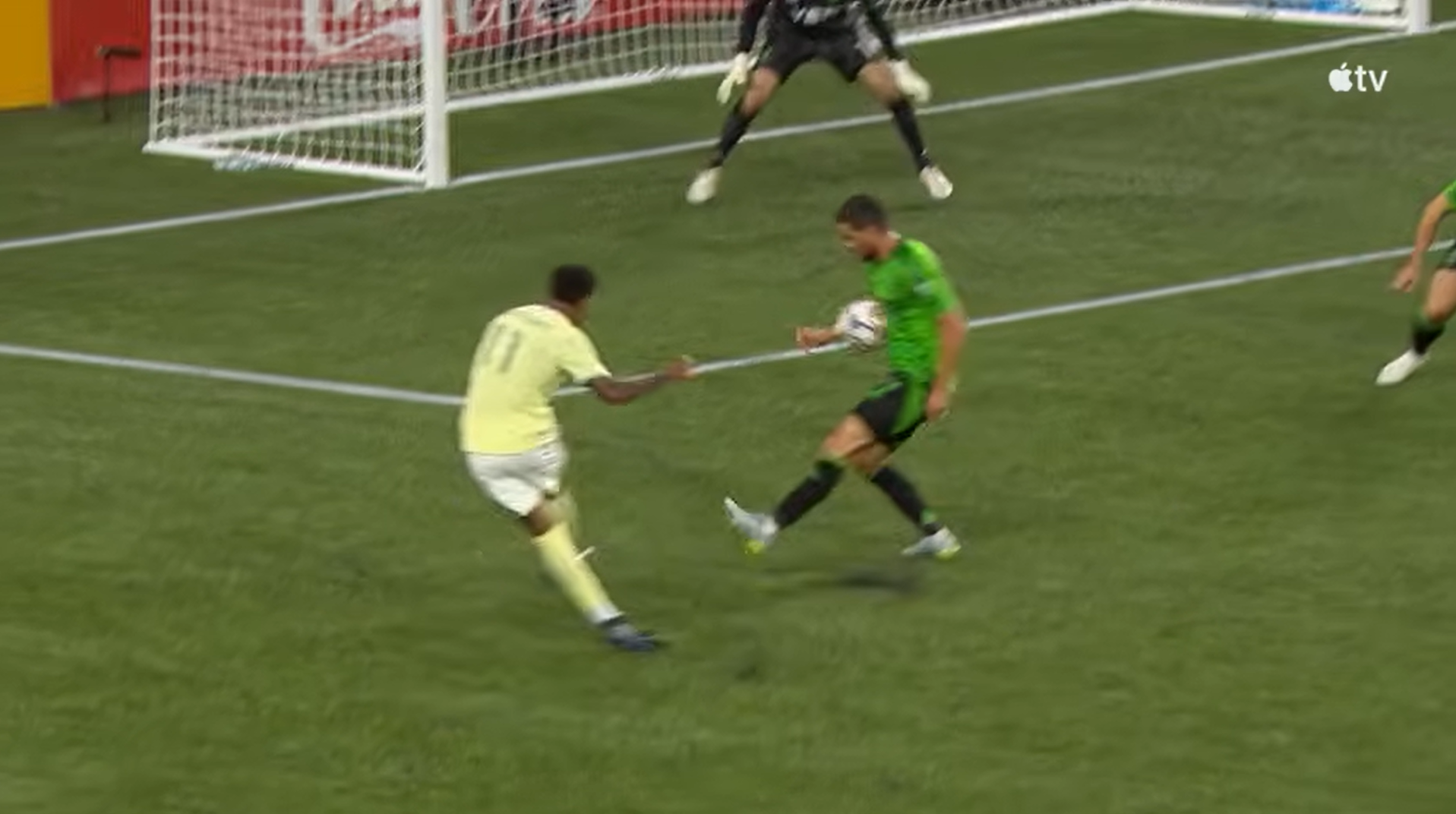
Some might view this as harsh, but I’ve seen penalty kicks awarded for a lot less. After a brief conversation at the penalty spot with Velde, Antony set the ball down and beat Stuver right down the middle to tie the game at 1-1 in the 89th minute. The entire VAR stoppage took about a minute, but it took both teams 3 minutes to settle down and let the kick be taken. So now 6 minutes of stoppage time were on the docket for the Timbers to try and hold onto a point that they definitely didn’t earn.
Those soccer gods who sent the Broccolis to New Jersey probably thought that Austin FC was due some sort of divine intervention. After all, dropping two points at the end of a difficult week in a game that Austin probably should’ve won would’ve been a tough blow to one of the more irritating fanbases in MLS. The Timbers, however, really wanted to get three points and learn the lessons for this near-humiliation later. Their efforts to attack and stay on the front foot nearly blew up in their face during the second minute of stoppage time. A Joao Ortiz pass was intercepted, and a through ball to Zan Kolmanic gave Austin a downhill attack. By all rights, his resulting cross should’ve been tapped home by Brandon Vazquez, but the DP striker couldn’t get a toe on the ball. Ian Smith made the decision to put the ball behind for a corner kick. This was a good chance for Austin, and they probably should’ve scored it. But what they actually needed was the Portland Timbers to provide the divine intervention that they were hoping for.
On the resulting corner kick, Rosales sent an inswinging cross into the box.
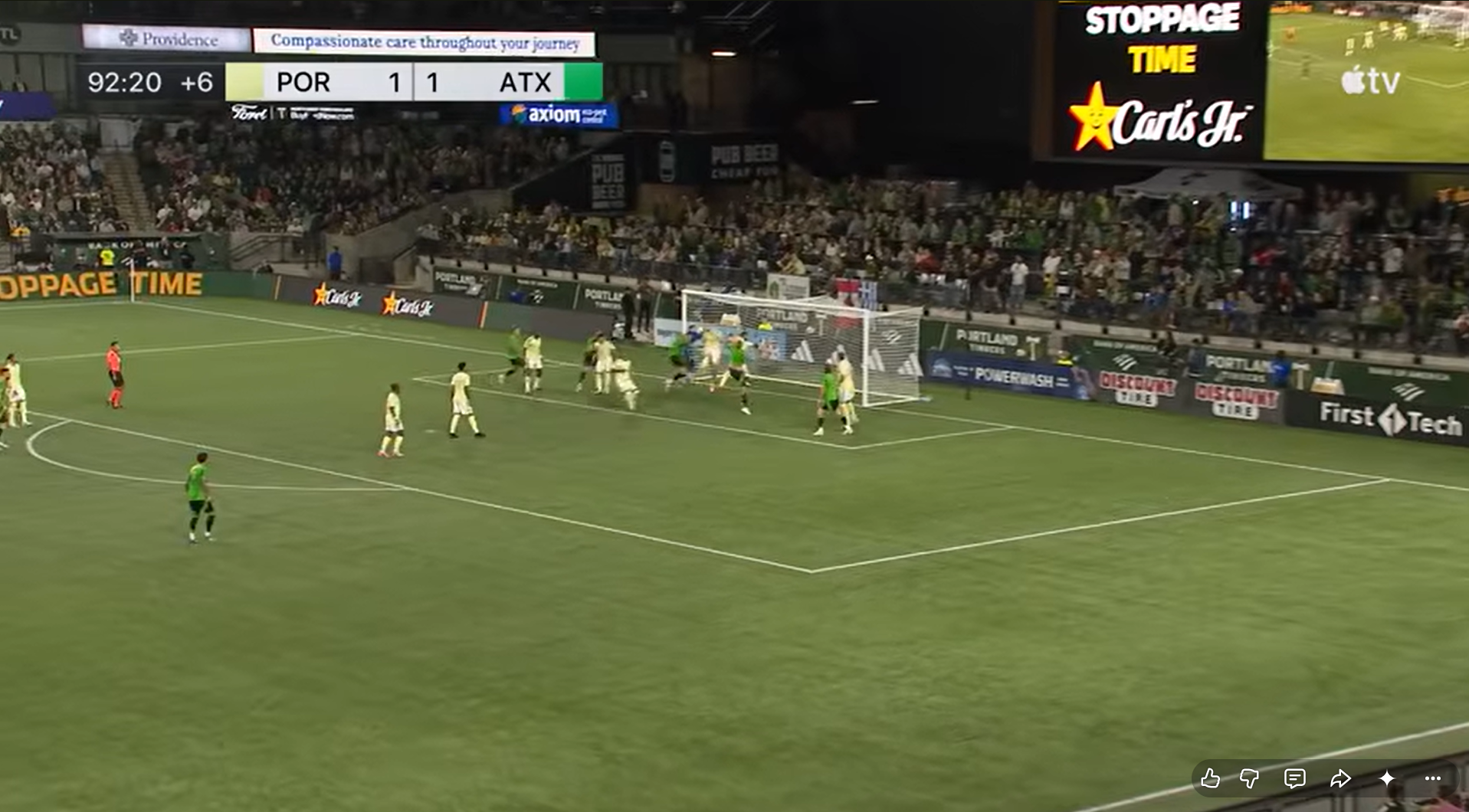
This is very blurry. You’ll have to excuse me. Pantemis can easily claim this cross, but his arms are outstretched into a punch. He does not call for this ball. Why else would Finn Surman feel compelled to attack it? If he didn’t hear a call from the very recognizable voice of his goalkeeper, why is this ball being headed towards the top of the box instead of in Pantemis’ arms?
In a shocking development, Sabovic wins the header off of Surman’s clearance. This header goes through the entirety of Portland’s defense to a quickly-reacting Vazquez, who barely gets a toe to the ball. This toe isn’t enough to score, unlike the chance that passed him by one minute ago. Instead, it deflects off of Surman, and the quickest player to react to it is Austin’s Oleksandr Svatok, who hits a volley off the turf and directly at Pantemis. The Canadian goalkeeper tries to push it away, but the ball caroms off his face and into his own net. 2-1 Austin, 90+3’. Humiliation beckons again.
However, because the Timbers didn’t immediately collapse and fall to the floor after Svatok’s deserved game-winner, one last chance presented itself. In order for the Timbers to avoid total humiliation, this chance would have to be converted. The final minute of stoppage time (+6) brought another set piece. Lassiter sent the free kick into the box where it was promptly cleared. Portland was able to latch onto the second ball, and Lassiter was able to send another cross into the box. This delivery was headed down by Surman and promptly cleared again. Lassiter won the second ball and found Velde on the left wing. The Norwegian’s cross was caught by Stuver. However, Austin’s goalkeeper punted the ball away and the Timbers quickly recovered. Da Costa played a long diagonal to Ian Smith, who chested the ball past Rosales and into a dangerous area. A pass to Velde followed, and the Norwegian winger cut inside on his right foot to send a low shot towards the far post. Lassiter stuck his leg out and missed it. A sliding Omir Fernandez was too late. The shot hit the far post and bounced away. Caicedo sent another cross into the box, but it was promptly cleared. Portland won the second ball again, and Smith drew a yellow card on Rosales to set up a final opportunity.
I can’t call it a “chance” because the resulting free kick was promptly headed out of the penalty area. The final whistle blew on a disappointing and frankly disgusting 2-1 loss. Despite all of their advantages, the Portland Timbers gifted three points to a struggling opponent. Same as it ever was.
The Overreaction Section
A defeat like this one can serve as an opportunity to get completely irrational. There are plenty of things to overreact to, and I’d like to embrace some slight irrationality for a couple of important talking points. This exercise will serve as a chance to answer one question: should I be worried after a loss and performance like this?
Kevin Kelsy: Plausible Concern
As Kelsy prepares for his big move (the first of hopefully many), the viewing audience got their first glimpse of a Kelsy-less Timbers tonight. What they saw was a team that struggled to break out of their own half, with Kelsy’s improved hold-up play being acknowledged as something that the Timbers were lacking. Is this worth an overreaction?
Possibly, but I’m still erring on the side of no. The elephant in the room is Vincent Janssen, who absolutely would’ve started tonight’s game if he wasn’t suspended for a dumb second yellow card against LAFC. Janssen has shown the qualities that Kelsy possesses, most notably in hold-up play and front-foot defending. He has also scored plenty of goals at every stop of his career.
But Portland’s two-deep striker situation is more of a cause for concern than replacing Kelsy’s better qualities. As I’ve said before, a scenario like tonight’s (where one striker is unavailable and a non-striker has to deputize up top) can be avoided if there’s a 3rd striker on the roster. I think that the Timbers could be in big trouble if a 3rd striker doesn’t walk through the door before the transfer window closes. Gage Guerra can be a solid MLS striker, and maybe his all-around game will improve as the season wears on. But he’s already been injured this year, and the Timbers have to make sure that their bases are covered.
The Kelsy deal is still a good thing. Big-boy clubs regularly make transactions in that vein. However, the Venezuelan still needs to be replaced. Maybe Janssen returns from suspension and hits the ground running. It would be a very welcome sight if he’s able to produce immediately after getting the starting job. The money received for Kelsy will be reinvested into the club. Portland is still learning how to sell, but they’ve always reinvested transfer fees. Any view to the contrary is a complete overreaction, and therefore nonsensical. But they do need to reinvest quickly. That much is apparent.
Defensive Shape: Serious Concern
Now we arrive at a problem where overreaction is both warranted and rational. The 2026 Portland Timbers have only been able to record one clean sheet in 25 matches across all competitions. This defense is still broken, and it needs to be fixed if a competitive floor is expected to be established.
Because soccer is a game with phases that shift completely from moment to moment, some of these defensive concerns are exacerbated by struggles on the ball. I’ll get to those later. But Portland’s defensive struggles can be explained through two different lenses: mentality and tactics.
I’m going to start with mentality. And I’m going to apply it to Austin’s first goal.
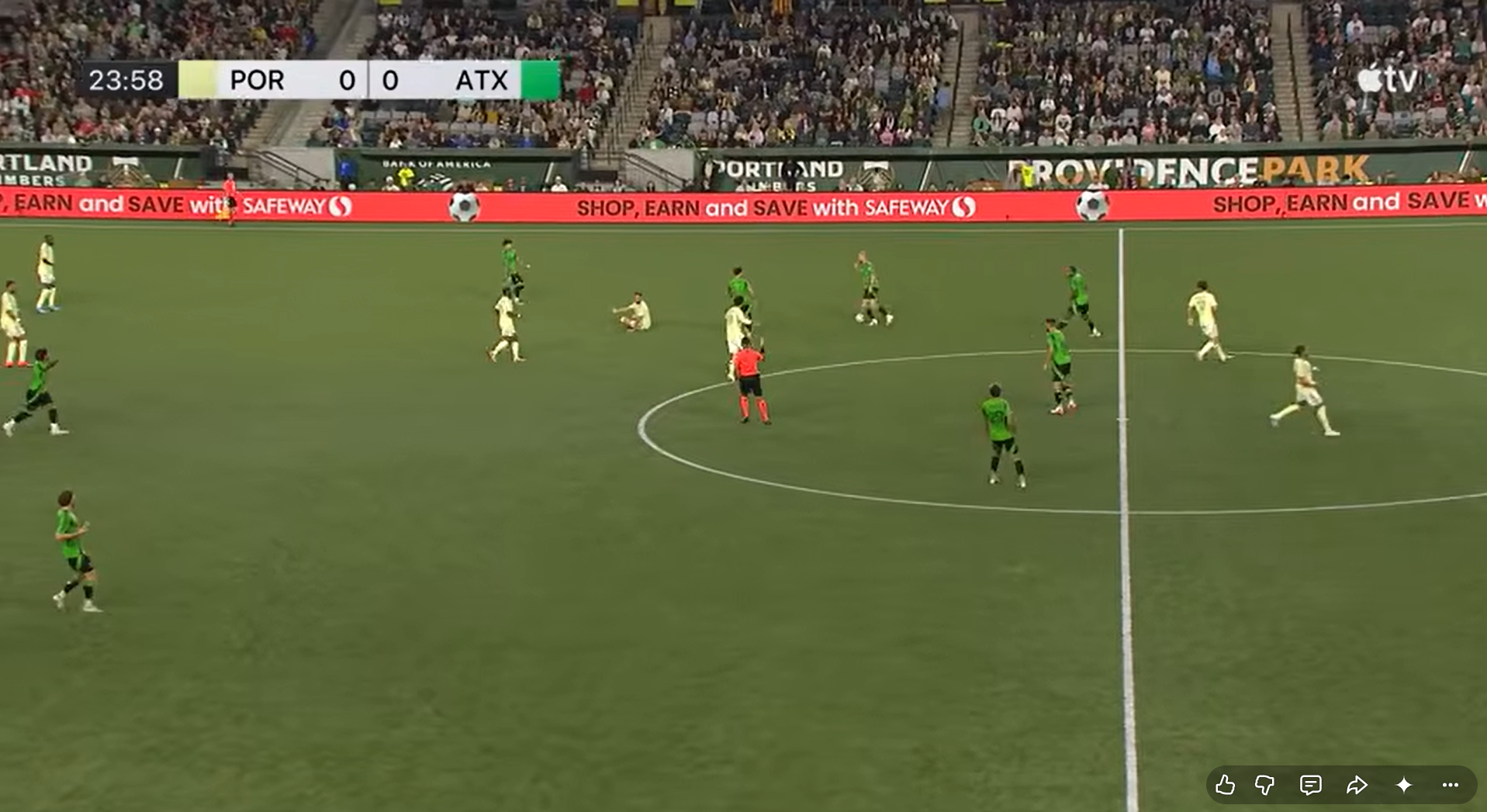
I have already used this picture in this column. It’s not the first time a situation like this has occurred in 2026.
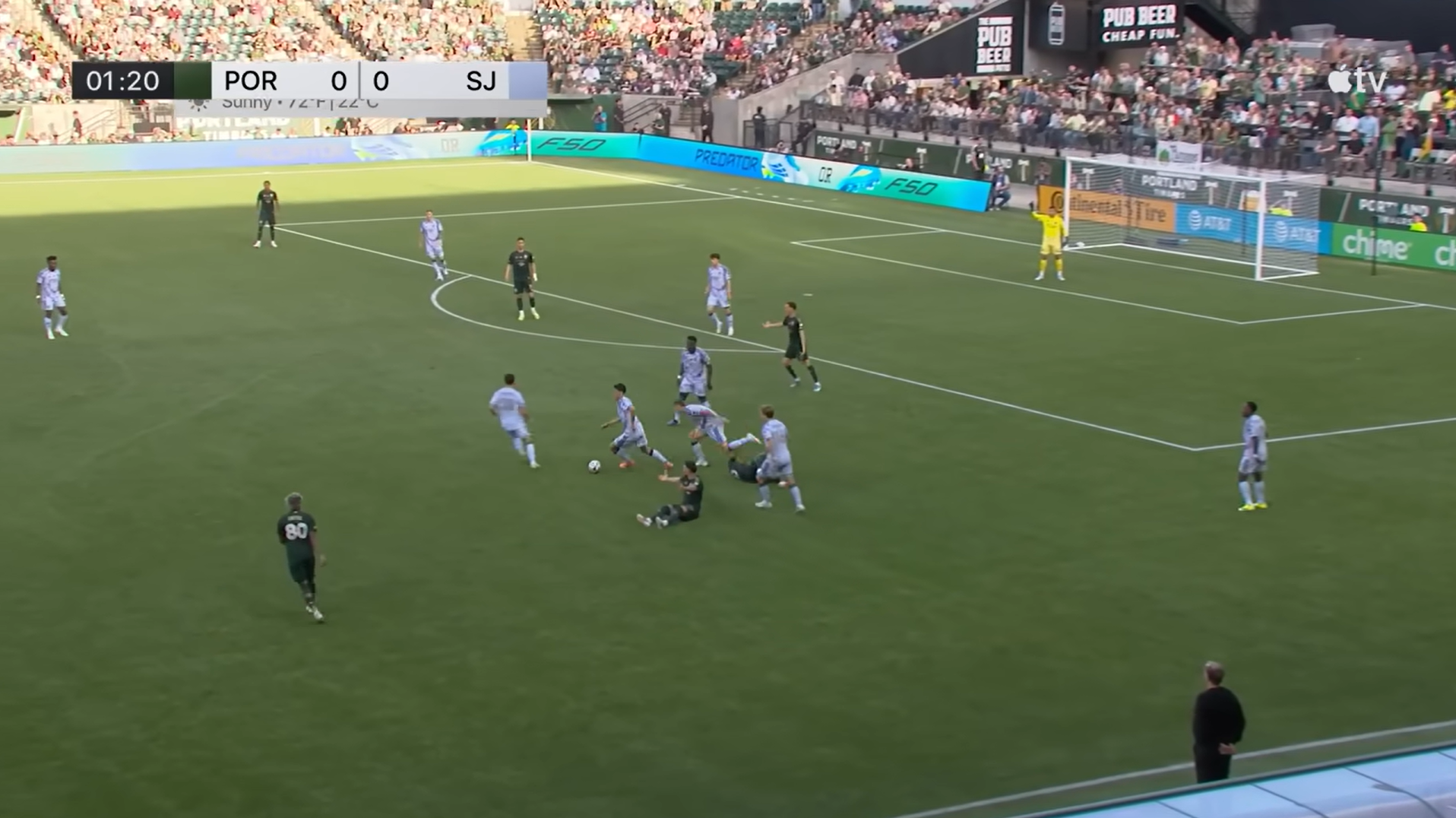
This is an image of Kristoffer Velde on the ground begging for a whistle against the San Jose Earthquakes back in May. San Jose immediately counterattacked and scored a goal from this situation. Austin’s 1st goal did not feature this kind of rapid ball movement and intensity. But Velde has been in the league for a year, and he has to cut this nonsense out. If you get the whistle, you get the whistle. If not, you’ve got to get back up.
The other aspect of “mentality” can be explained from another screenshot.
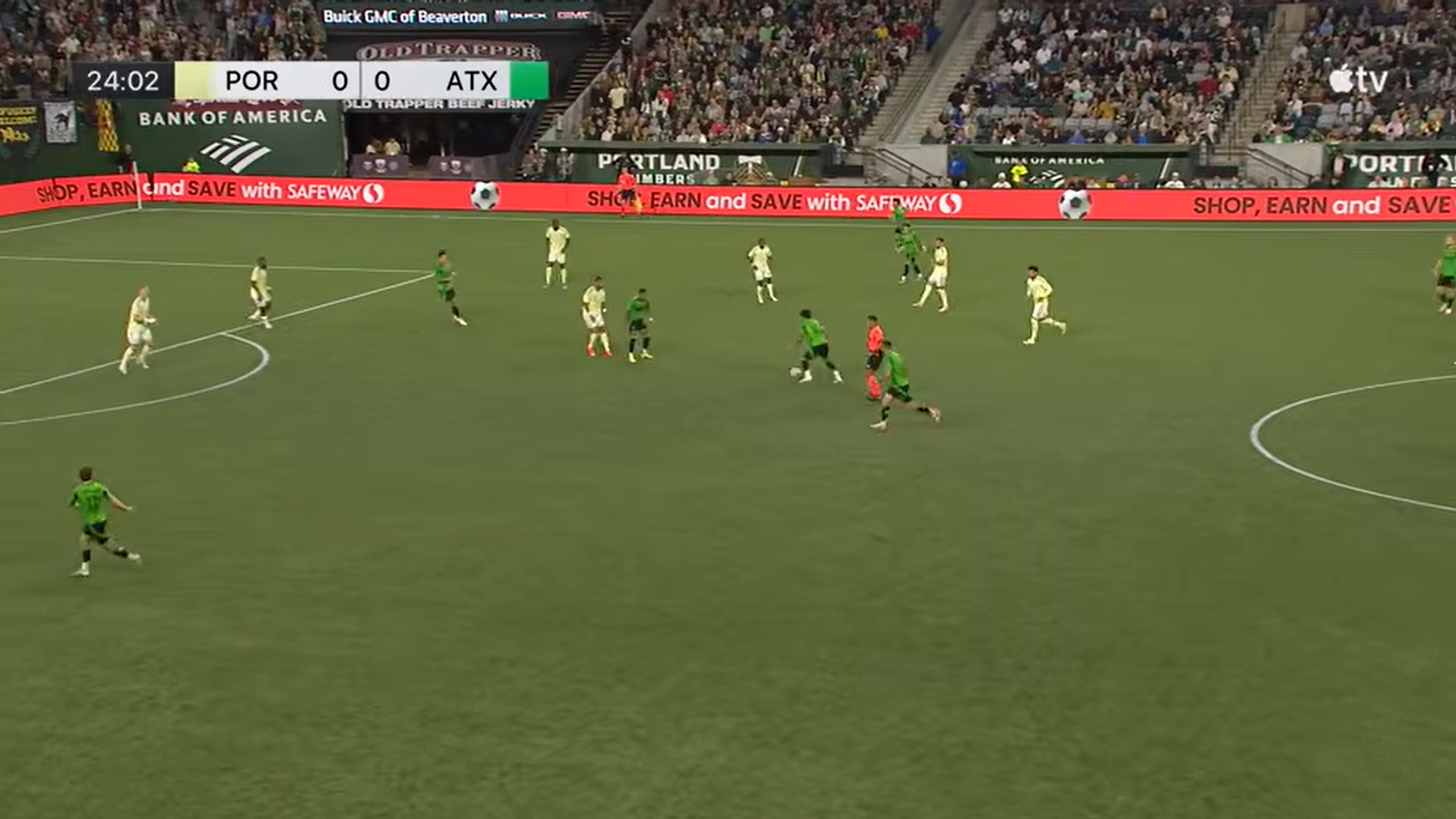
I had trouble assigning this to “mentality” or “tactics” but I think it’s a little bit of both. Cifuentes wants to create wide overloads to progress the ball, which can leave the Timbers very vulnerable if they turn the ball over. Enough yellow shirts have recovered here to theoretically form a block, but none of the players are venturing to where the ball COULD go. Instead, they’re focused on where the ball currently is. Mentality.
Throughout this game, the Timbers chose to drop rather than step up. This phenomenon created a defense with two different identities. Watch how this strategy works in real time after Brad Stuver claims this corner kick.
The broadcast doesn’t pick up how far back Portland’s defensive line is. While 5 players opt to (ineffectively) press, the backline isn’t compressing the space in the midfield. This problem is further enhanced by Caicedo’s positioning as a 3rd center back. Throughout this sequence, Austin has plenty of time on the ball, faces barely any on-ball pressure, and can effectively do what they want. A press works because the entire team is committed to it. These spatial problems simply don’t exist because the compact lines force long balls or force the opposition to play in tight spaces. Both of those situations can work for the Timbers. But giving all the space in the center of the pitch can only end badly. A better team would’ve repeatedly punished the Timbers for this ineffective defensive structure. Combined with a mentality that is more focused on the immediate presence of the ball rather than where the ball might go, and the 2026 Portland Timbers are basically guaranteed to concede a goal in every game that they play.
Attacking patterns of play pale in comparison to a constantly leaky defense. If the Timbers want to press, then they’re going to have to press as a unit. If the Timbers want to form a block, then they’ll have to block as a unit. No in-betweens. No more excuses.
A Lack of Runs: Slight Concern
Maybe I should be more concerned about this, but it was hard to harp on Portland’s lack of dangerous runs in a game where escaping their own half seemed like a herculean task. However, there is a reason why their attacks often broke down into horseshoes of death. Antony’s introduction helped the Timbers stretch the field more. I thought that there were a fair amount of decent attacking runs in this game, but they weren’t always found. Which is a perfect segue into another serious concern.
Passing the Ball: Serious Concern
Execution and decision-making. Two factors that severely limit the effectiveness of Portland’s passing. The poor execution can be explained pretty clearly: the quality of the passes are subpar. Velde and Da Costa, in particular, had several moments in the first half where a pretty routine exchange (often attempted from a short through ball or “slip pass”) was unable to be completed due to poor execution. Plenty of Portland’s passing turnovers can be attributed to poor execution as well. Even some of the non-passing turnovers too!
Timbers players have a very unfortunate habit of playing passes directly to feet. That act by itself isn’t bad, but these passes are hit so the receiver invites pressure AND has to get their first touch correct in order to escape the invited pressure. The execution of these passes has to improve.
In addition, improved decision-making will decrease the severity of the execution errors. Throughout this game, the Timbers would win the ball deep in their own half, and the immediate follow-up was to find Jose Caicedo. This often invited even more pressure, and forced the Timbers back instead of forward. Plenty of potential counters failed to materialize because of a failure to recognize the correct outlet ball. After a full week of training, Portland’s quality of possession was expected to be one of the safer parts of their game tonight. Instead, they kept turning the ball over and ignoring the most dangerous outlets. Not a recipe for success, and something that has to improve quickly.
Box Tilt/Duels
Time to look at the special stats. Let’s begin with box tilt.
It’s a Portland Timbers box tilt victory! After taking a 9-4 lead at halftime, an 11-10 second half propels Portland to a 20-14 win. Unfortunately, Austin made their box touches count more than the Timbers did.
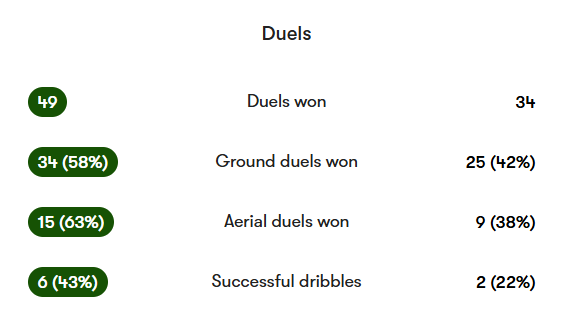
This is where things get slightly confusing. I certainly didn’t expect the Timbers to win the duel battle. However, this is because they did a good job when they were in a position to win duels. Second balls do not factor into these numbers, and Portland was utterly whipped on second balls tonight. A lack of organization, personified by an oddly vacated midfield, really kept Austin on the front foot more than anything else. However, because the Broccolis aren’t a good team, they weren’t able to create a ton of danger in Portland’s penalty area. Well, aside from the two goals that they scored.
Player Ratings
James Pantemis: 5
Upon first glance, this seems harsh. However, there is always a reason to be concerned when the Timbers are defending dead balls. And it isn’t because of poor marking, at least not anymore.
Pantemis doesn’t inspire a ton of confidence on defensive set pieces. His first instinct is to punch, and that tendency is combined with a poor ability to command his box. Austin’s game-winner is 100% Pantemis’ fault. There’s no other way to look at it. He doesn’t call Surman off on the initial cross, which forces the Kiwi to head the ball away. But in an even worse gaffe, the follow-up header by Sabovic is in a perfect place for Pantemis to catch the bouncing ball. Surman scrambles it away, but it goes right to Svatok. It’s unfortunate that Pantemis takes another blow to the head here as Svatok’s volley drills him in the face, but then he can’t keep the ball from going across the goal-line.
One save from three shots on target faced. His passing was better in this game, but keeping the goal is still the primary duty of a goalkeeper. Compare his shaky command to Stuver’s absent-minded cross claiming. The Canadian goalkeeper needs a bounce-back game against Minnesota next weekend. After a 10-save outing against LAFC, his weaknesses shone brighter than his strengths tonight.
Eric Miller: 7.5
One of the fullbacks is going to invert. That’s a key characteristic of Cifuentes’ system. Mr. Reliable spent a lot of time in the middle of the pitch, yet kept fulfilling his defensive duties at the same time. It was a little awkward watching him be one of the box-crashers, but he did occupy the space pretty well. Austin focused the majority of their attacks down Portland’s left side, so Miller didn’t have a lot to do tonight. However, it was an encouraging performance. Cifuentes is adamant about getting another right back in before the window closes. I hope it doesn’t eliminate Miller’s minutes. Having a calm veteran leader on the pitch can pay off, especially during a sequence like Austin’s game-winning goal (which Miller wasn’t on the pitch for).
Finn Surman: 7.8
Austin nearly put this game to bed in the 73rd minute, but Surman made a humongous block on a good shot from Rosales to keep the score 1-0. He just makes plays like that all the damn time. I thought it was interesting that he was given more freedom to roam from his center back role and provide pressure farther up the pitch. Was Caicedo’s dropping encouraged so Surman could get forward in his stead?
Kamal Miller: 8.1
Miller had an excellent spell from the 60th-61st minutes. It started with a giveaway, but the Canadian center back atoned for his mistake with a good tackle on Rosales. That tackle was followed by a quality interception of a through ball intended for Alastuey. Those plays are emblematic of Miller’s comfortability and confidence in the starting center back role alongside Surman. He’s been one of the most consistent players on the team since the Clausura began. Long may he continue. In addition, he’s now gone 4 games in a row without a yellow card. He only needs one more to get one removed through the Good Behavior Initiative. That good behavior only relates to bookings, however. I liked how he stood up to Biro, a certified bully whose dirty tackle on Riqui Puig back in 2024 should have resulted in a very lengthy suspension. Well done, Kamal.
Jimer Fory: 8.6
Get out the stat sheet. Fory had himself another blinder.
Defensively, he was nearly impregnable. 5 tackles, 4 interceptions, and 6 recoveries illustrated his defensive prowess. However, his attacking contributions weren’t at the same level. Why is that? Well, when his teammates are taking too long to provide him with slip passes, the danger of those crosses gets significantly reduced. He didn’t put a foot wrong off the ball, so I can excuse a lackluster attacking performance. Especially if he was a symptom of the issues, not the cause.
Jose Caicedo: The Ball Magnet
14 ball recoveries. That’s a whopper of a stat. If Stathead still existed, I could compare that to previous single-game performances. But I can’t because FIFA stinks and is greedy. Sigh.
I think that Cifuentes wants Caicedo to be at the center of everything. As a lone 6, it makes sense that he naturally would be in those positions to affect most actions on the pitch. However, his effectiveness can be neutered when he’s asked to drop into the backline. I don’t mind having that club in the bag, but it needs to be wielded better. “In the first half, we had a plan to play with a line of 5. That was the way Coach put us out to perform. And I think ultimately it may have been the difference in the game.”
Caicedo is right. By playing cautiously, they opened themselves up to unnecessary pressure and lost the initiative. The Colombian has started the last three games, and I asked him about his comfort in his new role in the post-game presser. “I feel great, to be honest. I got here to Portland to be able to do my part, independently of whatever different jobs I’m being tasked to do. I have no problem with it…I feel like I’ve been doing well and working well to earn the starts that I’ve gotten.”
You wouldn’t expect such a vocal leader on the field to be so soft-spoken. But as he becomes a crucial part of this Timbers team, he lets his play do the talking. With Diego Chara missing his second consecutive game due to injury, Caicedo’s excellent form continues to be a humongous positive.
Cole Bassett: 6.8
We’re going to start with Bassett’s heatmap.
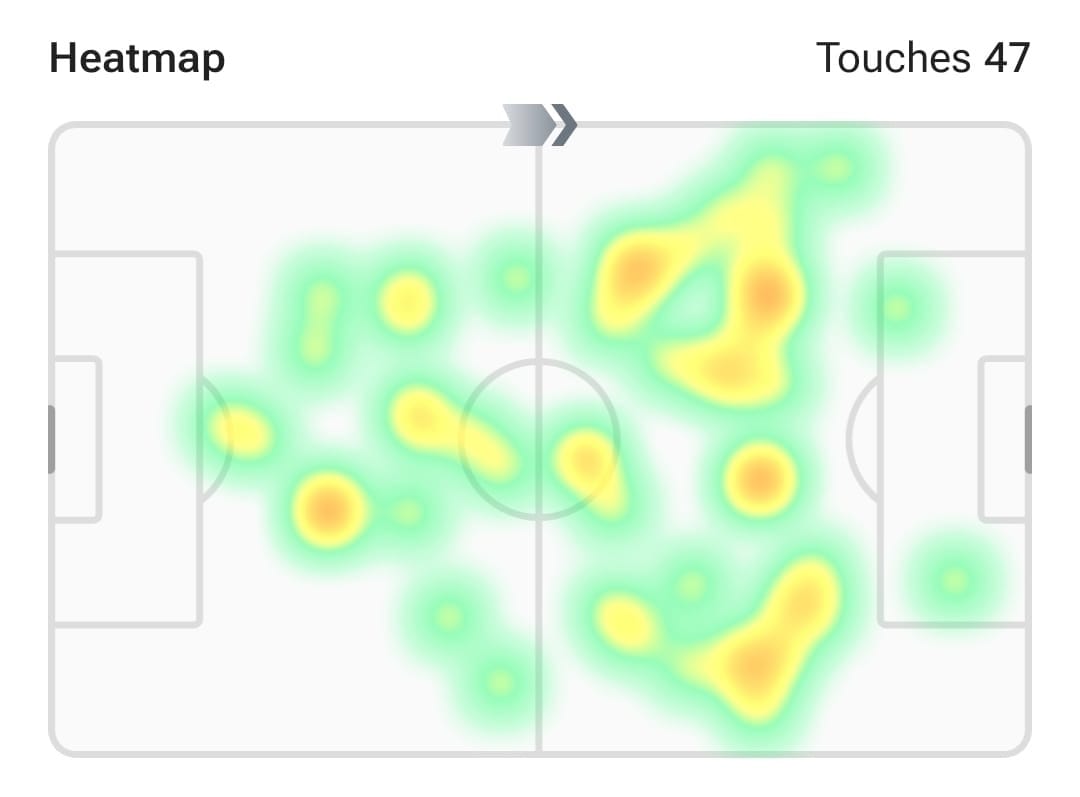
What is concerning about this? The giant gap between the final third and the box. Bassett wasn’t making dangerous runs into the box, and would often drop or rotate instead of using his movement to crash the penalty area. Tonight’s game was begging for some of those runs. However, I thought Bassett’s defending was pretty solid. I’m not blaming him for the conflicting defensive identities either. I wish he was able to score a goal, which probably would’ve happened if he made some of those box-crashing runs.
David Da Costa: 6.9
Bassett gets the heat map, and Portuguese Dave is getting a passing map.
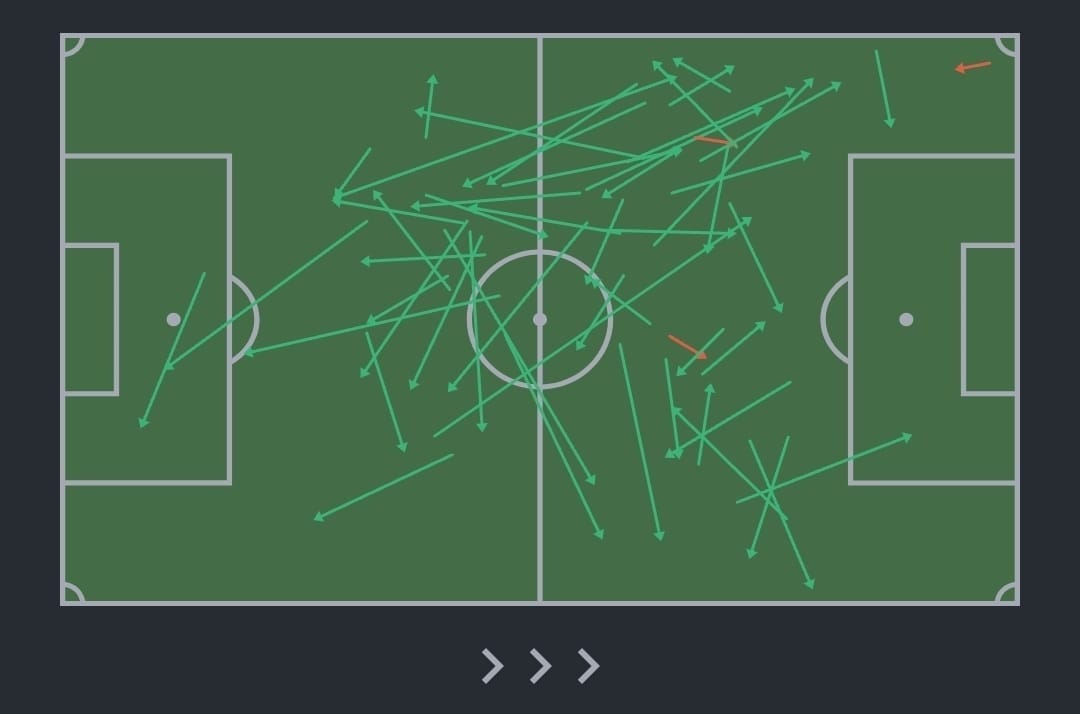
Would you like to see evidence that Portland’s dangerous off-ball runs were nearly non-existent? Look no further than the passing map of the player whose job it is to get the ball to those runners. Da Costa was solid, but unspectacular in this game. He registered 65 touches, but looked like he needed some help.
Ariel Lassiter: 6.4
The Costa Rican winger did not have a good first half. He lost the ball quite a bit and was locked down by Biro and Gallagher. One of Portland’s best chances came in the 76th minute when Da Costa’s shot was deflected and the rebound fell to Lassiter. He didn’t get the best attempt on the ball, and it flew wide right. The Timbers still need a DP-caliber right winger more than anything else. Lassiter has done a yeoman’s job as a fill-in on the right wing. That can’t be denied. But he’s more natural on the left, and the Timbers need a natural right winger quite badly.
Kristoffer Velde: There’s A Wolf Outside The Village
I could talk about another defender putting Velde in his pocket, or I could talk about the odd choice to wear an exchanged Austin jersey at the post-game log lift. However, there is a much larger theme within Velde’s game that bears a deeper dive.
In the 68th minute, Velde receives a pass into the box from Fory. After taking a touch, he goes down under slight contact from Jon Bell. He’s expecting to win a penalty, but it doesn’t happen. The play acts as a disguised “acceptable” giveaway. Velde is strong enough to stay on his feet through the contact, but it’s easier for him to go down. I don’t have too much of an issue with it, but he’s not going to get that call. This is just a set-up, though. The real main event occurs four minutes later.
You have got to be kidding me. Despite being at a numerical disadvantage, he has an opportunity to keep going for the ball. Instead, he throws his body at Biro and goes down, expecting that he’ll get the whistle. MLS referees have seen enough of this over the year he has spent as a Timber. If the boy keeps crying “wolf,” eventually the villagers stop paying attention. When the wolf actually arrives, the villagers ignore the cries.
The foul-baiting has to stop. He doesn’t do it every time he loses the ball, but the Timbers do lose out on opportunities in the long run due to Velde’s consistent diving. If the Norwegian winger is trying something productive but loses the ball, it can be slightly excused. It’s absolutely infuriating to watch Velde turn the ball over for the sake of trying to draw a foul.
After Guerra was substituted in the 62nd minute, Velde moved to the center forward role. However, that role requires a fair amount of unselfish play and an understanding that the ball wouldn’t be coming to his feet that often. I didn’t notice a ton of dangerous runs, just more instances of the Norwegian wanting the ball. Somehow, it became easier for Austin to defend the box after Velde moved centrally. I don’t think he’ll get another cameo as an emergency striker.
Gage Guerra: 6.3
In Guerra’s first start since March 14th in Houston, he looked disconnected from his teammates. Some of that could be due to rust, or maybe playing in an unfamiliar role that required a lot more hold-up play. I think Guerra could effectively lead the press if the players behind him were a bit more organized. There’s a lot of weight on his shoulders in the wake of the Kelsy sale. He has the work rate and finishing ability to be a decent substitute option, but I think his start tonight showed more weaknesses than strengths. That’s unfortunate.
ANTONY!: 8.9
The player who wins the penalty kick should get the chance to take it.
It’s a fairly straightforward “law of the game” (similar to baseball’s unwritten rules). When Antony’s shot hit Hines-Ike’s outstretched arm, it was only natural that he should get the chance to take the kick. And, given how encouraging his substitute appearance was, it felt like the correct decision too.
None of Portland’s players were willing to act as a field stretcher against a team that was leaving plenty of field to be stretched. Antony latched onto that role and instantly became the Timbers’ most threatening player. It was awesome to see him unleashed again. That’s what he can provide, and it paid off with a penalty kick and single-handedly becoming the player who was most likely to win this game for the Timbers.
Could he have played himself back into a starting role? I don’t know about that. There are still questions about his suitability in a possession side given his strengths as a “big-space” player. However, I do expect him to start at least one of the games in Portland’s upcoming double gameweek if a new winger doesn’t arrive at the club. It’s always good to see him on the scoresheet.
Ian Smith: 8
Despite another excellent Fory outing, Smith entered the game at the right time and added more attacking thrust to the team. He should’ve had an assist on the last-minute chance to equalize that Velde put off the post. Smudge won all three of his duels, drew a foul, and completed 9/10 passes. He should be getting a fair amount of minutes during the double gameweek.
Joao Ortiz: 6.6
Unfortunately, his most notable contribution was giving the ball away in the sequence that ended up becoming Austin’s winning goal. I was a little confused why he came on as an attacking sub ahead of Omir Fernandez, but he didn’t have a bad outing either. Just a rather pedestrian one. It appears that he’s endeared himself to Cifuentes already. Now, if only he had some runners to spray through balls to.
Omir Fernandez: 2 Touches
Fernandez was on the field for 12 minutes and touched the ball twice. One of them was a turnover, and the other was a tackle. Solid work, I guess. I think he needs to be the first sub off the bench if Cifuentes wants to make the midfield more front-footed.
Coach Rating: 4
This is a learning experience for Cifuentes, who gave away the initiative in the first half by dropping Caicedo into the backline. However, he’s a smart guy, and I feel like he’s going to learn from it. “As much as I hate to lose, I especially hate to lose this way,” the head coach said after the game. His team would’ve been extremely lucky to even escape with a point at home. That’s pretty unacceptable, especially after a full week of training.
Cifuentes believes that the team was missing “the cutting edge” in tonight’s game, which translates to “missing the opportunities to counter.” He’s right. The team was far more content to sit on the ball and recycle rather than take risks downfield. By setting up more conservatively and spread apart, the disconnect between the front five and the back five was very pronounced.
But the main problem with today’s performance can be summed up by one Cifuentes quote in the post-game presser: “We have to make teams feel when they come to Providence Park that it’s going to be a long night. We didn’t do that today.”
Table Time
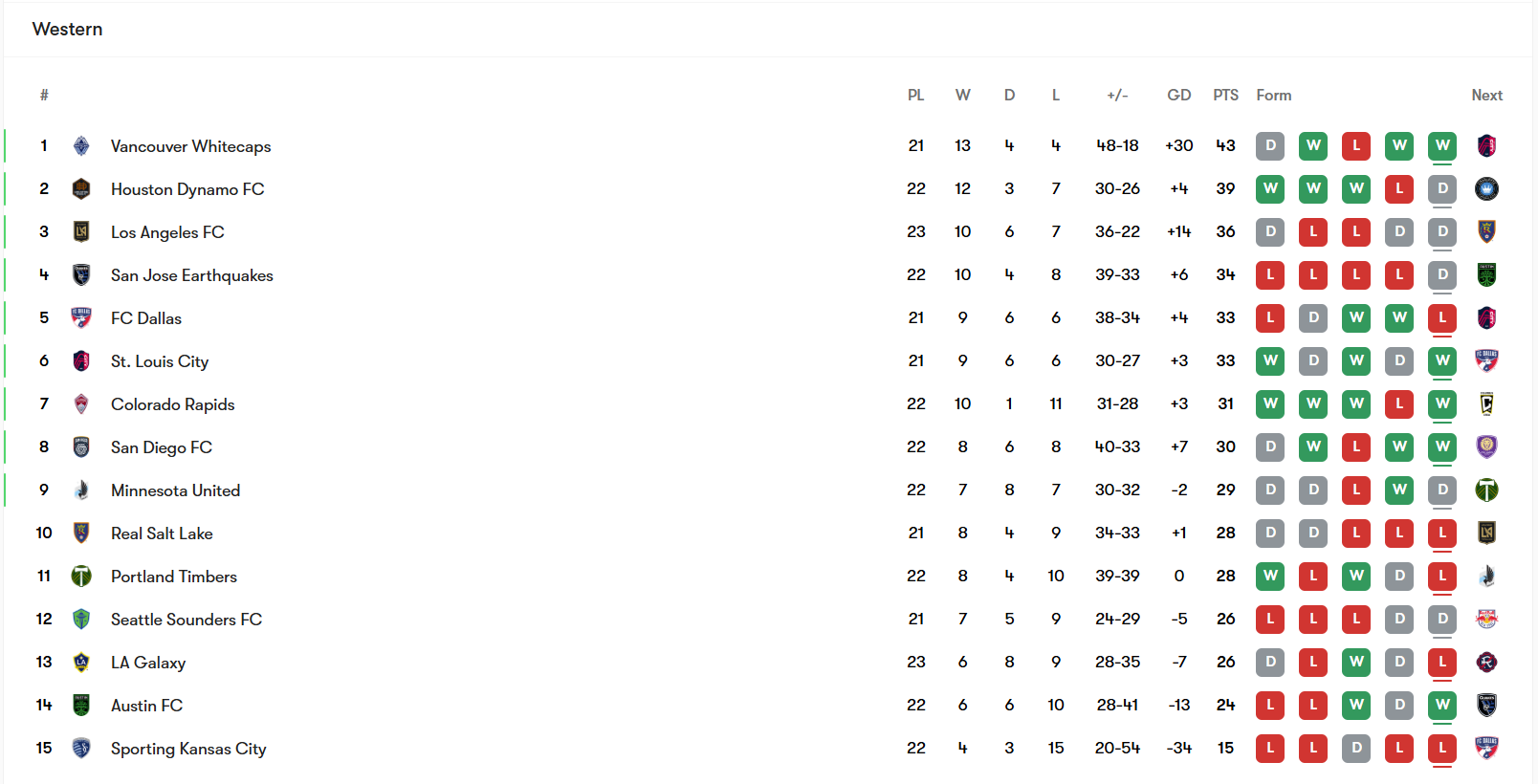
Congratulations to the Colorado Rapids for winning their third consecutive Rocky Mountain Cup. Congratulations to San Diego for getting revenge on Hirving Lozano (he still scored a goal though). Congratulations to Orlando’s Tyrese Spicer, who managed to score a late equalizer and prevent Minnesota from completing a 2-0 comeback and forcing the Loons to drop two crucial points. And, finally, CONGRATULATIONS to the Seattle Sounders for extending their MLS winless streak to 10 games. They’ve worked so hard to make it a reality. Even two goals from debutant Dejan Joveljic couldn’t fire the Sounders to three points at home against the, uh, Fire.
Meanwhile, tonight’s loss could be disastrous for the Portland Timbers. It could end up being a result that they look back on at the end of the season. For that reason, combined with Austin’s brutal week and a full week of rest and training for the Timbers, I think it’s their worst loss of the season so far. The San Jose loss was merely a foregone conclusion from the opening whistle, and so was the RSL defeat in May. Even the Vancouver loss was expected when the starting lineups came out. They’re only one point back of 9th-placed Minnesota, who comes to Providence Park next weekend for the reverse fixture of April’s 2-0 loss in St. Paul. As for the biggest issue that’s keeping the Timbers from a spot in the postseason? 39 goals conceded, which is the 3rd-worst mark in the West ahead of only Austin and SKC. Not very good company to be in.
Final Whistle
If you want to be superstitious for a second, you could point to Portland’s jersey choice as a reason for this defeat. Ceding the initiative to Austin and allowing them to wear green at Providence Park is a crime. I’m a little befuddled why this choice was made. It is your 100-year-old home, and your team should be wearing green there. Nonsense.
Four days remain for Ned Grabavoy to get the much-needed signings across the line. While the perception of the Kelsy sale largely remains “let’s see what they do with the rest of the money,” it’s going to be hard to quiet the naysayers if Wednesday’s deadline passes with Vincent Janssen being the only summer arrival. This is a team that has gone all-in before. Hell, they did it last year, but two unfortunate injuries turned a promising window into a wistful retrospection.
The 2026 Timbers need another all-in window, and they have the flexibility to do so. Nothing about this team has given the appearance of a playoff-worthy squad in 2026, despite some excellent results over the last month. What good are those results if the Timbers can’t take care of business against a team that they should be beating at home? It isn’t so much the defeat itself that’s so demoralizing, but it’s the manner of the defeat. Some of these issues were evident back in March, April, and May under a different coach with a completely different coaching staff. While it might be tempting to save some flexibility for the future, the immediate future is still cloudy. There is talent in this team, but it alternates between temptation and frustration on a regular basis. Where is the consistency? Who can provide the consistency?
I’ll let y’all debate the answers to that question. All I’m saying is that the expectation has been made that new additions are coming in the next four days. These new players have the potential to impact the team in the present and the future. The Timbers need those improvements in both time periods. And if those players don’t arrive, the timing of the Kelsy sale is going to look even worse, no matter how good it might be for the club in the long term.
This game represents Marti Cifuentes’ first true stumbling block as Timbers manager. A win in Chicago wasn’t expected, and the Timbers nearly stole that game at the death after a horrendous start. San Diego was a controlled win delivered by moments of brilliance by Portland’s two DPs. It would’ve been nice to hold onto the win in Los Angeles, but a superb goalkeeping performance kept an exhausted Timbers team in the game. Tonight’s game was a true “welcome to Portland” moment for Cifuentes. You aren’t truly a Timbers head coach until you lose a game that you’re definitely expected to win.
Next weekend’s game against Minnesota is now even more crucial. It’s a true 6-pointer, and now the Timbers have to show how they’ll bounce back from adversity. While tonight’s loss occurred during a game that they were expected to win, next Saturday they will need to win. It’s two different criteria, but they’re in the softest part of the schedule. Tonight’s game was a guaranteed three points, until it wasn’t. That’s the nature of MLS. Lots of work is still needed for the Timbers to cement their status as a playoff team. One month of encouraging results isn’t going to do it. Now they must work on their flaws, starting with this Achilles’ heel of a defense. Good things can still happen in 2026 for the Timbers. But this mountain wasn’t going to be summited in a month, or even one week. They’ll get their chance at revenge against the Broccolis on Decision Day. Until then, it’s time to prove that tonight was an aberration under the new regime. And it’s going to take a consistent run of good results to do so. The climb continues.

Comments ()